|
|
|||
|
||||
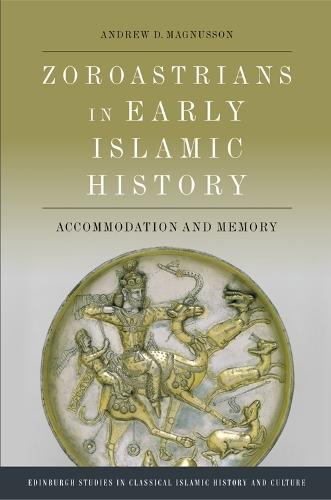
OverviewThe second Muslim caliph, Umar ibn al-Khattab, once reportedly exclaimed, 'I do not know how to treat Zoroastrians!' He and other Muslims encountered Zoroastrians during the conquest of Arabia but struggled to formulate a consistent policy toward the adherents of a religion that was neither biblical nor polytheistic. Some Muslims saw Zoroastrians as pagans and sought to limit interaction with them. Others found ways to incorporate them within the empire of Islamic law. Andrew D. Magnusson describes the struggle between advocates of inclusion and exclusion, the ultimate accommodation of Zoroastrians, and the reasons that Muslim historians have subsequently buried the memory of this relationship. Full Product DetailsAuthor: Andrew D. Magnusson (Assistant Professor of History, The University of Central Oklahoma)Publisher: Edinburgh University Press Imprint: Edinburgh University Press ISBN: 9781474489522ISBN 10: 1474489524 Pages: 224 Publication Date: 29 November 2022 Audience: Professional and scholarly , Professional & Vocational Format: Hardback Publisher's Status: Active Availability: Manufactured on demand We will order this item for you from a manufactured on demand supplier. Table of ContentsIntroduction: Zoroastrianism, Islam, and Accommodation Myth and Countermyth in Zoroastrian Historiography Umar’s Dilemma: The Taxation of People without a Book Marriage, Meat, and the Limits of Accommodation Salman’s Charter as a Site of Memory Fire Temple Desecration and Triumphal Tales of Violence Rhetorical Zoroastrians in Early Islamic Discourse Conclusion: An Ambivalent Accommodation Appendix A—Translation of an Iranian Recension of Salman’s Charter Appendix B—Translation of an Indian Recension of Salman’s Charter BibliographyReviews""Andrew Magnusson provides an insightful narrative of the relationship between the Zoroastrian population of the former Sasanian Empire and that of the new Muslim Caliphate who became their master in the seventh century CE. He wonderfully demonstrates that the early Muslims position toward the Zoroastrians was much more nuanced and moves beyond the old binary of tolerance"" and ""intolerance,"" in describing their relationship. Magnusson suggests that the early Muslims by necessity accommodated the Zoroastrian community by giving them their own space and privileges."""" -Touraj Daryaee, Maseeh Chair in Persian Studies & Culture University of California, Irvine """Andrew Magnusson provides an insightful narrative of the relationship between the Zoroastrian population of the former Sasanian Empire and that of the new Muslim Caliphate who became their master in the seventh century CE. He wonderfully demonstrates that the early Muslims position toward the Zoroastrians was much more nuanced and moves beyond the old binary of tolerance"" and ""intolerance,"" in describing their relationship. Magnusson suggests that the early Muslims by necessity accommodated the Zoroastrian community by giving them their own space and privileges."""" -Touraj Daryaee, Maseeh Chair in Persian Studies & Culture University of California, Irvine" Author InformationAndrew D. Magnusson is Assistant Professor of History at the University of Central Oklahoma. Tab Content 6Author Website:Countries AvailableAll regions |
||||