Overview
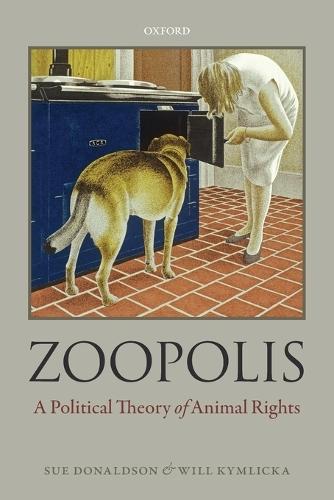
Zoopolis offers a new agenda for the theory and practice of animal rights. Most animal rights theory focuses on the intrinsic capacities or interests of animals, and the moral status and moral rights that these intrinsic characteristics give rise to. Zoopolis shifts the debate from the realm of moral theory and applied ethics to the realm of political theory, focusing on the relational obligations that arise from the varied ways that animals relate to human societies and institutions. Building on recent developments in the political theory of group-differentiated citizenship, Zoopolis introduces us to the genuine ""political animal"". It argues that different types of animals stand in different relationships to human political communities. Domesticated animals should be seen as full members of human-animal mixed communities, participating in the cooperative project of shared citizenship. Wilderness animals, by contrast, form their own sovereign communities entitled to protection against colonization, invasion, domination and other threats to self-determination. ""Liminal"" animals who are wild but live in the midst of human settlement (such as crows or raccoons) should be seen as ""denizens"", resident of our societies, but not fully included in rights and responsibilities of citizenship. To all of these animals we owe respect for their basic inviolable rights. But we inevitably and appropriately have very different relations with them, with different types of obligations. Humans and animals are inextricably bound in a complex web of relationships, and Zoopolis offers an original and profoundly affirmative vision of how to ground this complex web of relations on principles of justice and compassion.
Full Product Details
Author: Sue Donaldson ,
Will Kymlicka (Canadian Research Chair in Political Philosophy, Queen's University)
Publisher: Oxford University Press
Imprint: Oxford University Press
Dimensions:
Width: 16.10cm
, Height: 1.80cm
, Length: 23.30cm
Weight: 0.532kg
ISBN: 9780199673018
ISBN 10: 0199673012
Pages: 352
Publication Date: 23 May 2013
Audience:
College/higher education
,
Professional and scholarly
,
Undergraduate
,
Postgraduate, Research & Scholarly
Format: Paperback
Publisher's Status: Active
Availability: To order

Stock availability from the supplier is unknown. We will order it for you and ship this item to you once it is received by us.
Reviews
In this careful, thoughtful, and engaging work, Sue Donaldson and Will Kymlicka affirm and extend the attribution of rights to animals. ... The book is thoroughly researched and engages a lot of literature about animals, both philosophical and sociological Ruth Abbey, Philosophy in Review it reinvigorated my view of animal rights and political theory, presenting a compelling, if pretty utopian, picture of just and egalitarian animal-human relations. More importantly, perhaps, it better illuminated my own understanding of my relationship with animals close to me, Mortimer (dog) and Tadpole (cat). Samuel Hawke, Social Justice First This is the book that everyone in animal ethics ought to be talking about... extremely well written and carefully argued, and stuffed with fascinating observations about humans, animals and the relations between them... Dream novel: Margaret Atwood reads Zoopolis and creates a fictional world like that. Jean Kazez, Philosophy blog Zoopolis presents a meticulously principled, thorough- and maybe, hopefully, even realistic - theory, which in many ways improves upon preexisting theories of animal rights. Nina Varsava, Humanimalia Volume 4 Donaldson and Kymlicka's contribution builds upon attempts by others to extend justice to non-human animals in an original and compelling manner. They convincingly demonstrate that theories of animal rights lacking a political component are inadequate, and that traditional citizenship theory wrongly excludes many potential coauthors in the destiny of democratic communities. Steve Cooke, Global Policy will take the debate about the limits of liberal citizenship into radical new areas. Zoopolis breaks new ground by looking at animal rights from a genuinely political perspective. It's deliciously contentious thesis will force liberal political theorists to look much harder at the boundaries of citizenship. Daniel Hutton Ferris, Politics inSpires.org Zoopolis is an amazing book, which proposes to reframe the debate on our relationship with animals in a new theoretical framework. Marta Tafalla, Dianoia, Volume LVII a remarkable landmark in the animal rights debate. Like what Nozick said of Rawlss A Theory of Justice, it would seem that animal rights theorists must either work within the theory put forward by Zoopolis or explain why not. Tr istan Rogers, The Value Enquiry fascinating and path-breaking. There is a huge amount to commend in this rich and novel theory... Zoopolis is a major contribution to both animal ethics and political philosophy, and will provide much interesting debate. Alasdair Cochrane, The Philosophers Magazine eloquent and extremely thought-provoking astonishingly free of sentimentality while still brimming with passion Books like this - meticulously thought-out, very attractively reasoned, with no hint of screed - do inestimable good in their incremental way, and Zoopolis is among the best Ive ever read, mainly because it avoids the pitfalls of extremism that would make it look untenable to the unconverted. Steve Donoghue, Open Letters Monthly
it reinvigorated my view of animal rights and political theory, presenting a compelling, if pretty utopian, picture of just and egalitarian animal-human relations. More importantly, perhaps, it better illuminated my own understanding of my relationship with animals close to me, Mortimer (dog) and Tadpole (cat). Samuel Hawke, Social Justice First This is the book that everyone in animal ethics ought to be talking about... extremely well written and carefully argued, and stuffed with fascinating observations about humans, animals and the relations between them... Dream novel: Margaret Atwood reads Zoopolis and creates a fictional world like that. Jean Kazez, Philosophy blog Zoopolis presents a meticulously principled, thorough- and maybe, hopefully, even realistic - theory, which in many ways improves upon preexisting theories of animal rights. Nina Varsava, Humanimalia Volume 4 Donaldson and Kymlicka's contribution builds upon attempts by others to extend justice to non-human animals in an original and compelling manner. They convincingly demonstrate that theories of animal rights lacking a political component are inadequate, and that traditional citizenship theory wrongly excludes many potential coauthors in the destiny of democratic communities. Steve Cooke, Global Policy will take the debate about the limits of liberal citizenship into radical new areas. Zoopolis breaks new ground by looking at animal rights from a genuinely political perspective. It's deliciously contentious thesis will force liberal political theorists to look much harder at the boundaries of citizenship. Daniel Hutton Ferris, Politics inSpires.org Zoopolis is an amazing book, which proposes to reframe the debate on our relationship with animals in a new theoretical framework. Marta Tafalla, Dianoia, Volume LVII a remarkable landmark in the animal rights debate. Like what Nozick said of Rawlss A Theory of Justice, it would seem that animal rights theorists must either work within the theory put forward by Zoopolis or explain why not. Tr istan Rogers, The Value Enquiry fascinating and path-breaking. There is a huge amount to commend in this rich and novel theory... Zoopolis is a major contribution to both animal ethics and political philosophy, and will provide much interesting debate. Alasdair Cochrane, The Philosophers Magazine eloquent and extremely thought-provoking astonishingly free of sentimentality while still brimming with passion Books like this - meticulously thought-out, very attractively reasoned, with no hint of screed - do inestimable good in their incremental way, and Zoopolis is among the best Ive ever read, mainly because it avoids the pitfalls of extremism that would make it look untenable to the unconverted. Steve Donoghue, Open Letters Monthly
Author Information
Sue Donaldson lives in Kingston, Canada where she writes essays, plays, and books, including a vegan recipe collection (Foods That Don't Bite Back, Arsenal Pulp Press 2003) and a mystery novel for young adults (Thread of Deceit, Sumach Press 2004). Will Kymlicka is the author of six books published by Oxford University Press, including Contemporary Political Philosophy: An Introduction (1990; second edition 2002), Multicultural Citizenship (1995), and Multicultural Odysseys (2007). He is the Canada Research Chair in Political Philosophy at Queen's University.