|
|
|||
|
||||
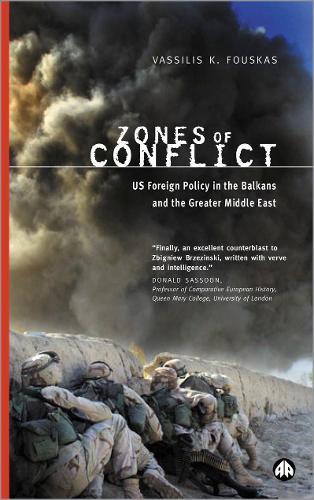
OverviewThe US has several major interests in the Balkans, the Greater Middle East and the wide Eurasian zone, which determine its political and military strategies in the region. What are these interests, and what strategies are used to ensure that they are maintained? Examining the balance of power between the US, the EU and key EU states in the region, Vassilis Fouskas offers a critique of US foreign policy and its underlying motivations. He argues that the major US objectives include control over gas and oil producing zones; safe transportation of energy to Western markets at stable prices; and the elimination, but not destruction, of America's Eurasian competitors. He asserts that US foreign policy is therefore driven by the desire to maintain a strategic partnership with key EU states, while preventing the emergence of an alternative coalition in Eurasia capable of challenging US supremacy. Has US foreign policy undergone a dramatic U-turn after the end of the Cold War or, for that matter, after September 11th? This book tackles such questions and argues that the emergence of a social democratic administration in Eurasia is a feasible alternative to American unilateralism. Full Product DetailsAuthor: Vassilis K. FouskasPublisher: Pluto Press Imprint: Pluto Press Dimensions: Width: 13.50cm , Height: 1.90cm , Length: 21.50cm Weight: 0.296kg ISBN: 9780745320298ISBN 10: 0745320295 Pages: 184 Publication Date: 20 February 2003 Audience: Professional and scholarly , Professional and scholarly , Professional & Vocational , Professional & Vocational Format: Paperback Publisher's Status: Out of Stock Indefinitely Availability: Out of stock Table of ContentsAcknowledgements 1. Introduction The Realist Chessboard The Structure of the Book Globalisation and European Integration 2. The New Geo-politics of Gas and Oil The 1990s: Years of Pandemonium Conflicting Interests: Oil and Gas Projects in Eurasia End of the Cold War? 3. Scarface Politics NATO’s ‘New Strategic Concept’ Problems of ‘Variable Geometry’ Political, Moral and Legal Conundrums: the Kosovo War US Successes Muslims, Christians and Foreign Policy The Limits of NATO 4. Near and Middle Eastern Dilemmas The ‘Northern Tier’ and the Greek-Turkish Dimension The Arab-Israeli Conflict Conflict over Cyprus Towards Summer 1974 and After 5. Turkish Questions for the West A Democracy Guided by the Military and Used as Such The US and the ‘Turkish Pivot’ Summing-up the Realist Game 6. Eurasian Gambles over Cyprus’ EU Prospects EU-Cyprus Relations and Germany’s Primacy US Qualified Support to Germany and Greece Greek and Turkish Arguments Military Diplomacy by the ‘Turkish Pivot’ 7. Conclusion US Policy in Eurasia: An Assessment A Trans-Eurasian Convention Underwritten by Eurasian Powers Re-conquering America Bibliography IndexReviewsAt last, a book that challenges fundamental assumptions of American foreign policy in the post-Cold War era. Vangelis Xairetismata: Dean Emeritus and Professor Emeritus, Indiana, University-Purdue University, Fort Wayne and Rector Intercollege, Nicosia, Cyprus. Author InformationVassilis Fouskas is Senior Research Fellow in European and International Studies and Director of the MSc Programme in International Conflict at Kingston University. He is also editor of the Journal of Southern Europe and the Balkans. He is the author of Italy, Europe and the Left (1998), and contributed to Donald Sassoon's Looking Left (1997) Tab Content 6Author Website:Countries AvailableAll regions |
||||