Overview
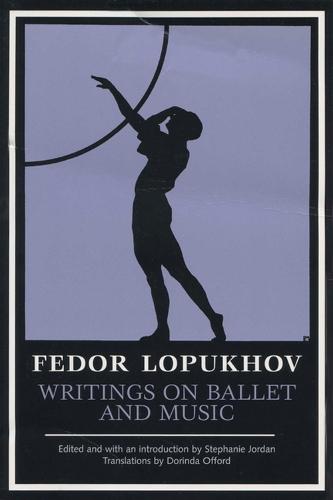
Although little-known in the West, Fedor Lopukhov was a leading figure in Russia's dance world for more than 60 years and an influence on many who became major figures in western dance, such as George Balanchine. As a choreographer, he staged the first post-revolutionary productions of traditional ballets like """"Swan Lake"""" and """"The Sleeping Beauty"""" as well as avant-garde and experimental works, including """"Dance Symphony"""",""""Bolt"""" and a highly controversial version of """"The Nutcracker"""". This first publication in English of Lopukhov's theoretical writings offers readers a clear understanding of his seminal importance in dance history and illuminate his role in the development of dance as a non-narrative, musically based form.
Full Product Details
Author: Fedor Lopukhov ,
Dorinda Offord ,
Stephanie Jordan
Publisher: University of Wisconsin Press
Imprint: University of Wisconsin Press
Dimensions:
Width: 15.40cm
, Height: 1.30cm
, Length: 22.80cm
Weight: 0.333kg
ISBN: 9780299182748
ISBN 10: 0299182746
Pages: 184
Publication Date: 31 January 2003
Audience:
College/higher education
,
Professional and scholarly
,
Undergraduate
,
Postgraduate, Research & Scholarly
Format: Paperback
Publisher's Status: Out of Print
Availability: Out of stock

Reviews
"""The availability of these finely translated essays in English (and Stephanie Jordan's illuminating introduction) will educate the Western world about the lost choreographer Fedor Lopukhov's role in the history of choreography, both experimental and classical, in Russia and the Soviet Union, as well as his contribution to dance theory. It will shed light for both dance and music audiences on relations between music and ballet--not only in Lopukhov's own works, but in the ballets of Marius Petipa, the nineteenth-century choreographer of the great ballet classics whose compositions Lopukhov scrutinized attentively and imaginatively.""--Sally Banes, University of Wisconsin-Madison"
The availability of these finely translated essays in English (and Stephanie Jordan's illuminating introduction) will educate the Western world about the lost choreographer Fedor Lopukhov's role in the history of choreography, both experimental and classical, in Russia and the Soviet Union, as well as his contribution to dance theory. It will shed light for both dance and music audiences on relations between music and ballet--not only in Lopukhov's own works, but in the ballets of Marius Petipa, the nineteenth-century choreographer of the great ballet classics whose compositions Lopukhov scrutinized attentively and imaginatively. --Sally Banes, University of Wisconsin-Madison<br>
Author Information
Fedor Lopukhov (1886-1973) was born and lived most of his life in St. Petersburg. He attended the ballet school affiliated with the Maryinsky (later Kirov) Theatre, where he made his debut in 1905, danced as a soloist until 1922, and served as artistic director from 1922 through the end of that decade and for brief periods during the 1940s and 1950s. Stephanie Jordan is research professor in dance at Roehampton University of Surrey.