Overview
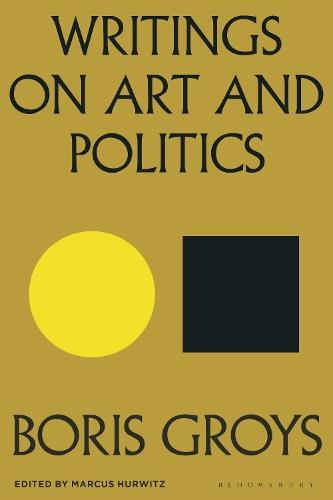
To the philosopher Boris Groys, everything technology produces in the modern world ultimately falls into two categories – it’s art, or it's garbage. Both are useless, defunctionalized objects that simply lie there. The difference between them comes when we immunize art from the destructive power of time to which we devoutly deliver our garbage. In this collection of essays and interviews, Groys expounds on these paradoxes, taking in art, the dialectic of work, the afterlife, politics, utopia, philosophy, faith, revolution, the avant-garde and digitalization. His philosophical writings critique the political economy of heterotopia, whereas his writings on art concern the things of the afterlife: only the politics of immortality promises salvation from the garbage pit. Groys sees the history of class struggle as a history of aestheticization - defined by the forms spectators recognize as valuable enough to preserve, which they will fight to the death to preserve from disappearance and nonexistence. Western civilization's tendency to aestheticize politicizes everything. If we can design ourselves as artworks worthy of admiration and care, then can we too survive the ravages of time? Bringing together previously unpublished texts, newly translated work and interviews, this is a coruscating trip through the complex and challenging philosophical and cultural problems that Boris Groys has made it his life's work to deal with.
Full Product Details
Author: Boris Groys ,
Dr Marcus Hurwitz (Individual philosopher)
Publisher: Bloomsbury Publishing PLC
Imprint: Bloomsbury Academic
Dimensions:
Width: 15.60cm
, Height: 2.20cm
, Length: 23.20cm
Weight: 0.320kg
ISBN: 9781350457843
ISBN 10: 1350457841
Pages: 280
Publication Date: 19 February 2026
Audience:
College/higher education
,
Tertiary & Higher Education
Format: Paperback
Publisher's Status: Forthcoming
Availability: Not yet available

This item is yet to be released. You can pre-order this item and we will dispatch it to you upon its release.
Reviews
Why is the internet like the spirit of Napoleon? What do Facebook posts share with Christian icons? Why have we swerved so quickly from neoliberalism to neofascism? And what does Lenin’s mausoleum have to do with the readymade? Like an anthropologist tourguide from a distant planet, Boris Groys answers these questions (and more) with calm detachment—guiding us through cultures of the museum, art history, the internet, and Russia. His counterintuitive connections brilliantly puncture received wisdom, and disrupt canonical truisms with dark and delightful irony. This is cultural critique as pure creativity and philosophical imagination. Reading Groys is a mindblowing trip. * Claire Bishop, artist, critic, Presidential Professor of Art History and Faculty Director of the James Gallery, CUNY Graduate Center *
Why is the internet like the spirit of Napoleon? What do Facebook posts share with Christian icons? Why have we swerved so quickly from neoliberalism to neofascism? And what does Lenin’s mausoleum have to do with the readymade? Like an anthropologist tourguide from a distant planet, Boris Groys answers these questions (and more) with calm detachment—guiding us through cultures of the museum, art history, the internet, and Russia. His counterintuitive connections brilliantly puncture received wisdom, and disrupt canonical truisms with dark and delightful irony. This is cultural critique as pure creativity and philosophical imagination. Reading Groys is a mindblowing trip. * Claire Bishop, artist, critic, Presidential Professor of Art History and Faculty Director of the James Gallery, CUNY Graduate Center * Boris Groys’s writings are formative, unpredictable, and always prophetic in their grasp of art’s political metabolism. Few thinkers have written so lucidly about the avant-garde’s utopian exhaustion, the museum’s revolutionary promise, or the artist’s peculiar labor of self-design. Reading Groys has shaped how many of us think and work. This collection captures the full arc of that influence: theoretical, ironic, and strangely intimate. It is both a record and a renewal of the conversation that continues to define contemporary art’s intellectual life. * Anton Vidokle, artist, curator, and founder of E-Flux Journal *
Author Information
Marcus Hurwitz is a philosopher, art critic, and writer whose work engages with the historical avant-garde, Moscow Conceptualism, and installation art alongside contemporary French, German, and Russian philosophy.