Overview
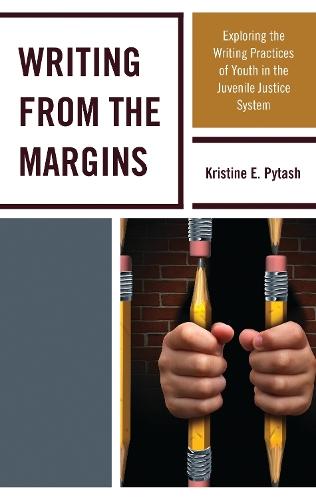
The book is a critical examination of the complex role of writing in court-involved young adults’ lives. The purpose of this book is to provide an in-depth look at how writing might possibly be the best opportunity to give students multiple tools to deal with their circumstances in life: to give them a voice to express themselves; an opportunity to recognize their strengths; a way to document their aspirations; and chance to give them hope. Furthermore, this book will advocate for literacy instruction that is grounded in research, and will advocate for youth to be creative meaning-makers, and finally this book will underscore the power of writing as a way to amplify beliefs and life experiences. This book includes current research that supports a framework for teaching writing, particularly for those youth who are marginalized and disenfranchised, while considering the meaning of equity in education.
Full Product Details
Author: Kristine E. Pytash
Publisher: Bloomsbury Publishing Plc
Imprint: Rowman & Littlefield
Dimensions:
Width: 15.00cm
, Height: 1.10cm
, Length: 23.10cm
Weight: 0.200kg
ISBN: 9781475830644
ISBN 10: 1475830645
Pages: 126
Publication Date: 01 September 2017
Audience:
Professional and scholarly
,
Professional & Vocational
Format: Paperback
Publisher's Status: Active
Availability: Manufactured on demand

We will order this item for you from a manufactured on demand supplier.
Reviews
With her important new text on writing instruction that best serves adolescents, Kristy Pytash pays attention to young people and their perspectives on and experiences with writing, gathering lessons so that we--and our young charges--might all be better served. Kristy recognizes that, as a scholar, she has a duty to live the pedagogies and ideals she is espousing--she's one of that new generation of pedagogues, academic activists, and researchers who knows that our inquiries and examination must be lived and the result of collaborations with the full range of constituents of our schools. Perhaps most importantly, Kristy bases her merged teacher education and youth intervention efforts in contexts where the most disenfranchised adolescents make their schooling homes, believing that youths whose voices are least often heard might be the ones to whom researchers, future teachers, and we all should listen most. Kristy's book offers compelling features to which those of us interested in making writing more than a school-based task simply must pay attention.--Kristien Zenkov Ph.D, Professor of Education, George Mason University In a world where the school to prison pipeline is an all too real process, we who work in literacy classrooms need to develop ways to at least slow the flow. Although the work of Kristine Pytash vividly illustrates how to thoughtfully engage incarcerated youth to make meaning of the texts of their lives through composition, the real power of this book lies in the fact that the same pedagogy, if done in all schools, could go great lengths toward shutting the tap.--Bob Fecho, Professor & Program Director, Columbia Univeristy
With her important new text on writing instruction that best serves adolescents, Kristy Pytash pays attention to young people and their perspectives on and experiences with writing, gathering lessons so that we—and our young charges—might all be better served. Kristy recognizes that, as a scholar, she has a duty to live the pedagogies and ideals she is espousing—she’s one of that new generation of pedagogues, academic activists, and researchers who knows that our inquiries and examination must be lived and the result of collaborations with the full range of constituents of our schools. Perhaps most importantly, Kristy bases her merged teacher education and youth intervention efforts in contexts where the most disenfranchised adolescents make their schooling homes, believing that youths whose voices are least often heard might be the ones to whom researchers, future teachers, and we all should listen most. Kristy’s book offers compelling features to which those of us interested in making writing more than a school-based task simply must pay attention. -- Kristien Zenkov Ph.D, Professor of Education, George Mason University In a world where the school to prison pipeline is an all too real process, we who work in literacy classrooms need to develop ways to at least slow the flow. Although the work of Kristine Pytash vividly illustrates how to thoughtfully engage incarcerated youth to make meaning of the texts of their lives through composition, the real power of this book lies in the fact that the same pedagogy, if done in all schools, could go great lengths toward shutting the tap. -- Bob Fecho, Professor & Program Director, Columbia Univeristy
With her important new text on writing instruction that best serves adolescents, Kristy Pytash pays attention to young people and their perspectives on and experiences with writing, gathering lessons so that we-and our young charges-might all be better served. Kristy recognizes that, as a scholar, she has a duty to live the pedagogies and ideals she is espousing-she's one of that new generation of pedagogues, academic activists, and researchers who knows that our inquiries and examination must be lived and the result of collaborations with the full range of constituents of our schools. Perhaps most importantly, Kristy bases her merged teacher education and youth intervention efforts in contexts where the most disenfranchised adolescents make their schooling homes, believing that youths whose voices are least often heard might be the ones to whom researchers, future teachers, and we all should listen most. Kristy's book offers compelling features to which those of us interested in making writing more than a school-based task simply must pay attention. -- Kristien Zenkov Ph.D, Professor of Education, George Mason University In a world where the school to prison pipeline is an all too real process, we who work in literacy classrooms need to develop ways to at least slow the flow. Although the work of Kristine Pytash vividly illustrates how to thoughtfully engage incarcerated youth to make meaning of the texts of their lives through composition, the real power of this book lies in the fact that the same pedagogy, if done in all schools, could go great lengths toward shutting the tap. -- Bob Fecho, Professor & Program Director, Columbia Univeristy
Author Information
Kristine E. Pytash is an Associate Professor in Teaching, Learning and Curriculum Studies at Kent State University’s College of Education, Health, and Human Services where she co-directs the secondary Integrated Language Arts teacher preparation program. A former high school English teacher, her research focuses on the literacy practices of youth in alternative schools and juvenile detention facilities, disciplinary writing, and preparing preservice teachers to teach writing.