Overview
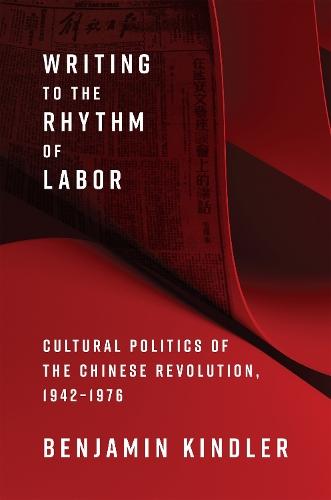
What does it mean to write in a socialist revolution? What defines labor in a communist society? In revolutionary China, writers were regularly dispatched to the countryside or factories with the expectation that, through immersion in the life of workers and peasants, they would be remade as ""culture workers"" whose writing could serve the communist project. Their cultural labor would not merely reflect or represent the process of building socialism-it would actively participate in it by excavating the contradictions and challenges of the ongoing reorganization of social relations. Benjamin Kindler examines how writing transformed the Chinese Revolution even as the revolution remade what it meant to write. He argues that the revolution sought in unparalleled ways to overcome the basic division between those who write and those who work. This book combines close readings of a wide range of texts-from the works of established figures to the writings of amateur workers drawn from the factory floor-with analysis of Chinese socialist political economy. Far from being drab instances of state propaganda, these texts and cultural experiments were lively and inventive attempts to determine what a different, more equal society might look like. Offering new ways to understand cultural production as a material, embodied process, this book reconsiders the role of art and literature in radical politics.
Full Product Details
Author: Benjamin Kindler
Publisher: Columbia University Press
Imprint: Columbia University Press
ISBN: 9780231219310
ISBN 10: 0231219318
Pages: 296
Publication Date: 20 May 2025
Audience:
College/higher education
,
Postgraduate, Research & Scholarly
Format: Hardback
Publisher's Status: Active
Availability: Manufactured on demand

We will order this item for you from a manufactured on demand supplier.
Reviews
What does the labor of writing mean in the midst of an ongoing social revolution? Through elegant and detailed exposition, Kindler addresses with seriousness and sympathy China’s transition to socialism as a culturally creative narrative process that helped shape the social relations and the imagination of a future not yet foretold. -- Rebecca E. Karl, New York University Rigorously researched and conceptually compelling, this remarkable book reframes the theory and practice of literary writing in socialist China as a response to a central problem of Marxist revolutions: the role of the intellectual and the relationship between mental and manual labor. An important contribution to our understanding of socialist literature and cultural politics in the twentieth century. -- Edward Tyerman, University of California, Berkeley Writing to the Rhythm of Labor announces the arrival of a major new voice in the field of modern Chinese literary study. Kindler interrogates the category of the ""cultural worker"" as integral to the Chinese socialist project's attempts at overcoming the divide between mental and manual labor. Boldly rejecting modernist notions of the aesthetic autonomy of literary writing that has long structured the field of modern Chinese literary studies, Kindler invites us to take seriously the wager that the division between those who wrote and those who worked with hand, plough, or machine could be overcome. What Kindler unearths is nothing less than a collective re-imagining of how literature could be produced, read, and taught in a modern world under radical transformation. -- Mark McConaghy, National Sun Yat-Sen University
What does the labor of writing mean in the midst of an ongoing social revolution? Through elegant and detailed exposition, Kindler addresses with seriousness and sympathy China’s transition to socialism as a culturally creative narrative process that helped shape the social relations and the imagination of a future not yet foretold. -- Rebecca E. Karl, New York University Rigorously researched and conceptually compelling, this remarkable book reframes the theory and practice of literary writing in socialist China as a response to a central problem of Marxist revolutions: the role of the intellectual and the relationship between mental and manual labor. An important contribution to our understanding of socialist literature and cultural politics in the twentieth century. -- Edward Tyerman, University of California, Berkeley Writing to the Rhythm of Labor announces the arrival of a major new voice in the field of modern Chinese literary study. Kindler interrogates the category of the ""cultural worker"" as integral to the Chinese socialist project's attempts at overcoming the divide between mental and manual labor. Boldly rejecting modernist notions of the aesthetic autonomy of literary writing that has long structured the field of modern Chinese literary studies, Kindler invites us to take seriously the wager that the division between those who wrote and those who worked with hand, plough, or machine could be overcome. What Kindler unearths is nothing less than a collective re-imagining of how literature could be produced, read, and taught in a modern world under radical transformation. -- Mark McConaghy, National Sun Yat-Sen University [An] absorbing and challenging book. * MCLC * The book demonstrates deep and nuanced theoretical engagement with key texts of Marxism and Maoism...Engaging and challenging to read, the book is an excellent text for a graduate seminar that rethinks China’s revolutionary culture. * China Quarterly *
Author Information
Benjamin Kindler is an assistant professor in the Department of Cultural Studies at Lingnan University, Hong Kong.