Overview
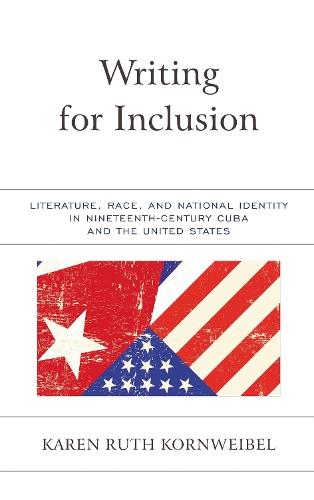
Writing for Inclusion is a study of some of the ways the idea of national identity developed in the nineteenth century in two neighboring nations, Cuba and The United States. The book examines symbolic, narrative, and sociological commonalities in the writings of four Afro-Cuban and African American writers: Juan Francisco Manzano and Frederick Douglass, fugitive slaves during mid-century; and Martín Morúa Delgado and Charles W. Chesnutt from the post-slavery period. All four share sensitivity to their imperfect inclusion as full citizens, engage in an examination of the process of racialization that hinders them in seeking such inclusion, and contest their definition as non-citizens. Works discussed include the slave narratives of Manzano and Douglass, Manzano’s poetry and play Zafira, andDouglass’s oratory and novella The Heroic Slave. Also considered, within the context provided by Manzano and Douglass, are Morúa and Chesnutt’s non-fiction writings about race and nation as well as their second-generation “tragic mulata” novels Sofía and The House Behind the Cedars. Based on an examination of the works of these four authors, Writing for Inclusion provides a detailed examination of examples of self-emancipation, the authors’ symbolic use of language, their expression of social anxieties or irony within the quest for recognition, and their arguments for an inclusive vision of national identity beyond the quagmires of race. By focusing on the process of racialization and ideas of race and national identity in a comparative context, the study seeks to highlight the artificial and contested nature of both terms and suggest new ways to interrogate them in our present day.
Full Product Details
Author: Karen Ruth Kornweibel
Publisher: Associated University Presses
Imprint: Fairleigh Dickinson University Press
Dimensions:
Width: 15.40cm
, Height: 1.30cm
, Length: 21.90cm
Weight: 0.268kg
ISBN: 9781683930990
ISBN 10: 1683930991
Pages: 174
Publication Date: 06 July 2021
Audience:
Professional and scholarly
,
Professional & Vocational
Format: Paperback
Publisher's Status: Active
Availability: Manufactured on demand

We will order this item for you from a manufactured on demand supplier.
Reviews
The comparative turn in American studies has allowed scholars to uncover the workings of identity formations across borders of nation and personhood, and to interrogate their common conceptions and assemblages, to use Alexander Weheylie's term. Kornweibel (East Tennessee State Univ.) follows in this vein as she studies the connections between race and national identity through a cross-cultural comparison of writers from Cuba and the US. She places fugitive slaves Juan Francisco Manzano and Frederick Douglass in dialogue along with post-slavery writers Martin Morua Delgado and Charles Chesnutt so that she can trace their arguments against racialization as a rationale for exclusion from national identities. Kornweibel is adept in discussing these authors' fictions and nonfiction writings and analyzing their use of language to symbolically express the social anxieties behind the lack of recognition afforded Afro-Cuban and African Americans in their respective lands, and to contest their placement as noncitizens and articulate their humanity as grounds for inclusion in their social arenas. Writing for Inclusion should appeal to scholars of African American and American studies for its engagement with race and nation across the diaspora. Summing Up: Recommended. Graduate students, researchers, faculty. * CHOICE *
The comparative turn in American studies has allowed scholars to uncover the workings of identity formations across borders of nation and personhood, and to interrogate their common conceptions and assemblages, to use Alexander Weheylie’s term. Kornweibel (East Tennessee State Univ.) follows in this vein as she studies the connections between race and national identity through a cross-cultural comparison of writers from Cuba and the US. She places fugitive slaves Juan Francisco Manzano and Frederick Douglass in dialogue along with post-slavery writers Martin Morua Delgado and Charles Chesnutt so that she can trace their arguments against racialization as a rationale for exclusion from national identities. Kornweibel is adept in discussing these authors’ fictions and nonfiction writings and analyzing their use of language to symbolically express the social anxieties behind the lack of recognition afforded Afro-Cuban and African Americans in their respective lands, and to contest their placement as noncitizens and articulate their humanity as grounds for inclusion in their social arenas. Writing for Inclusion should appeal to scholars of African American and American studies for its engagement with race and nation across the diaspora. Summing Up: Recommended. Graduate students, researchers, faculty. * CHOICE *
Author Information
Karen Ruth Kornweibel is associate professor of English in the Department of Literature and Language at East Tennessee State University.