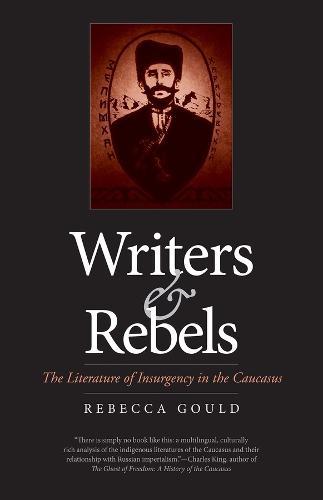
Full Product Details
Author: Rebecca Gould
Publisher: Yale University Press
Imprint: Yale University Press
Dimensions:
Width: 15.60cm
, Height: 2.70cm
, Length: 23.50cm
Weight: 0.717kg
ISBN: 9780300200645
ISBN 10: 0300200641
Pages: 352
Publication Date: 20 September 2016
Audience:
College/higher education
,
Professional and scholarly
,
Tertiary & Higher Education
,
Professional & Vocational
Format: Hardback
Publisher's Status: Active
Availability: Manufactured on demand

We will order this item for you from a manufactured on demand supplier.
Reviews
There is simply no book like this: a multilingual, culturally rich analysis of the indigenous literatures of the Caucasus and their relationship with Russian imperialism. -Charles King, author of The Ghost of Freedom: A History of the Caucasus -- Charles King There is simply no book like this: a multilingual, culturally rich analysis of the indigenous literatures of the Caucasus and their relationship with Russian imperialism. Rebecca Gould's command of the sources is unparalleled. Her ability to connect literary theory with the imperial past and contemporary politics has opened up a vast new field of research: how to bring Russia's borderlands into full conversation with the history of Islamic thought and the fate of European colonialism. -Charles King, author of The Ghost of Freedom: A History of the Caucasus -- Charles King A book of this empirical and theoretical range and depth has never been written on the Caucasus. To become an expert on any one of these three regions is daunting and a rarity; to write a book that connects them as this author has is an amazing achievement. -Paul Manning, Trent University -- Paul Manning Gould brilliantly synthesizes her virtuoso linguistics, her catholic command of theory, and her extensive knowledge of the history and culture of the Caucasus to argue for the necessity of native texts and discourse in creating an anthropology that facilitates the interpretation of two centuries of turbulent Islamic insurgence in the Caucasus. -Paul Friedrich, author of Tolstoy and the Chechens -- Paul Friedrich Combining theoretical sophistication and staggering linguistic competence, Rebecca Gould has written a book destined to become a classic in the fields of bandit studies and Caucasus studies. --Georgi Derliguian, author of Bourdieu's Secret Admirer in the Caucasus: A World-System Biography -- Georgi Derliguian A beautifully written work that uses literary material in languages as diverse as Arabic, Chechen, Georgian, Persian and Russian to historicize the legacy of the Russian colonial encounter with the north Caucasus. Centered on the notion of transgressive sanctity, the book is significant for illuminating the aestheticization of violence in Chechen and Daghestani culture and explaining the deep-rootedness of anti-state rebellion in Caucasian historical memory. The Literatures of Anticolonial Insurgency is an invitation to reflect on the interpretive possibilities of literary anthropology for the social history of colonialism. This book is an exegetic gem, resulting from intellectually engaged scholarship. --Paolo Sartori, Senior Research Fellow at the Institute of Iranian Studies, Vienna -- Paolo Sartori Ranging with enviable learning across Chechen, Daghestani, Georgian and Russian literary modernities, Rebecca Gould's book on anti-colonial violence breaks new ground by developing the notion of 'transgressive sanctity'. Gould's sensitive readings of the aesthetics of insurgency in the Caucasus extend our knowledge of imperialism and anti-colonialism in regions of the world that are generally neglected by scholars in the anglophone academy who tend to focus on western European imperialism. This rich and complex book deepens our understanding of anti-colonial insurgency across the world and is an invaluable contribution to debates about imperialism, anti-colonial violence and aesthetics. --Javed Majeed, King's College London -- Javed Majeed Gould's tour de force of the literatures of the Caucasus opens a new chapter in world literary history. Gould uses the methods of three disciplines-literature, anthropology, and history-to shed new light on anti-colonialism under Russian rule. Makings these literatures available and accessible to a much wider community than ever before, Gould significantly extends the range of postcolonial critique. The book deserves a place on readers' shelves alongside the best works on postcolonial theory and history. -Muzaffar Alam, University of Chicago -- Muzaffar Alam An excellent introduction to the literature and politics of the Caucasus. -Choice Choice Selected as the Honorable Mention for the Joseph Rothschild Prize in Nationalism and Ethnic Studies, awarded annually by the Association for the Study of Nationalities for an outstanding book published on Russia, Eastern Europe or Eurasia. -- Joseph Rothschild Prize Association forthe Study of Nationalities
Shortlisted for the 2017 Central Eurasian Studies Society Book award in the History and Humanities category. -- Bok Award * Central Eurasian Studies Society * Selected as the Honorable Mention for the Joseph Rothschild Prize in Nationalism and Ethnic Studies, awarded annually by the Association for the Study of Nationalities for an outstanding book published on Russia, Eastern Europe or Eurasia. -- Joseph Rothschild Prize * Association forthe Study of Nationalities * Gould's tour de force of the literatures of the Caucasus opens a new chapter in world literary history. Gould uses the methods of three disciplines-literature, anthropology, and history-to shed new light on anti-colonialism under Russian rule. Makings these literatures available and accessible to a much wider community than ever before, Gould significantly extends the range of postcolonial critique. The book deserves a place on readers' shelves alongside the best works on postcolonial theory and history. -Muzaffar Alam, University of Chicago -- Muzaffar Alam Ranging with enviable learning across Chechen, Daghestani, Georgian and Russian literary modernities, Rebecca Gould's book on anti-colonial violence breaks new ground by developing the notion of 'transgressive sanctity'. Gould's sensitive readings of the aesthetics of insurgency in the Caucasus extend our knowledge of imperialism and anti-colonialism in regions of the world that are generally neglected by scholars in the anglophone academy who tend to focus on western European imperialism. This rich and complex book deepens our understanding of anti-colonial insurgency across the world and is an invaluable contribution to debates about imperialism, anti-colonial violence and aesthetics. --Javed Majeed, King's College London -- Javed Majeed A beautifully written work that uses literary material in languages as diverse as Arabic, Chechen, Georgian, Persian and Russian to historicize the legacy of the Russian colonial encounter with the north Caucasus. Centered on the notion of transgressive sanctity, the book is significant for illuminating the aestheticization of violence in Chechen and Daghestani culture and explaining the deep-rootedness of anti-state rebellion in Caucasian historical memory. The Literatures of Anticolonial Insurgency is an invitation to reflect on the interpretive possibilities of literary anthropology for the social history of colonialism. This book is an exegetic gem, resulting from intellectually engaged scholarship. --Paolo Sartori, Senior Research Fellow at the Institute of Iranian Studies, Vienna -- Paolo Sartori Combining theoretical sophistication and staggering linguistic competence, Rebecca Gould has written a book destined to become a classic in the fields of bandit studies and Caucasus studies. --Georgi Derliguian, author of Bourdieu's Secret Admirer in the Caucasus: A World-System Biography -- Georgi Derliguian Gould brilliantly synthesizes her virtuoso linguistics, her catholic command of theory, and her extensive knowledge of the history and culture of the Caucasus to argue for the necessity of native texts and discourse in creating an anthropology that facilitates the interpretation of two centuries of turbulent Islamic insurgence in the Caucasus. -Paul Friedrich, author of Tolstoy and the Chechens -- Paul Friedrich A book of this empirical and theoretical range and depth has never been written on the Caucasus. To become an expert on any one of these three regions is daunting and a rarity; to write a book that connects them as this author has is an amazing achievement. -Paul Manning, Trent University -- Paul Manning There is simply no book like this: a multilingual, culturally rich analysis of the indigenous literatures of the Caucasus and their relationship with Russian imperialism. Rebecca Gould's command of the sources is unparalleled. Her ability to connect literary theory with the imperial past and contemporary politics has opened up a vast new field of research: how to bring Russia's borderlands into full conversation with the history of Islamic thought and the fate of European colonialism. -Charles King, author of The Ghost of Freedom: A History of the Caucasus -- Charles King There is simply no book like this: a multilingual, culturally rich analysis of the indigenous literatures of the Caucasus and their relationship with Russian imperialism. -Charles King, author of The Ghost of Freedom: A History of the Caucasus -- Charles King
There is simply no book like this: a multilingual, culturally rich analysis of the indigenous literatures of the Caucasus and their relationship with Russian imperialism. -Charles King, author of The Ghost of Freedom: A History of the Caucasus -- Charles King There is simply no book like this: a multilingual, culturally rich analysis of the indigenous literatures of the Caucasus and their relationship with Russian imperialism. Rebecca Gould's command of the sources is unparalleled. Her ability to connect literary theory with the imperial past and contemporary politics has opened up a vast new field of research: how to bring Russia's borderlands into full conversation with the history of Islamic thought and the fate of European colonialism. -Charles King, author of The Ghost of Freedom: A History of the Caucasus -- Charles King A book of this empirical and theoretical range and depth has never been written on the Caucasus. To become an expert on any one of these three regions is daunting and a rarity; to write a book that connects them as this author has is an amazing achievement. -Paul Manning, Trent University -- Paul Manning Gould brilliantly synthesizes her virtuoso linguistics, her catholic command of theory, and her extensive knowledge of the history and culture of the Caucasus to argue for the necessity of native texts and discourse in creating an anthropology that facilitates the interpretation of two centuries of turbulent Islamic insurgence in the Caucasus. -Paul Friedrich, author of Tolstoy and the Chechens -- Paul Friedrich Combining theoretical sophistication and staggering linguistic competence, Rebecca Gould has written a book destined to become a classic in the fields of bandit studies and Caucasus studies. --Georgi Derliguian, author of Bourdieu's Secret Admirer in the Caucasus: A World-System Biography -- Georgi Derliguian A beautifully written work that uses literary material in languages as diverse as Arabic, Chechen, Georgian, Persian and Russian to historicize the legacy of the Russian colonial encounter with the north Caucasus. Centered on the notion of transgressive sanctity, the book is significant for illuminating the aestheticization of violence in Chechen and Daghestani culture and explaining the deep-rootedness of anti-state rebellion in Caucasian historical memory. The Literatures of Anticolonial Insurgency is an invitation to reflect on the interpretive possibilities of literary anthropology for the social history of colonialism. This book is an exegetic gem, resulting from intellectually engaged scholarship. --Paolo Sartori, Senior Research Fellow at the Institute of Iranian Studies, Vienna -- Paolo Sartori Ranging with enviable learning across Chechen, Daghestani, Georgian and Russian literary modernities, Rebecca Gould's book on anti-colonial violence breaks new ground by developing the notion of 'transgressive sanctity'. Gould's sensitive readings of the aesthetics of insurgency in the Caucasus extend our knowledge of imperialism and anti-colonialism in regions of the world that are generally neglected by scholars in the anglophone academy who tend to focus on western European imperialism. This rich and complex book deepens our understanding of anti-colonial insurgency across the world and is an invaluable contribution to debates about imperialism, anti-colonial violence and aesthetics. --Javed Majeed, King's College London -- Javed Majeed
Author Information
Rebecca Gould is reader in translation studies and comparative literature at the University of Bristol. She lives in England.