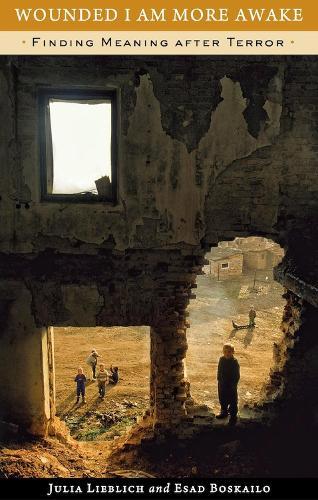
Full Product Details
Author: Julia Lieblich ,
Esad Boskailo ,
Julia Lieblich
Publisher: Vanderbilt University Press
Imprint: Vanderbilt University Press
Dimensions:
Width: 13.90cm
, Height: 1.70cm
, Length: 21.80cm
Weight: 0.456kg
ISBN: 9780826518255
ISBN 10: 0826518257
Pages: 192
Publication Date: 24 April 2012
Audience:
General/trade
,
General
Format: Hardback
Publisher's Status: Active
Availability: Available To Order

We have confirmation that this item is in stock with the supplier. It will be ordered in for you and dispatched immediately.
Reviews
I have just turned the last page. I feel drained, enraged, despairing for humanity--but also enriched, confirmed, and, in a way, elated. This unlikely couple, a journalist who wrote the story and a psychiatrist who lived the story, have accomplished something that is remarkable and necessary. They relived and recorded one man's survival of genocide in a narrative that conveys such well-chosen detail that you smell the stench and sweat of bodies in a concentration camp, but you have just enough air to breathe and distance to carry you through the darkness. <p> We must acknowledge the extremes of human evil, and face the history of collective atrocity. We must understand the impact of cruelty and loss on those who escape and endure. And the only way to learn the hardest lessons of inhumanity is for the tale to be told so well that we permit ourselves to take it in, to appreciate the dignity of those who have been deliberately debased, but who act in small, decent ways. They share bread. They restrain anger that could damage a fellow prisoner. They testify and risk the reprisal of others and, even worse, the reprisal of unforgiving memory. This is my world, the world of those who witness trauma and terror and loss. These are my people, the victims who prevail, the therapists who listen, the journalists who witness, perceive, and relate.<p> Read this book. It will take you where you would rather not go, but you will be better for going there. <br>--Frank Ochberg, MD, founder of the Dart Center for Journalism and Trauma
I have just turned the last page. I feel drained, enraged, despairing for humanity--but also enriched, confirmed, and, in a way, elated. This unlikely couple, a journalist who wrote the story and a psychiatrist who lived the story, have accomplished something that is remarkable and necessary. They relived and recorded one man's survival of genocide in a narrative that conveys such well-chosen detail that you smell the stench and sweat of bodies in a concentration camp, but you have just enough air to breathe and distance to carry you through the darkness. <p> We must acknowledge the extremes of human evil, and face the history of collective atrocity. We must understand the impact of cruelty and loss on those who escape and endure. And the only way to learn the hardest lessons of inhumanity is for the tale to be told so well that we permit ourselves to take it in, to appreciate the dignity of those who have been deliberately debased, but who act in small, decent ways. They share bread.
-I have just turned the last page. I feel drained, enraged, despairing for humanity--but also enriched, confirmed, and, in a way, elated. This unlikely couple, a journalist who wrote the story and a psychiatrist who lived the story, have accomplished something that is remarkable and necessary. They relived and recorded one man's survival of genocide in a narrative that conveys such well-chosen detail that you smell the stench and sweat of bodies in a concentration camp, but you have just enough air to breathe and distance to carry you through the darkness. -We must acknowledge the extremes of human evil, and face the history of collective atrocity. We must understand the impact of cruelty and loss on those who escape and endure. And the only way to learn the hardest lessons of inhumanity is for the tale to be told so well that we permit ourselves to take it in, to appreciate the dignity of those who have been deliberately debased, but who act in small, decent ways. They share bread. They restrain anger that could damage a fellow prisoner. They testify and risk the reprisal of others and, even worse, the reprisal of unforgiving memory. This is my world, the world of those who witness trauma and terror and loss. These are my people, the victims who prevail, the therapists who listen, the journalists who witness, perceive, and relate.-Read this book. It will take you where you would rather not go, but you will be better for going there.---Frank Ochberg, MD, founder of the Dart Center for Journalism and Trauma
Author Information
Esad Boskailo is a Clinical Associate Professor in the Department of Psychiatry at the University of Arizona College of Medicine - Phoenix and Associate Director of Psychiatric Residency Training at the Maricopa Integrated Health System. Trained in family medicine in Bosnia, he works with survivors of trauma from domestic abuse to war. Julia Lieblich is an award-winning human rights journalist whose work has appeared in the New York Times Magazine, the Washington Post, Time, Life, and Ms. A former religion writer for the Chicago Tribune and the Associated Press, she is an assistant professor of journalism at Loyola University Chicago.