Overview
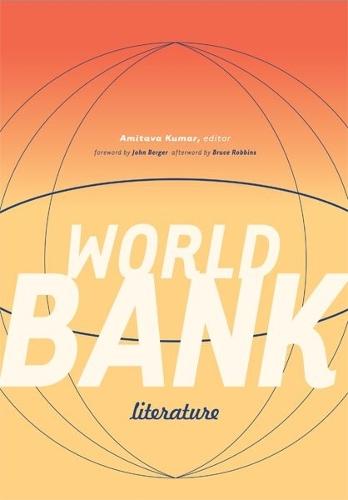
A trailblazing interrogation of the cultural, political, and economic implications of World Bank hegemony. World Bank literature is more than a concept-it is a provocation, a call to arms. It is intended to prompt questions about each word, to probe globalization, political economy, and the role of literary and cultural studies. As asserted in this major work, it signals a radical rewriting of academic debates, a rigorous analysis of the World Bank and the International Monetary Fund (IMF), and a consideration of literature that deals with new global realities. Made more relevant than ever by momentous antiglobalization demonstrations in Seattle and Genoa, World Bank Literature brings together essays by a distinguished group of economists, cultural and literary critics, social scientists, and public policy analysts to ask how to understand the influence of the World Bank/IMF on global economic power relations and cultural production. The authors attack this question in myriad ways, examining World Bank/IMF documents as literature, their impact on developing nations, the relationship between literature and globalization, the connection between the academy and the global economy, and the emergence of coalitions confronting the new power. World Bank Literature shows, above all, the multifarious and sometimes nefarious ways that abstract academic debates play themselves out concretely in social policy and cultural mores that reinforce traditional power structures. Contributors: Anthony C. Alessandrini, Kent State U; Bret Benjamin, SUNY, Albany; John Berger; Suzanne Bergeron, U of Michigan, Dearborn; Lorrayne Carroll, U of Southern Maine; Manthia Diawara, NYU; Grant Farred, Duke; Barbara Foley, Rutgers; Claire F. Fox, U of Iowa; Rosemary Hennessy, SUNY, Albany; Doug Henwood, Left Business Observer; Caren Irr, Brandeis; Joseph Medley, U of Southern Maine; Cary Nelson, U of Illinois; Gautam Premnath, U of Massachusetts, Boston; Bruce Robbins, Columbia; Andrew Ross, NYU; Subir Sinha, U of London; Kenneth Surin, Duke; Rashmi Varma, U of North Carolina; Evan Watkins, U of California, Davis; Phillip E. Wegner, U of Florida; Richard Wolff, U of Massachusetts.
Full Product Details
Author: Amitava Kumar ,
John Berger
Publisher: University of Minnesota Press
Imprint: University of Minnesota Press
Dimensions:
Width: 17.80cm
, Height: 1.80cm
, Length: 25.40cm
Weight: 0.610kg
ISBN: 9780816638376
ISBN 10: 0816638373
Pages: 344
Publication Date: 16 December 2002
Audience:
College/higher education
,
Professional and scholarly
,
Undergraduate
,
Postgraduate, Research & Scholarly
Format: Paperback
Publisher's Status: Active
Availability: Temporarily unavailable

The supplier advises that this item is temporarily unavailable. It will be ordered for you and placed on backorder. Once it does come back in stock, we will ship it out to you.
Author Information
Amitava Kumar is associate professor of English and cultural studies at Penn State University. He is the author of Passport Photos (2000). John Berger is author of the Booker Prizewinning novel G. Among his renowned studies of art and photography are Ways of Seeing and Another Way of Telling. Bruce Robbins is professor of English and comparative literature at Columbia University. He is the author of Feeling Global: Internationalism in Distress.