Overview
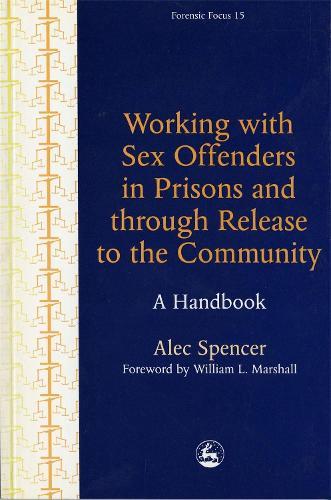
This work is the first study of its kind to look at a wide range of issues and problems relating to the management of sexual offenders in prisons. As Spencer points out, treatment for sexual offenders cannot simply be slotted into the present prison system. His analysis of the delivery of prison based offence-specific programmes within the broader context of criminal justice systems and the community provides valuable insight into the relationship between prisons and other agencies dealing with sex offenders. Spencer also examines issues such as the links between victims and offenders, sex offenders in special hospitals, women as sex abusers, the use of pornography and sexual offender notification. In this book, Spencer makes a strong case for implementing treatment for sexual offenders within prisons, as well as the need for treatment and supervision in the community once the offenders have been released. His multi-agency approach is an innovative and cohesive strategy for effective interventions/ treatment and highlights major issues which need to be addressed so that programmes stand a chance of succeeding in a penal setting.
Full Product Details
Author: Alec Spencer ,
Bill Marshall
Publisher: Jessica Kingsley Publishers
Imprint: Jessica Kingsley Publishers
Volume: No. 15
Dimensions:
Width: 15.20cm
, Height: 1.40cm
, Length: 22.80cm
Weight: 0.380kg
ISBN: 9781853027673
ISBN 10: 1853027677
Pages: 256
Publication Date: 01 June 1999
Audience:
College/higher education
,
Professional and scholarly
,
Undergraduate
,
Postgraduate, Research & Scholarly
Format: Paperback
Publisher's Status: Active
Availability: Out of stock

The supplier is temporarily out of stock of this item. It will be ordered for you on backorder and shipped when it becomes available.
Reviews
This is an important book...[it] correctly sticks to the actual structure of the sex offender programme in Edinburgh. It tackles some tricky issues, but, mercifully, in an indirect manner...I would commend it wholeheartedly as a serious work in an area that is poorly covered -- Therapeutic Communities This book is essential reading for those working in prisons where sexual offenders are being treated or where there are plans to implement treatment programmes. It is an invaluble source of information not only for a variety of staff ranging for senior prison staff to programme facilitators and on line officers, but also for students and proffessionals working in related areas. It aims to look at a wide range of of issues and problems relating to the management of sexual offenders in prisons and their reintigration into the community. A variety of important discussions are considered in this book, including definitions of sexual offending, motivations to offend sexually, women as sex abusers, mentally disordered offenders, the use of pornography,notification of information on sex offenders and the link between victims and offenders. It is refreshing to read a book that delivers more than it promises. It is also unusual to find a text that focuses on the necessary operational and human resource requirements and considerations for quality treatment delivery. The author is to be commended for addressing many of these difficult issues. Spencer has gathered rich observations, interesting experiences and makes recommendations that are a smooth blend of pragmatism and principle. The author is considerate toward the reader, summarising the key points throughout each chapter. Useful case studies from the intervention programme are included in an appendix and the author provides an original flavour by including a prisoner account of treatment. The text is well structured and easily readable. The author has succeeded in presenting a careful, forthright analysis, couched in facts rather that verbal flatulence that represents a welcome shift away from criminological sex offender myopia. This is not just a useful supplement to existing texts but also an invaluable addition to the ongoing debate surrounding the treatment of sexual offenders. -- The British Journal of Forensic Practice Spencer's analysis of the delivery of prison-based offence-specific programmes, both within the broader context of criminal justice systems and the community provides insight into the relationship between prisons and other agencies dealing with sex offenders. -- New Life
This is an important book...[it] correctly sticks to the actual structure of the sex offender programme in Edinburgh. It tackles some tricky issues, but, mercifully, in an indirect manner...I would commend it wholeheartedly as a serious work in an area that is poorly covered -- Therapeutic Communities This book is essential reading for those working in prisons where sexual offenders are being treated or where there are plans to implement treatment programmes. It is an invaluable source of information not only for a variety of staff ranging for senior prison staff to programme facilitators and on line officers, but also for students and professionals working in related areas. It aims to look at a wide range of of issues and problems relating to the management of sexual offenders in prisons and their reintegration into the community.A variety of important discussions are considered in this book, including definitions of sexual offending, motivations to offend sexually, women as sex abusers, mentally disordered offenders, the use of pornography,notification of information on sex offenders and the link between victims and offenders.It is refreshing to read a book that delivers more than it promises. It is also unusual to find a text that focuses on the necessary operational and human resource requirements and considerations for quality treatment delivery. The author is to be commended for addressing many of these difficult issues. Spencer has gathered rich observations, interesting experiences and makes recommendations that are a smooth blend of pragmatism and principle. The author is considerate toward the reader, summarising the key points throughout each chapter. Useful case studies from the intervention programme are included in an appendix and the author provides an original flavour by including a prisoner account of treatment. The text is well structured and easily readable. The author has succeeded in presenting a careful, forthright analysis, couched in facts rather that verbal flatulence that represents a welcome shift away from criminological sex offender myopia. This is not just a useful supplement to existing texts but also an invaluable addition to the ongoing debate surrounding the treatment of sexual offenders. * The British Journal of Forensic Practice * Spencer's analysis of the delivery of prison-based offence-specific programmes, both within the broader context of criminal justice systems and the community provides insight into the relationship between prisons and other agencies dealing with sex offenders. -- New Life
Author Information
Alec Spencer is currently Governor of HM Prison Edinburgh and he is on the SPS Accreditation Panel. He is also a member of NOTA (UK) and ATSA (USA). He lectures at Edinburgh University, where he is a Research Asssociate of the Centre for Law and Society, and runs workshops and training events for those working with sex offenders in prisons.