Overview
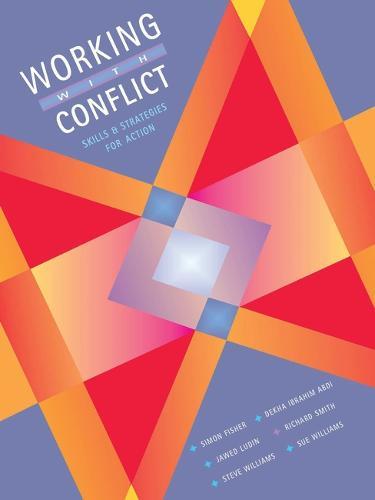
This source book provides a range of practical tools -processes, yeas, techniques - for tackling conflict, developed by the organisation, Responding to Conflict (RTC). It covers: understanding conflict - and down to earth techniques for conflict analysis; building effective strategies to address conflict can influence policy; direct intervention in situations to acute conflict, its emergence and consequences; and the skills, evaluation and learning needs to improve future interventions. The book reflects the diverse experience of over 300 practitioners from some 70 countries and draws on examples from around the world - including Cambodia, Afghanistan, South Africa, Kenya, Northern Ireland and Colombia. the book highlights the options available to individuals and organisations, equips them with a basis on which they can plan what responses are possible, and strengthens their capacity to engage in useful interventions.
Full Product Details
Author: Simon Fisher ,
Jawed Ludin ,
Richard Smith ,
Sue Williams
Publisher: Bloomsbury Publishing PLC
Imprint: Zed Books Ltd
Dimensions:
Width: 21.00cm
, Height: 21.00cm
, Length: 28.00cm
Weight: 0.544kg
ISBN: 9781856498371
ISBN 10: 1856498379
Pages: 208
Publication Date: 01 August 2000
Audience:
College/higher education
,
Professional and scholarly
,
Tertiary & Higher Education
,
Professional & Vocational
Replaced By: 9781913441388
Format: Paperback
Publisher's Status: Active
Availability: Awaiting stock

The supplier is currently out of stock of this item. It will be ordered for you and placed on backorder. Once it does come back in stock, we will ship it out for you.
Reviews
'Until now, it has been impossible to find a book that synthesized current approaches to understanding and dealing with conflict. Working With Conflict has undertaken this monumental task - and has produced a book that will be extraordinarily useful for both practitioners and policy makers alike. Developed in tandem with people who are working at the heart of many conflicts around the world, and displaying much of the wisdom gleaned from their practice, the book provides a unique resource. An invaluable and timely reference book for all those working in the field of conflict.' Mari Fitzduff, Director of INCORE (the Initiative on Conflict Resolution and Ethnicity in Northern Ireland)
'Until now, it has been impossible to find a book that synthesized current approaches to understanding and dealing with conflict. Working With Conflict has undertaken this monumental task - and has produced a book that will be extraordinarily useful for both practitioners and policy makers alike. Developed in tandem with people who are working at the heart of many conflicts around the world, and displaying much of the wisdom gleaned from their practice, the book provides a unique resource. An invaluable and timely reference book for all those working in the field of conflict' - Professor Mari Fitzduff, Director, INCORE (the Initiative on Conflict Resolution and Ethnicity in Northern Ireland)
Author Information
Simon Fisher is the director of Responding to Conflict based in Birmingham, England.