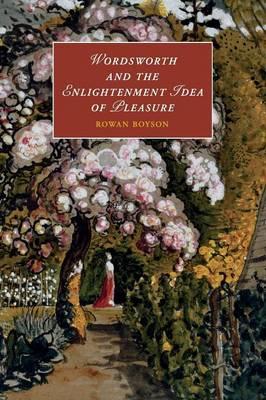
Full Product Details
Author: Rowan Boyson (King's College, Cambridge)
Publisher: Cambridge University Press
Imprint: Cambridge University Press
Volume: 95
Dimensions:
Width: 15.20cm
, Height: 1.80cm
, Length: 22.90cm
Weight: 0.350kg
ISBN: 9781107566415
ISBN 10: 110756641
Pages: 256
Publication Date: 01 October 2015
Audience:
Professional and scholarly
,
College/higher education
,
Professional & Vocational
,
Tertiary & Higher Education
Format: Paperback
Publisher's Status: Active
Availability: Manufactured on demand

We will order this item for you from a manufactured on demand supplier.
Reviews
'... persuasively argues that theories of pleasure in the eighteenth century have been mischaracterized as conservative, normative, and stultifying ... A timely study of an important concept that offers a much needed account of the strange and heretofore somewhat baffling insistence in Wordsworth's work on the importance of pleasure.' European Romantic Review 'This study brilliantly examines the modern misreading of Enlightenment pleasure, reframing it as as communal, collective and joyous (rather than private, solipsistic and disinterested). Boyson excels at engaging the reader with an argument that is at once historical, political and philosophical, but that skillfully holds on to the literary and aesthetic ... There is no doubt that Wordsworth and the Enlightenment Idea of Pleasure offers a significant argument that I hope will both influence Wordsworth studies and open up the positive experiences his poetry offers for further critical attention. The study might even be considered as part of the 'eudaimonic turn' that currently seeks to rescue joy, ecstasy, wonder and happiness from those critics who dismiss it as ideology or neurosis in their weary roles as the defenders of literary criticism's negativity bias.' Emma Mason, BARS Bulletin and Review '... challenging, capacious [and] conceptually rich ... at once a critique and an astute extension of Wordsworth's philosophical and aesthetic commitments.' Michael Pickard, Studies in Romanticism ... persuasively argues that theories of pleasure in the eighteenth century have been mischaracterized as conservative, normative, and stultifying ... A timely study of an important concept that offers a much needed account of the strange and heretofore somewhat baffling insistence in Wordsworth's work on the importance of pleasure. European Romantic Review This study brilliantly examines the modern misreading of Enlightenment pleasure, reframing it as as communal, collective and joyous (rather than private, solipsistic and disinterested). Boyson excels at engaging the reader with an argument that is at once historical, political and philosophical, but that skillfully holds on to the literary and aesthetic ... There is no doubt that Wordsworth and the Enlightenment Idea of Pleasure offers a significant argument that I hope will both influence Wordsworth studies and open up the positive experiences his poetry offers for further critical attention. The study might even be considered as part of the 'eudaimonic turn' that currently seeks to rescue joy, ecstasy, wonder and happiness from those critics who dismiss it as ideology or neurosis in their weary roles as the defenders of literary criticism's negativity bias. Emma Mason, BARS Bulletin and Review ... challenging, capacious [and] conceptually rich ... at once a critique and an astute extension of Wordsworth's philosophical and aesthetic commitments. Michael Pickard, Studies in Romanticism
'... persuasively argues that theories of pleasure in the eighteenth century have been mischaracterized as conservative, normative, and stultifying ... A timely study of an important concept that offers a much needed account of the strange and heretofore somewhat baffling insistence in Wordsworth's work on the importance of pleasure.' European Romantic Review 'This study brilliantly examines the modern misreading of Enlightenment pleasure, reframing it as as communal, collective and joyous (rather than private, solipsistic and disinterested). Boyson excels at engaging the reader with an argument that is at once historical, political and philosophical, but that skillfully holds on to the literary and aesthetic ... There is no doubt that Wordsworth and the Enlightenment Idea of Pleasure offers a significant argument that I hope will both influence Wordsworth studies and open up the positive experiences his poetry offers for further critical attention. The study might even be considered as part of the 'eudaimonic turn' that currently seeks to rescue joy, ecstasy, wonder and happiness from those critics who dismiss it as ideology or neurosis in their weary roles as the defenders of literary criticism's negativity bias.' Emma Mason, BARS Bulletin and Review
Author Information
Rowan Boyson is a Research Fellow at King's College, Cambridge. She has published review-essays in New Formations and Literature Compass and is a member of the British Association of Romantic Studies.