Overview
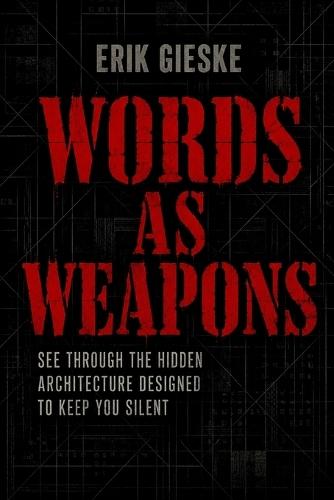
You already know something is wrong. You felt it the last time a bureaucrat told you ""a determination has been made"" - without saying who made it. You felt it when your boss announced ""it has been decided"" - without naming the decision-maker. You felt it when a partner said ""you should have known"" - and somehow, you apologized. That feeling has a name. And this book gives it to you. Words as Weapons is the book that strips the machinery bare. Not theory. Not academic abstraction. A forensic dismantling of the six linguistic control mechanisms that run through every institution, every relationship, every news broadcast, every corporate email, every government form you have ever held in your hands - exposing them, naming them, and handing you the tools to dismantle them in real time. You have been living inside a hidden architecture. This book teaches you to see the walls. The Six Patterns are everywhere once you know their names: Passivization - ""Mistakes were made."" By whom? The agent vanishes. The accountability evaporates. You are left holding a consequence with no one to challenge. Normalization - ""That's just how things work."" Says who? Arbitrary power dressed as inevitability. The cage presented as the natural order. Responsibility Shift - ""You should have known."" The oldest manipulation in the human repertoire. The moment you apologize, they win. Deadline as Pressure - ""We need your answer by end of day."" Your prefrontal cortex goes offline. Your amygdala takes the wheel. The decision gets made before you can think. Euphemism as Concealment - ""We're streamlining operations."" Three thousand people lost their jobs. But the sentence is clean. The sentence is comfortable. The sentence protects no one but the speaker. Silence as Statement - The unanswered email. The postponed meeting. The non-response designed to make you doubt yourself, shrink yourself, question whether you were worth responding to at all. Once you see them, you cannot unsee them. That is not a metaphor. It is a neurological fact. The moment a pattern is named, the prefrontal cortex - the seat of rational agency - reclaims the ground that urgency, shame, and institutional authority had quietly occupied. You do not need to fight. You need to see. And then you need to speak. Words as Weapons moves through five stages that mirror the journey every reader takes: From victimhood - sensing that something is wrong, but lacking the language to name it. Through awareness - the moment the fog lifts and every passive construction, every euphemism, every manufactured deadline becomes visible for what it is. To mastery - where the counter-strategies are so internalized they emerge automatically, where your language signals precision rather than submission, where you have completed the Voice Reclamation Protocol and rebuilt your vocabulary from the ground up. This is not a book about communication skills. It is a book about power. About who holds it, how it is maintained, and what happens when you stop participating in the fiction that the words being used against you are neutral. The words were not neutral. They were never neutral. They were engineered - in bureaucracies, in boardrooms, in relationships, in newsrooms, in the algorithmic systems that construct your digital reality - to keep you in exactly the place you are in right now. This book is the exit. Words as Weapons - See through the hidden architecture designed to keep you silent.
Full Product Details
Author: Erik Gieske
Publisher: Independently Published
Imprint: Independently Published
Dimensions:
Width: 15.20cm
, Height: 2.40cm
, Length: 22.90cm
Weight: 0.612kg
ISBN: 9798196116377
Pages: 462
Publication Date: 08 May 2026
Audience:
General/trade
,
General
Format: Paperback
Publisher's Status: Active
Availability: Available To Order

We have confirmation that this item is in stock with the supplier. It will be ordered in for you and dispatched immediately.