|
|
|||
|
||||
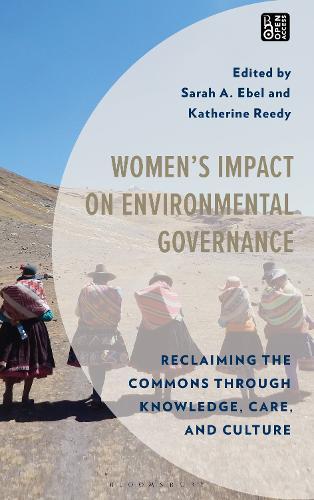
OverviewThis open access book assembles geographically diverse analyses of case studies from around the world to demonstrate how women interact with global drivers of change to create new governance structures, subvert existing governance structures, or adapt their informal structures to reclaim their commons. Drawing upon case studies from Bangladesh, Peru, the United States, Tanzania and Kenya, and Chile, the book’s authors address the question: How do women reclaim their culture and resources from the impacts of global change by enacting processes of formal and informal governance? The authors argue that women are essential actors in processes of both environmental and economic governance. Yet, their labor often goes unrecognized as power dynamics between and across genders shape access, control, and care of a resource or property and both state-level policymaking and international development frequently reinforce women’s marginalization. However, women’s work underpins economic, environmental, and community sustainability and they persist to overcome, subvert, or circumnavigate forms of enclosure in the commons. As both an ode to women’s work and a call to policymakers and development agencies to recognize women's labor, this book illustrates how women draw upon knowledge, care, and culture to improve social, economic, and ecological well-being. The ebook editions of this book are available open access under a standard CC BY-NC-ND 4.0 licence on bloomsburycollections.com. Open access was funded by Bloomsbury Open Collections Library Collective Full Product DetailsAuthor: Katherine L. Reedy , Sarah A. EbelPublisher: Bloomsbury Publishing Plc Imprint: Rowman & Littlefield ISBN: 9781666980097ISBN 10: 1666980099 Pages: 168 Publication Date: 28 May 2026 Audience: Professional and scholarly , College/higher education , Professional & Vocational , Postgraduate, Research & Scholarly Format: Hardback Publisher's Status: Forthcoming Availability: Manufactured on demand Table of ContentsList of Figures Prologue Sarah A. Ebel Chapter 1. Gender Inequalities at the Nexus of Markets, Livelihoods, and Institutions in the Sundarbans Mangrove Mohammed Abdul Baten and Christine M. Beitl Chapter 2. Keeping the Commons: Quechua Women’s Collaborative Networks in Peruvian Pastoralism Allison Caine Chapter 3. The Costs of Living in Area M: Enclosure, Indigeneity, and Women’s Work in Aleut/Unangax^ Communities Katherine Reedy Chapter 4. A Collaborative Approach to Conceptualizing Care Labour in Agroecology: Case Studies from Women’s Rights and Agroecology Organizations in Kenya, Tanzania, and Ethiopia Through the Rural Women Cultivating Change Project (RWCC) Sheila Rao, Doris Munyingi, Anna Mwara, Julia Kamau, Martha Nemera, and Lauren Brander Chapter 5. No nos falta nada: How Women Reclaim the Commons through Environmental and Economic Governance in Southern Chile Jillian Everly, Sarah Ebel, and Gonzalo Saavedra Gallo References Index About the ContributorsReviewsThis book will be an important addition in the environmental studies and women studies field. This book is a timely piece piece of scholarship as it discusses women's impact on environmental issues. Author InformationSarah A. Ebel is Assistant Professor in the School of Marine and Environmental Programs at the University of New England. Katherine Reedy is Professor of Anthropology and Chair of the Anthropology and Languages Department at Idaho State University. Tab Content 6Author Website:Countries AvailableAll regions |
||||