|
|
|||
|
||||
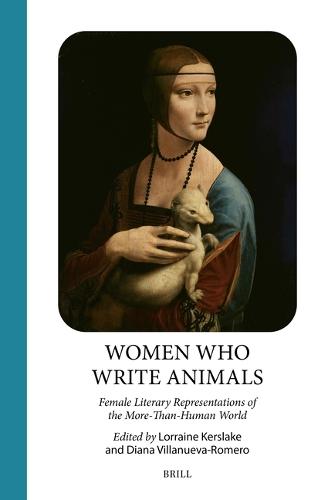
OverviewWhy have so many women turned to animals in their writing—and what does that reveal about our shared world? Women Who Write Animals: Female Literary Representations of the More-Than-Human World brings to light the rich and often overlooked legacy of Anglophone women writers who, from the late eighteenth century to the present, have engaged powerfully and provocatively with animal life. From activists and scientists to poets and novelists, these authors have reshaped how we imagine animals—and, in turn, ourselves. Drawing on ecofeminism, animal studies, and posthumanist thought, the essays gathered here explore intimate interspecies bonds, political resistance, ethical entanglements, and alternative ways of knowing and inhabiting the world. Combining original archival research with innovative critical approaches, this collection reclaims women’s central role in rethinking nature and challenges readers to envision a more compassionate, relational, and interconnected planet. Full Product DetailsAuthor: Lorraine Kerslake , Maria Diana Villanueva-RomeroPublisher: Brill Imprint: Brill Volume: 21 ISBN: 9789004754577ISBN 10: 9004754571 Pages: 375 Publication Date: 16 April 2026 Audience: College/higher education , Postgraduate, Research & Scholarly Format: Hardback Publisher's Status: Forthcoming Availability: Not yet available This item is yet to be released. You can pre-order this item and we will dispatch it to you upon its release. Table of ContentsReviewsAuthor InformationLorraine Kerslake (PhD.) is Senior Lecturer in English at the University of Alicante, Spain and a member of the Research Institute for Gender Studies. Her research covers ecocriticism, ecofeminism, children's literature and posthumanism. Her publications include The Voice of Nature in Ted Hughes’s Writing for Children (Routledge, 2018) and co-editor of Imaginative Ecologies (Brill, 2022). Diana Villanueva-Romero (PhD.) is Senior Lecture at the University of Extremadura, Spain. She is a member of the research groups GIECO (UAH) and CILEM (UEx) and of the Institute for Linguistics and Applied Languages (LINGLAP, UEx). In 2022 she co-edited Imaginative Ecologies (Brill, 2022). Tab Content 6Author Website:Countries AvailableAll regions |
||||