Overview
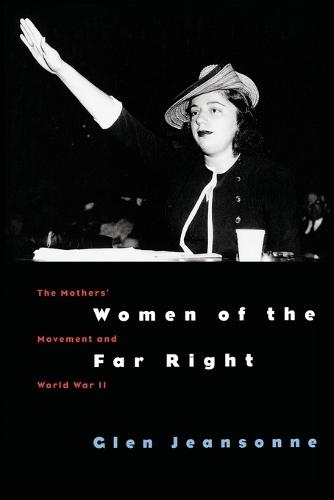
The majority of American women supported the Allied cause during World War II. and made sacrifices on the home front to benefit the war effort. But U.S. intervention was opposed by a movement led by ultraright women whose professed desire to keep their sons out of combat was mixed with militant Christianity, anticommunism, and anti-Semitism. This book is the first history of the self-styled ""mothers' movement,"" so called because among its component groups were the National Legion of Mothers of America, the Mothers of Sons Forum, and the National Blue Star Mothers. Unlike leftist antiwar movements, the mothers' movement was not pacifist; its members opposed the war on Germany because they regarded Hitler as an ally against the spread of atheistic communism. They also differed from leftist women in their endorsement of patriarchy and nationalism. God, they believed, wanted them to fight the New Deal liberalism that imperiled their values and the internationalists, communists, and Jews, whom they saw as subjugating Christian America. Jeansonne examines the motivations of these women, the political and social impact of their movement, and their collaborations with men of the far right and also with mainstream isolationists such as Charles Lindbergh. Drawing on files kept by the FBI and other confidential documents, this book sheds light on the history of the war era and on women's place within the far right.
Full Product Details
Author: Glen Jeansonne
Publisher: The University of Chicago Press
Imprint: University of Chicago Press
Edition: New edition
Dimensions:
Width: 1.50cm
, Height: 0.20cm
, Length: 2.30cm
Weight: 0.397kg
ISBN: 9780226395890
ISBN 10: 0226395898
Pages: 284
Publication Date: 09 June 1997
Audience:
College/higher education
,
Professional and scholarly
,
Undergraduate
,
Postgraduate, Research & Scholarly
Format: Paperback
Publisher's Status: Active
Availability: Manufactured on demand

We will order this item for you from a manufactured on demand supplier.
Reviews
A fascinating and frightening account of a little-discussed episode in American history. The mothers' movement, as its members referred to it, was a grassroots movement of women opposed to American involvement in WW II. Most of the women who joined had draft-age sons or husbands. They were also predominantly white, Christian, politically conservative, and opposed to the New Deal. But the shocking truth about these mothers, which Jeansonne (History/Univ. of Wisconsin, Milwaukee; Gerald L.K. Smith, 1988, etc.) reveals here, was far less benign than it would seem on the surface. The movement was not merely isolationist, it was also racist, anti-Semitic, xenophobic, and anticommunist. Many of the women involved were even avowedly pro-Nazi, using the movement as a way to spread Nazi propaganda. Jeansonne discusses these women, especially the movement's leaders, and through them analyzes prejudice in general, concluding that extreme bigotry is mostly the result of anxiety and social stress, which produce the need for a scapegoat. But what stands out are Jeansonne's portraits of leaders such as Elizabeth Dilling, Cathrine Curtis, and others. These women were as far from the ideal of motherhood they touted as Hitler was from the Aryan one: Dilling's 25-year marriage was a complete disaster, although she claimed to have had a happy home until organized Jewry sent a bleached gold digger to seduce her husband; Bessie Burchett was nicknamed Two Gun because of the permits she held to carry two guns, one in a holster under her skirt. Working with limited source material and unwilling informants - relatives of the women involved were often unaware or ashamed of their participation in the mothers' movement - Jeansonne still manages to assemble a surprisingly full and informative book. A small gem - compelling and wonderfully written. (Kirkus Reviews)