Overview
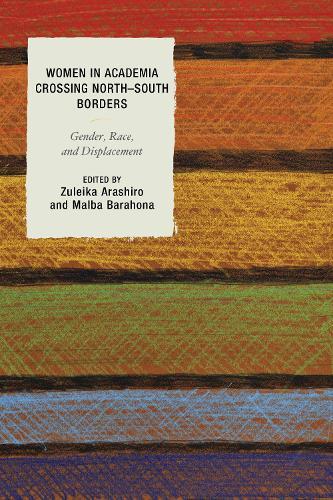
Drawing broadly on decolonial studies, postcolonial feminist scholarship, and studies on identity, this interdisciplinary edited volume brings together personal accounts written by female scholars who migrated from Latin America and joined universities in the Global North (Australia, the United States, and the Netherlands), and female scholars who moved from the Global North to teach in Latin American universities. The seven contributors examine how their lived experiences with gender, race, and place/displacement have impactedtheir social identities and on their roles as researchers and teachers. They describe how personal and intellectual negotiations in their new location have influenced their fight for plural forms of knowing and being. This book expands the debate on geopolitics of knowledge and the position of female scholars from the Global South beyond the United States as a site of experiences.
Full Product Details
Author: Zuleika Arashiro ,
Malba Barahona ,
Zuleika Arashiro ,
Malba Barahona
Publisher: Bloomsbury Publishing Plc
Imprint: Lexington Books
Dimensions:
Width: 15.40cm
, Height: 1.40cm
, Length: 22.10cm
Weight: 0.277kg
ISBN: 9781498517713
ISBN 10: 1498517714
Pages: 192
Publication Date: 23 May 2019
Audience:
Professional and scholarly
,
Professional & Vocational
Format: Paperback
Publisher's Status: Active
Availability: Manufactured on demand

We will order this item for you from a manufactured on demand supplier.
Reviews
Exceptional historic times demand knowledge and knowers that go beyond the trivial and push the canon toward visibility of marginality as well as show the way to epistemic resistance and justice. Women in Academia Crossing North-South Borders embodies this push.... One of the main advantages of Women in Academia is that it is a product of vibrant, collective solidarity.... Legitimizing marginal women's voices, articulating shifting knowledge patterns and identities, and showing the epistemological alternative of protest are important contributions of Women in Academia. They make the book very contemporary and needed in view of current US and global contexts of erasure and oppression of epistemological difference and diverse identities. Deeply emotional and inspirational, the book also stands out as a rebellious manifesto against authoritarian regimes, and is a must read for anyone who is interested in epistemic and social justice. * Hypatia: A Journal of Feminist Philosophy * Women academics are increasingly migrating across international borders, but their experiences and acute sense of otherness in their destination countries have remained hidden. This volume lifts these prevalent experiences out of the shadows. The contributors' experiences vary, but the narratives-singly and collectively-will be eminently recognizable for the migrant, or globalized, academic woman, and will provide their colleagues with valuable insights into lives lived at the intersection of gender, ethnic/racial identity, and the different traditions of academic institutions in various countries. -- Marijke Breuning, University of North Texas This powerful collection of self-ethnographies deconstruct notions of scholarship and North-South identities in innovative ways that challenge the colonial nature of power that operates in academic fields such as political science and international relations. -- Arlene B. Tickner, Universidad de los Andes Women in Academia Crossing North-South Borders reflects on gender, race, and identity in a compelling and theoretically daring way. The authors share with great candor and rare academic honesty how they, as women of color born in the Global South, negotiate their identity on the borders of hegemonic academic systems. This is an exciting collection that illustrates poignantly how the authors' willingness to be vulnerable asserts their individual and communal power. An inspiring read. -- Wendy Harcourt, ISS, Erasmus University
Exceptional historic times demand knowledge and knowers that go beyond the trivial and push the canon toward visibility of marginality as well as show the way to epistemic resistance and justice. Women in Academia Crossing North-South Borders embodies this push.... One of the main advantages of Women in Academia is that it is a product of vibrant, collective solidarity.... Legitimizing marginal women's voices, articulating shifting knowledge patterns and identities, and showing the epistemological alternative of protest are important contributions of Women in Academia. They make the book very contemporary and needed in view of current US and global contexts of erasure and oppression of epistemological difference and diverse identities. Deeply emotional and inspirational, the book also stands out as a rebellious manifesto against authoritarian regimes, and is a must read for anyone who is interested in epistemic and social justice. * Hypatia: A Journal of Feminist Philosophy * Women academics are increasingly migrating across international borders, but their experiences and acute sense of otherness in their destination countries have remained hidden. This volume lifts these prevalent experiences out of the shadows. The contributors’ experiences vary, but the narratives—singly and collectively—will be eminently recognizable for the migrant, or globalized, academic woman, and will provide their colleagues with valuable insights into lives lived at the intersection of gender, ethnic/racial identity, and the different traditions of academic institutions in various countries. -- Marijke Breuning, University of North Texas This powerful collection of self-ethnographies deconstruct notions of scholarship and North–South identities in innovative ways that challenge the colonial nature of power that operates in academic fields such as political science and international relations. -- Arlene B. Tickner, Universidad de los Andes Women in Academia Crossing North–South Borders reflects on gender, race, and identity in a compelling and theoretically daring way. The authors share with great candor and rare academic honesty how they, as women of color born in the Global South, negotiate their identity on the borders of hegemonic academic systems. This is an exciting collection that illustrates poignantly how the authors’ willingness to be vulnerable asserts their individual and communal power. An inspiring read. -- Wendy Harcourt, ISS, Erasmus University
Author Information
Zuleika Arashiro is academic visitor at the Australian National Centre for Latin American Studies at the Australian National University. Malba Barahona is research fellow at Pontificia Universidad Católica de Valparaíso.