Overview
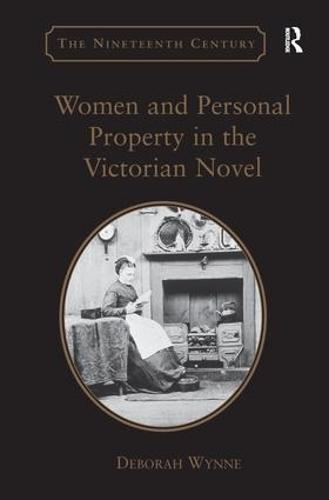
How key changes to the married women's property laws contributed to new ways of viewing women in society are revealed in Deborah Wynne's study of literary representations of women and portable property during the period 1850 to 1900. While critical explorations of Victorian women's connections to the material world have tended to focus on their relationships to commodity culture, Wynne argues that modern paradigms of consumerism cannot be applied across the board to the Victorian period. Until the passing of the 1882 Married Women's Property Act, many women lacked full property rights; evidence suggests that, for women, objects often functioned not as disposable consumer products but as cherished personal property. Focusing particularly on representations of women and material culture in Charles Dickens, George Eliot, and Henry James, Wynne shows how novelists engaged with the vexed question of women's relationships to property. Suggesting that many of the apparently insignificant items that 'clutter' the Victorian realist novel take on new meaning when viewed through the lens of women's access to material culture and the vagaries of property law, her study opens up new possibilities for interpreting female characters in Victorian fiction and reveals the complex work of 'thing culture' in literary texts.
Full Product Details
Author: Deborah Wynne
Publisher: Taylor & Francis Ltd
Imprint: Routledge
Weight: 0.360kg
ISBN: 9781138276246
ISBN 10: 1138276243
Pages: 188
Publication Date: 16 November 2016
Audience:
College/higher education
,
General/trade
,
Tertiary & Higher Education
,
General
Format: Paperback
Publisher's Status: Active
Availability: In Print

This item will be ordered in for you from one of our suppliers. Upon receipt, we will promptly dispatch it out to you. For in store availability, please contact us.
Reviews
'Deborah Wynne has written an engaging study of the relationship of women to personal property in the Victorian era and how this relationship is depicted in the novels of the time... Wynne writes very well, and her monograph is both thought-provoking and enlightening... I have no hesitation in recommending this very readable and thought-provoking book.' Dickens Quarterly 'Wynne’s book is invigorating in the way it breaks with simplistic accounts of women’s nineteenth-century dispossession.' Victorian Studies '... [Wynne’s] journey through the novels has an infectious enthusiasm which also lays the ground for the application of thing theory to other novels of the period such as those of Gaskell, Collins and Trollope.' English Studies
'Deborah Wynne has written an engaging study of the relationship of women to personal property in the Victorian era and how this relationship is depicted in the novels of the time... Wynne writes very well, and her monograph is both thought-provoking and enlightening... I have no hesitation in recommending this very readable and thought-provoking book.' Dickens Quarterly 'Wynne's book is invigorating in the way it breaks with simplistic accounts of women's nineteenth-century dispossession.' Victorian Studies '... [Wynne's] journey through the novels has an infectious enthusiasm which also lays the ground for the application of thing theory to other novels of the period such as those of Gaskell, Collins and Trollope.' English Studies
Author Information
Deborah Wynne is Professor of Nineteenth-Century Literature at the University of Chester. She is the author of The Sensation Novel and the Victorian Family Magazine.