Overview
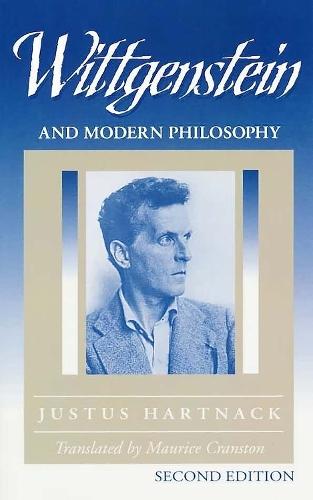
Justus Hartnack offers a concise and clear introduction to Wittgenstein and traces the influence of these works in the schools of logical positivism and analytical philosophy. A philosopher as great and at the same time as difficult as Wittgenstein has been the subject of innumerable studies, and universal agreement on how to interpret him cannot be expected. This is true of almost all great thinkers, past and present. That is why we still benefit from studies of Plato, Aristotle, Descartes, Spinoza, Kant, or Hegel, to mention just a few. New studies and scholarly works on Wittgesntein will continue to appear. [A] reliable brief orientation to his thought is, if not essential, then at least a very useful way to begin a study of his philosophy. — From the Preface to the Second Edition
Full Product Details
Author: Justus Hartnack, PhD
Publisher: University of Notre Dame Press
Imprint: University of Notre Dame Press
Edition: Second Edition
Dimensions:
Width: 12.70cm
, Height: 1.10cm
, Length: 20.30cm
ISBN: 9780268019365
ISBN 10: 0268019363
Pages: 168
Publication Date: 28 February 1986
Audience:
Professional and scholarly
,
Professional & Vocational
Format: Hardback
Publisher's Status: Active
Availability: Out of stock

The supplier is temporarily out of stock of this item. It will be ordered for you on backorder and shipped when it becomes available.
Reviews
"""[Hartnack] has managed to state the main points in the Tractatus and the Philosophical Investigations in such a simple way that his exposition may well be the best introduction for the layman or the student of philosophy."" —The Philosophical Review “Wittgenstein and Modern Philosophy describes some central problems of the Tractatus Logico-Philosophicus and the Philosophical Investigations, discusses the Tractatus’s influence on the Logical Positivists, and compares Wittgenstein’s earlier and later views. The concluding chapter summarizes some work of a few contemporary philosophers who, in Professor Hartnack’s eyes, can be viewed as carrying on ‘investigations’ that have their genesis in Wittgenstein’s later work.” —Times Literary Supplement “The greatest virtue of the exposition is its simplicity. Hartnack presents his interpretation of Wittgenstein very briefly, in clear language, and with a minimum of complexity. The result is an exposition of the philosophy of Wittgenstein simple enough to be understood by any student of philosophy and almost any layman.” —Carl Wellman, Lawrence University"
""[Hartnack] has managed to state the main points in the Tractatus and the Philosophical Investigations in such a simple way that his exposition may well be the best introduction for the layman or the student of philosophy."" —The Philosophical Review “Wittgenstein and Modern Philosophy describes some central problems of the Tractatus Logico-Philosophicus and the Philosophical Investigations, discusses the Tractatus’s influence on the Logical Positivists, and compares Wittgenstein’s earlier and later views. The concluding chapter summarizes some work of a few contemporary philosophers who, in Professor Hartnack’s eyes, can be viewed as carrying on ‘investigations’ that have their genesis in Wittgenstein’s later work.” —Times Literary Supplement “The greatest virtue of the exposition is its simplicity. Hartnack presents his interpretation of Wittgenstein very briefly, in clear language, and with a minimum of complexity. The result is an exposition of the philosophy of Wittgenstein simple enough to be understood by any student of philosophy and almost any layman.” —Carl Wellman, Lawrence University
[Hartnack] has managed to state the main points in the Tractatus and the Philosophical Investigations in such a simple way that his exposition may well be the best introduction for the layman or the student of philosophy. -The Philosophical Review Wittgenstein and Modern Philosophy describes some central problems of the Tractatus Logico-Philosophicus and the Philosophical Investigations, discusses the Tractatus's influence on the Logical Positivists, and compares Wittgenstein's earlier and later views. The concluding chapter summarizes some work of a few contemporary philosophers who, in Professor Hartnack's eyes, can be viewed as carrying on 'investigations' that have their genesis in Wittgenstein's later work. -Times Literary Supplement The greatest virtue of the exposition is its simplicity. Hartnack presents his interpretation of Wittgenstein very briefly, in clear language, and with a minimum of complexity. The result is an exposition of the philosophy of Wittgenstein simple enough to be understood by any student of philosophy and almost any layman. -Carl Wellman, Lawrence University
"""[Hartnack] has managed to state the main points in the Tractatus and the Philosophical Investigations in such a simple way that his exposition may well be the best introduction for the layman or the student of philosophy."" —The Philosophical Review “Wittgenstein and Modern Philosophy describes some central problems of the Tractatus Logico-Philosophicus and the Philosophical Investigations, discusses the Tractatus’s influence on the Logical Positivists, and compares Wittgenstein’s earlier and later views. The concluding chapter summarizes some work of a few contemporary philosophers who, in Professor Hartnack’s eyes, can be viewed as carrying on ‘investigations’ that have their genesis in Wittgenstein’s later work.” —Times Literary Supplement “The greatest virtue of the exposition is its simplicity. Hartnack presents his interpretation of Wittgenstein very briefly, in clear language, and with a minimum of complexity. The result is an exposition of the philosophy of Wittgenstein simple enough to be understood by any student of philosophy and almost any layman.” —Carl Wellman, Lawrence University"
Author Information
Justus Hartnack, the author of numerous studies in modern philosophy, is emeritus professor of philosophy at Aarhus University in Denmark and emeritus distinguished professor at the State University of New York at Brockport.