Overview
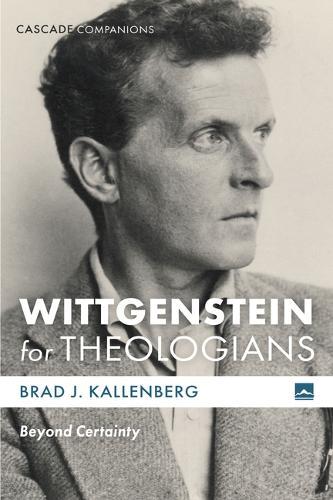
It would be an unusual fish indeed that contemplated the nature of the very water in which it lives. Ironically, human beings do not fare much better than fish: we tend not to notice the way language permeates all our life and thought. Ludwig Wittgenstein (1889-1951) was one of a handful of recent thinkers who has shown just how important the nature of language is for the doing of theology. Not only do the workings of language outrank the authority of math and science, the very regularities by which we are able to communicate are inextricably tied to the bodily nature of our existence. (Of course, the bodily dimension of human language is why God's plan for reestablishing open communication with us required the incarnation of Jesus-the-Word rather than simply emailing to us a philosophical treatise.) Moreover, this bodily nature is irreducibly social by nature, and it is in the social ""dance"" with others that the world is brought into focus for a given individual. This present volume unpacks four of Wittgenstein's central concepts--language-games, grammar, form of life, and aspect-seeing--in order to explore their importance for doing the work of theology.
Full Product Details
Author: Brad J Kallenberg
Publisher: Wipf & Stock Publishers
Imprint: Wipf & Stock Publishers
Dimensions:
Width: 12.70cm
, Height: 0.90cm
, Length: 20.30cm
Weight: 0.154kg
ISBN: 9781498206501
ISBN 10: 1498206506
Pages: 146
Publication Date: 21 November 2025
Audience:
General/trade
,
General
Format: Paperback
Publisher's Status: Active
Availability: Available To Order

We have confirmation that this item is in stock with the supplier. It will be ordered in for you and dispatched immediately.
Reviews
""Winsomely written and easily accessible, Wittgenstein for Theologians explores 'language-games, ' 'forms of life, ' 'theology as grammar, ' 'primitive reactions, ' and 'aspect-seeing' to show how knowing how to live in and live out the faith is fundamental--and knowing what the faith teaches is derivative. Kallenberg helps us Christians to understand the depth of the new in Christ."" --Terrence W. Tilley, Emeritus Professor of Theology, Fordham University, New York ""Too often, theologians and philosophers of religion have neglected the core insights of Wittgenstein's later work in the analysis of the language of faith. Kallenberg reverses that trend demonstrating the benefits of applying key concepts in Wittgenstein's later work to the aims of faith seeking understanding. This volume is a highly instructive contribution to that effort for students and theologians."" --Jeffrey G. Willetts, Founding Dean, The John Leland Center for Theological Studies, Arlington, Virginia ""Brad Kallenberg brilliantly introduces Wittgenstein and theology through a skillful breakdown of complexity into digestible parts for students, and his use of personal and illustrative examples facilitates enjoyable reading. This is a remarkable accomplishment. Highly recommended for all who are interested not only in Wittgenstein, but even more broadly philosophy and theology."" --Tim Labron, Professor of Philosophy, Concordia University of Edmonton
Author Information
Brad J. Kallenberg is Emeritus Professor of Theology at the University of Dayton in Dayton, Ohio. He is author of Ethics as Grammar (2001), Live to Tell (2002), God and Gadgets (2011), and By Design: Theology, Technology and the Practice of Engineering (2013).