Overview
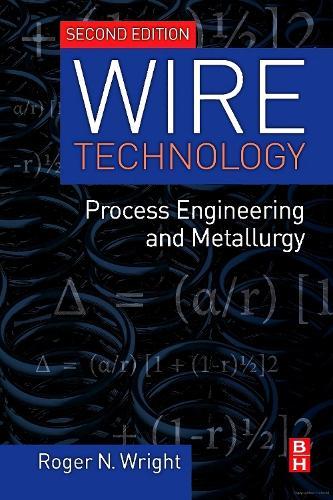
Wire drawing is a metalworking process used to reduce the diameter of a wire by pulling the wire through a single, or series of, drawing die(s). The engineering applications of wire drawing are broad and far-reaching, including electrical wiring, cables, tension-loaded structural components, springs, paper clips and spokes for wheels. This all-new, classical text is the first to explain the complex theory and sophisticated engineering concepts with relation to wire drawing in an accessible and universal way for practicing engineers. Designed to facilitate the entry and training of new engineers and upgrade the professional practice of those already in the field in the face of increased product demands and tightening specifications, this essential resource by industry expert Roger Wright provides: A technical overview and introduction of engineering concepts related to wire drawing, suitable for beginners and practiced engineers looking to brush up on the theory behind the process An interface with basic engineering education so as to provide an accessible introduction for engineers new to the field Real-world worked examples, problems and protocols based on true life engineering scenarios and challenges Unique coverage of the author's own pass design and risk prediction calculations, developed through decades of research and wire industry consulting Whilst most competing titles are less practical in their approach and focus on either ferrous, non-ferrous or electrical, our book takes a universal approach more suited to the practicing engineer who needs knowledge of wire drawing across the board. Ideal for use as a complete insight into the process from start to finish or a dip-in resource for practical problem-solving, this versatile work-a-day guide, training tool and desk reference will help readers train their staff and adapt and improve processes at minimal cost for maximum performance.
Full Product Details
Author: Roger N. Wright (Leading wire industry trainer and consultant, and Professor Emeritus, School of Engineering, Rensselaer Polytechnic Institute, Troy, NY, USA)
Publisher: Elsevier - Health Sciences Division
Imprint: Butterworth-Heinemann Inc
Dimensions:
Width: 15.20cm
, Height: 2.30cm
, Length: 22.90cm
Weight: 0.570kg
ISBN: 9780123820921
ISBN 10: 0123820928
Pages: 332
Publication Date: 03 December 2010
Audience:
Professional and scholarly
,
Professional & Vocational
Replaced By: 9780128026502
Format: Hardback
Publisher's Status: Active
Availability: In Print

This item will be ordered in for you from one of our suppliers. Upon receipt, we will promptly dispatch it out to you. For in store availability, please contact us.
Reviews
This book would be appropriate for an undergraduate or graduate course in mechanical engineering or materials science and for the working professional as a reference book. It is timely in that few well-written and comprehensive books on wire technology are available at present. --IEEE Electrical Insulation Magazine
This book would be appropriate for an undergraduate or graduate course in mechanical engineering or materials science and for the working professional as a reference book. It is timely in that few well-written and comprehensive books on wire technology are available at present. --IEEE Electrical Insulation Magazine
Author Information
Roger Wright is a leading industry trainer and consultant specializing in wire technology and professor of materials engineering at the Rensselaer Polytechnic Institute, a major US engineering school. As an active metallurgical and manufacturing consultant with 30+ years' experience working with those in the wire drawing industry, Roger has the much sought after skill of introducing sophisticated theory and concepts in an accessible and practical way to help improve the work and efficiency of engineers involved with wire.