Overview
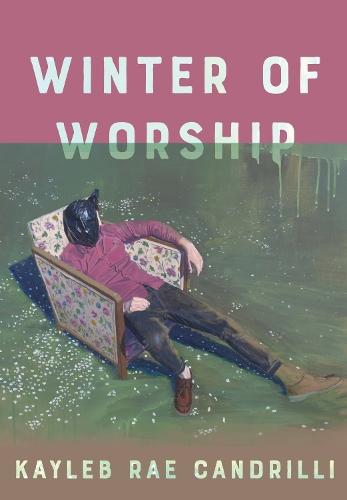
Steeped in loss-of climate and childhood, of fathers and friends-Winter of Worship finds survival in our tender human connections. Told through an ever-queer lens, Kayleb Rae Candrilli's fourth collection, Winter of Worship, is a patchwork of the pastoral and the ""litter swirled around us""-a pandemic, global warming, a hometown hit by storms of fentanyl and Oxycontin scripts. A book of elegy told in ghazals, ""Marble Runs,"" and other forms, these poems reckon with loss: of climate, of fathers, of youth. Candrilli writes, ""We are so young / to know so much about life without / our friends."" Steeped in the grief of these losses, Winter of Worship finds healing in the smallest memories: Nokia phone cases, jalapeo gardens, pop flys, 67 Dodge darts, YouTube mixes ""all electronica and / glitch step."" We also find survival in our tender human connections: an iPod tucked into the jacket pocket of a drifter, a kiss pressed to a partner's forehead, a mother calling her child by their chosen name. From the cornfields of Pennsylvania to the streets of downtown Brooklyn, these poems refuse to forget, refuse to lose ""an ounce of gentleness.""
Full Product Details
Author: Kayleb Rae Candrilli
Publisher: Copper Canyon Press,U.S.
Imprint: Copper Canyon Press,U.S.
ISBN: 9781556596933
ISBN 10: 1556596936
Pages: 96
Publication Date: 20 February 2025
Audience:
General/trade
,
General
Format: Paperback
Publisher's Status: Active
Availability: Available To Order

We have confirmation that this item is in stock with the supplier. It will be ordered in for you and dispatched immediately.
Reviews
Praise for Winter of Worship “Candrilli commits to what the title of their new collection implies as they explore the implications of time and seasons. The poems illuminate experiences that are sometimes divine, often devastating, frequently mundane, and singularly perfect. . . . These are poems constructed with a quiet power that produces a revelatory end that somehow cracks open another beginning, 'Not everyone understands my body, but still, it’s here, & believable.'”—Sara Verstynen, Booklist “Kayleb Rae Candrilli’s latest collection, Winter of Worship, is a collection steeped in grief, compulsively obsessed with time and slowing it, or reorganizing it—making it mappable in such a way that maybe, loss won’t feel so prevalent. Through crisply constructed poems including ghazals, haibuns, and the poet’s invented form, the Marble Run, Candrilli grasps at lost queer futures, knowledge, and innocence. . . . The result is a tenderly felt and beautifully written collection which remembers a lot and wants to record the details of memory before they are lost to time, but which ultimately defers to sensation—the intangible, disoriented, inaccessible aspect of memory.”—Meredith Macleod Davidson, Adroit Journal “Winter of Worship by Kayleb Rae Candrilli begins liltingly 'It’s a new year, and each oyster I open re-injures / my two-seam shoulder' and, in a later poem, begins again: 'It’s a new decade and a new pandemic is roaring / through the world.' These starts mark aliveness and newness but also the possibility of death, the hereafter, and the life in memory, as 'Ars Poetica' reads: 'When friends // die, I don’t cry until the longhand / elegy.'”—Cindy Juyoung Ok, Poetry Northwest “A simpler existence is mourned in Winter of Worship, Kayleb Rae Candrilli’s fourth collection filled with hometown memories, linguistic reenactments of youth, and queer observations of domestic moments. . . . The whole collection is an elegy of its own, traversing with a stable, vivid voice the futures, friends, and family lost to passing time.”—Turi Sioson, Only Poems “These poems, which deal with grief, environmental destruction, transphobia and more, constantly remind us that 'so much still matters.'”—Ron Charles, Washington Post “Extends the threads of community care to the landscape of Philadelphia’s downtown streets. The poems grieve: for friends lost to the opioid crisis, for youth lost to climate change and the pandemic, for queer history lost to the AIDS epidemic. Yet Candrilli sustains a current of hope underneath, finding connection in the smallest gestures of the everyday. They indulge in the healing power of recursive poetic forms, using the repetitions of ghazals and 'Marble Runs' to transform their surroundings.”—Skylar Mikus, Electric Lit “Winter of Worship strikes this delicate balance between hope and despair, and yet, here is Kayleb Rae Candrilli, 'whole and sturdy . . . committed to spring.'”—Charles Rammelkamp, The Lake Praise for Kayleb Rae Candrilli “What is innovative about Candrilli’s narrative of transness is their insistence that it does not disavow the complicated lessons of gender receive from a cis-normative society. Instead, transness subsumes them within its broader poetics of embodiment.”—Broad Street Review “Candrilli’s poems skillfully delve into—amid much else—what it means to be alive on this damaged earth. They precisely interrogate what happens when human interactions poison—or “touch”—something formerly unadulterated.”—Los Angeles Review of Books “Intentionally or unintentionally, a text responds by default to conversations of its moment, and the conversation centering trans and nonbinary communities is a high stakes one. Candrilli’s book refuses narratives that depict tragic victims for cis consumption. The book doesn’t, however, ignore wounds. In doing so, it acknowledges that ‘we can hold / just about everything inside of us, whether we want to or not.’ This book hopes to break your heart. It also hopes to show you its own: full, tender, and ‘simple, again.’”—Pleiades Magazine “The most miraculous part of Candrilli’s poetry is it nearly always arrives at an unexpected end, or at an unexpected absence of one.”—New York Journal of Books “When I read Water I Won’t Touch, I dog-eared many pages, underlined many lines. Candrilli’s poems are intimate, nimble, glinting with tenderness and an astonishing lyricism. The physicality of violence electrifies memory, a refusal to conform and the euphoria of love sweetens the future. Language this good, this deftly composed fills me with gratitude. Candrilli is a fearless and brilliant poet.”—Eduardo C. Corral
Praise for Winter of Worship “Candrilli commits to what the title of their new collection implies as they explore the implications of time and seasons. The poems illuminate experiences that are sometimes divine, often devastating, frequently mundane, and singularly perfect. . . . These are poems constructed with a quiet power that produces a revelatory end that somehow cracks open another beginning, 'Not everyone understands my body, but still, it's here, & believable.'""—Sara Verstynen, Booklist “Kayleb Rae Candrilli's latest collection, Winter of Worship, is a collection steeped in grief, compulsively obsessed with time and slowing it, or reorganizing it—making it mappable in such a way that maybe, loss won't feel so prevalent. Through crisply constructed poems including ghazals, haibuns, and the poet's invented form, the Marble Run, Candrilli grasps at lost queer futures, knowledge, and innocence. . . . The result is a tenderly felt and beautifully written collection which remembers a lot and wants to record the details of memory before they are lost to time, but which ultimately defers to sensation—the intangible, disoriented, inaccessible aspect of memory.""—Meredith Macleod Davidson, Adroit Journal “Winter of Worship by Kayleb Rae Candrilli begins liltingly 'It's a new year, and each oyster I open re-injures / my two-seam shoulder' and, in a later poem, begins again: 'It's a new decade and a new pandemic is roaring / through the world.' These starts mark aliveness and newness but also the possibility of death, the hereafter, and the life in memory, as 'Ars Poetica' reads: 'When friends // die, I don't cry until the longhand / elegy.'""—Cindy Juyoung Ok, Poetry Northwest “A simpler existence is mourned in Winter of Worship, Kayleb Rae Candrilli's fourth collection filled with hometown memories, linguistic reenactments of youth, and queer observations of domestic moments. . . . The whole collection is an elegy of its own, traversing with a stable, vivid voice the futures, friends, and family lost to passing time.""—Turi Sioson, Only Poems “These poems, which deal with grief, environmental destruction, transphobia and more, constantly remind us that 'so much still matters.'""—Ron Charles, Washington Post “Extends the threads of community care to the landscape of Philadelphia's downtown streets. The poems grieve: for friends lost to the opioid crisis, for youth lost to climate change and the pandemic, for queer history lost to the AIDS epidemic. Yet Candrilli sustains a current of hope underneath, finding connection in the smallest gestures of the everyday. They indulge in the healing power of recursive poetic forms, using the repetitions of ghazals and 'Marble Runs' to transform their surroundings.""—Skylar Mikus, Electric Lit “Winter of Worship strikes this delicate balance between hope and despair, and yet, here is Kayleb Rae Candrilli, 'whole and sturdy . . . committed to spring.'""—Charles Rammelkamp, The Lake “Rural, nostalgic, clawing.""—Karla J. Strand, Ms. Magazine Praise for Kayleb Rae Candrilli “What is innovative about Candrilli's narrative of transness is their insistence that it does not disavow the complicated lessons of gender receive from a cis-normative society. Instead, transness subsumes them within its broader poetics of embodiment.""—Broad Street Review “Candrilli's poems skillfully delve into—amid much else—what it means to be alive on this damaged earth. They precisely interrogate what happens when human interactions poison—or “touch""—something formerly unadulterated.""—Los Angeles Review of Books “Intentionally or unintentionally, a text responds by default to conversations of its moment, and the conversation centering trans and nonbinary communities is a high stakes one. Candrilli's book refuses narratives that depict tragic victims for cis consumption. The book doesn't, however, ignore wounds. In doing so, it acknowledges that 'we can hold / just about everything inside of us, whether we want to or not.' This book hopes to break your heart. It also hopes to show you its own: full, tender, and 'simple, again.'""—Pleiades Magazine “The most miraculous part of Candrilli's poetry is it nearly always arrives at an unexpected end, or at an unexpected absence of one.""—New York Journal of Books “When I read Water I Won't Touch, I dog-eared many pages, underlined many lines. Candrilli's poems are intimate, nimble, glinting with tenderness and an astonishing lyricism. The physicality of violence electrifies memory, a refusal to conform and the euphoria of love sweetens the future. Language this good, this deftly composed fills me with gratitude. Candrilli is a fearless and brilliant poet.""—Eduardo C. Corral
“What is innovative about Candrilli’s narrative of transness is their insistence that it does not disavow the complicated lessons of gender receive from a cis-normative society. Instead, transness subsumes them within its broader poetics of embodiment.” —Broad Street Review “Candrilli’s poems skillfully delve into — amid much else — what it means to be alive on this damaged earth. They precisely interrogate what happens when human interactions poison — or “touch” — something formerly unadulterated.” —Los Angeles Review of Books “Intentionally or unintentionally, a text responds by default to conversations of its moment, and the conversation centering trans and nonbinary communities is a high stakes one. Candrilli’s book refuses narratives that depict tragic victims for cis consumption. The book doesn’t, however, ignore wounds. In doing so, it acknowledges that ‘we can hold / just about everything inside of us, whether we want to or not.’ This book hopes to break your heart. It also hopes to show you its own: full, tender, and ‘simple, again.’” —Pleiades Magazine “The most miraculous part of Candrilli’s poetry is it nearly always arrives at an unexpected end, or at an unexpected absence of one.”—New York Journal of Books “When I read Water I Won’t Touch, I dog-eared many pages, underlined many lines. Candrilli’s poems are intimate, nimble, glinting with tenderness and an astonishing lyricism. The physicality of violence electrifies memory, a refusal to conform and the euphoria of love sweetens the future. Language this good, this deftly composed fills me with gratitude. Candrilli is a fearless and brilliant poet.” —Eduardo C. Corral
Author Information
Kayleb Rae Candrilli (they/them) is the author of Winter of Worship (Copper Canyon Press, 2024), Water I Won't Touch (Copper Canyon, 2021), All the Gay Saints (Saturnalia 2020), which won the Saturnalia Book Prize, and What Runs Over (YesYes Books, 2017), which was a Lambda Literary finalist for Transgender Poetry. They are the recipient of a Whiting Award and of a PEW Fellowship and a fellowship from the National Endowment for the Arts. Candrilli has served as the nonfiction editor of the Black Warrior Review and as a feature editor for NANO Fiction. They served as Assistant Poetry Editor for Boaat Press from 2017 to 2018. They grew up in rural Pennsylvania and currently live in Philadelphia with their partner.