Overview
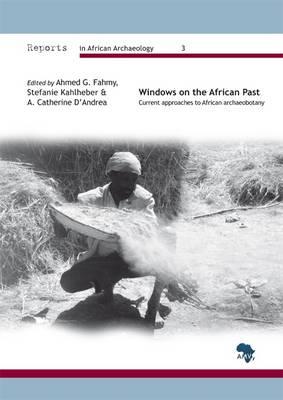
Archaeobotany has significantly increased our knowledge of the relationships between humans and plants throughout the ages. As is amply illustrated in this volume, botanical remains preserved in archaeological contexts have great potential to inform us about past environments and the various methods used by ancient peoples to exploit and cultivate plants. This volume presents the proceedings of the 6th International Workshop on African Archaeobotany (IWAA) held at Helwan University in Cairo, Egypt, on 13 - 15 June 2009. Studies presented herein clearly illustrate that African archaeobotany is a dynamic field, with many advances in techniques and important case studies presented since the first meeting of IWAA held in 1994. Authors have employed classical and new archaeobotanical techniques, in addition to linguistics and ethnoarchaeology to increase our knowledge about the role of plants in ancient African societies. This book covers a wide range of African countries including Egypt, Ethiopia, Libya, Nigeria, South Africa, and the Canary Islands. It is of interest to archaeobotanists, archaeologists, historians, linguists, agronomists, and plant ecologists.
Full Product Details
Author: Ahmed G. Fahmy ,
Stefanie Kahlheber ,
A. Catherine D'Andrea
Publisher: Africa Magna Verlag
Imprint: Africa Magna Verlag
Volume: 3
Weight: 0.530kg
ISBN: 9783937248325
ISBN 10: 3937248323
Pages: 242
Publication Date: 26 December 2011
Audience:
College/higher education
,
Postgraduate, Research & Scholarly
Format: Paperback
Publisher's Status: Active
Availability: Available To Order

We have confirmation that this item is in stock with the supplier. It will be ordered in for you and dispatched immediately.
Reviews
This book is the newest addition to a series of volumes resulting from the International Workshop for African Archaeobotany meetings held every two years since 1994 [...] Windows on the African Past [...] is an important addition to the growing corpus of knowledge on ancient African plant use. This particular volume includes a diverse array of analytical techniques and data sources that open several 'windows' on past people and plant interactions and pave the way for their future study. [...] Windows on the African Past nicely captures the diversity of approaches used in this growing field and is a must-read for anyone seriously interested the role of plants in African history. --Amanda L. Logan, University of Michigan, USA, (Azania: Archaeological Research in Africa 47 (3) 2012). In terms of the study of past human plant use and archaeological plant remains, Africa is the least studied continent. A new volume on African archaeobotany is therefore a welcome addition to a small but growing literature. [...] This volume represents an eclectic vision of archaeobotany, including chapters on phylogeography based on modern landrace genetics, historical linguistics (two chapters), ethnoarchaeology, as well as studies of phytoliths, wood charcoal and the dominant study of archaeological seed remains. --Dorian Q. Fuller, University College London, UK (Journal of African Archaeology 11 (1) 2013).
This book is the newest addition to a series of volumes resulting from the International Workshop for African Archaeobotany meetings held every two years since 1994 [...] Windows on the African Past [...] is an important addition to the growing corpus of knowledge on ancient African plant use. This particular volume includes a diverse array of analytical techniques and data sources that open several 'windows' on past people and plant interactions and pave the way for their future study. [...] Windows on the African Past nicely captures the diversity of approaches used in this growing field and is a must-read for anyone seriously interested the role of plants in African history. --Amanda L. Logan, University of Michigan, USA, (Azania: Archaeological Research in Africa 47 (3) 2012. In terms of the study of past human plant use and archaeological plant remains, Africa is the least studied continent. A new volume on African archaeobotany is therefore a welcome addition to a small but growing literature. This volume is timely and was published two years after the conference, ahead of the ill-fated publication of the previous London meeting. Edited volumes arising from conferences seem to be under increasing pressure as current academic demands push scholars to publish more in journals and publishers are increasingly worried about sales of such volumes. Nevertheless volumes such as this have an important place as markers of the progress in a discipline, in which it is essential for new researchers to get to grips with where the field has gotten to. This is certainly the case here where the 13 chapters published provide a reasonably representative cross-section of the state of play in archaeobotany of Africa. [...] This volume represents an eclectic vision of archaeobotany, including chapters on phylogeography based on modern landrace genetics, historical linguistics (two chapters), ethnoarchaeology, as well as studies of phytoliths, wood charcoal and the dominant study
Author Information
""Windows on the African Past nicely captures the diversity of approaches used in this growing field [African Archaeobotany] and is a must-read for anyone seriously interested the role of plants in African history."" Amanda L. Logan, University of Michigan, USA (Azania: Archaeological Research in Africa, vol. 47 (3), 2012).