Overview
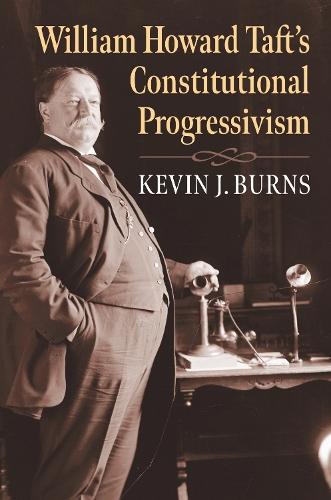
In William Howard Taft's Constitutional Progressivism Kevin J. Burns makes a compelling case that Taft's devotion to the Constitution of 1787 contributed to his progressivism. In contrast to the majority of scholarship, which has viewed Taft as a reactionary conservative because of his constitutionalism, Burns explores the ways Taft's commitment to both the Constitution and progressivism drove his political career and the decisions he made as president and chief justice. Taft saw the Constitution playing a positive role in American political life, recognizing that it created a national government strong enough to enact broad progressive reforms. In reevaluating Taft's career, Burns highlights how Taft rejected the 'laissez faire school,' which taught that 'the Government ought to do nothing but run a police force.' Recognizing that the massive industrial changes following the Civil War had created a plethora of socioeconomic ills, Taft worked to expand the national government's initiatives in the fields of trust-busting, land conservation, tariff reform, railroad regulations, and worker safety laws. Burns offers a fuller understanding of Taft and his political project by emphasizing Taft's belief that the Constitution could play a constructive role in American political life by empowering the government to act and by undergirding and protecting the reform legislation the government implemented. Moreover, Taft recognized that if the Constitution could come to the aid of progressivism, political reform might also redound to the benefit of the Constitution by showing its continued relevance and workability in modern America. Although Taft's efforts to promote significant policy-level reforms attest to his progressivism, his major contribution to American political thought is his understanding of the US Constitution as a fundamental law, not a policy-oriented document. In many ways Taft can be thought of as an originalist, yet his originalism was marked by a belief in robust national powers. Taft's constitutionalism remains relevant because while his principles seem foreign to modern legal discourse, his constitutional vision offers an alternative to contemporary political divisions by combining political progressivism-liberalism with constitutional conservatism.
Full Product Details
Author: Kevin J. Burns
Publisher: University Press of Kansas
Imprint: University Press of Kansas
Dimensions:
Width: 15.40cm
, Height: 2.00cm
, Length: 23.30cm
Weight: 0.523kg
ISBN: 9780700632114
ISBN 10: 0700632115
Pages: 248
Publication Date: 30 May 2021
Audience:
Professional and scholarly
,
Professional & Vocational
Format: Hardback
Publisher's Status: Active
Availability: In Print

This item will be ordered in for you from one of our suppliers. Upon receipt, we will promptly dispatch it out to you. For in store availability, please contact us.
Reviews
A comprehensive and convincing study of Taft's Progressive credentials. Combining Herbert Croley's nationalism with a deeply studied Constitutional faith, Taft as president and as chief justice vindicated the state-building capacity of the federal government to express and institute an articulate national will through a reformed Republican Party. In marked contrast, both the Democratic Party and Woodrow Wilson appear mired in an intellectual, constitutional, and partisan past premised on states' rights, patronage, and local interests.--Eldon J. Eisenach, professor of political science emeritus, University of Tulsa This major revisionist interpretation of William Howard Taft rejects the long-standing view that he was merely a standpat conservative and hidebound legalist. Kevin J. Burns argues persuasively that Taft was simultaneously a political reformer and a constitutional conservative. Deeply researched and clearly written, this book traces Taft's support for substantial Progressive reforms amid his irrevocable conviction that the founders' Constitution should not be transformed or abandoned. How Taft reconciled these imperatives is explained in this work of keen historical insight and remarkable contemporary relevance. This book will stand as a landmark in the study of Taft's constitutionalism.--Johnathan O'Neill, professor of history, Georgia Southern University This excellent book crafts an astute reconsideration of William Howard Taft's ideas and career. Rejecting the usual portrayal of Taft as conservative, Burns convincingly shows him to be a committed reformer, but a reformer who was also dedicated to acting within constitutional norms. Thus, we learn Taft was a different kind of Progressive than Roosevelt, one whose contributions were, perhaps, more permanent because they were ensconced in law and administrative structure. This is an important contribution to understanding both Taft and Progressive Era politics.--Peri E. Arnold, professor of political science emeritus, University of Notre Dame, and author of Remaking the Presidency: Roosevelt, Taft, and Wilson, 1901-1916 Here is a book that we have needed for a very long time. Our image of William Howard Taft has for too long been buried under countless layers of historiographical caricature, in which blanket condemnations of his legalism and catty jokes about his weight have been made to stand in for careful analysis. Kevin Burns's attentive and sympathetic study shows us what we have been missing. Unlike those Progressives, then and now, who see the evisceration of the Constitution as the sine qua non for reform, Taft believed it was possible to use constitutional means to achieve Progressive ends. Thanks to Burns's labors, we may be able to reconsider that possibility ourselves.--Wilfred M. McClay, G.T. and Libby Blankenship Chair in the History of Liberty, University of Oklahoma
A comprehensive and convincing study of Taft's Progressive credentials. Combining Herbert Croley's nationalism with a deeply studied Constitutional faith, Taft as president and as chief justice vindicated the state-building capacity of the federal government to express and institute an articulate national will through a reformed Republican Party. In marked contrast, both the Democratic Party and Woodrow Wilson appear mired in an intellectual, constitutional, and partisan past premised on states' rights, patronage, and local interests. - Eldon J. Eisenach, professor of political science emeritus, University of Tulsa This major revisionist interpretation of William Howard Taft rejects the long-standing view that he was merely a standpat conservative and hidebound legalist. Kevin J. Burns argues persuasively that Taft was simultaneously a political reformer and a constitutional conservative. Deeply researched and clearly written, this book traces Taft's support for substantial Progressive reforms amid his irrevocable conviction that the founders' Constitution should not be transformed or abandoned. How Taft reconciled these imperatives is explained in this work of keen historical insight and remarkable contemporary relevance. This book will stand as a landmark in the study of Taft's constitutionalism. - Johnathan O'Neill, professor of history, Georgia Southern University This excellent book crafts an astute reconsideration of William Howard Taft's ideas and career. Rejecting the usual portrayal of Taft as conservative, Burns convincingly shows him to be a committed reformer, but a reformer who was also dedicated to acting within constitutional norms. Thus, we learn Taft was a different kind of Progressive than Roosevelt, one whose contributions were, perhaps, more permanent because they were ensconced in law and administrative structure. This is an important contribution to understanding both Taft and Progressive Era politics. - Peri E. Arnold, professor of political science emeritus, University of Notre Dame, and author of Remaking the Presidency: Roosevelt, Taft, and Wilson, 1901-1916 Here is a book that we have needed for a very long time. Our image of William Howard Taft has for too long been buried under countless layers of historiographical caricature, in which blanket condemnations of his legalism and catty jokes about his weight have been made to stand in for careful analysis. Kevin Burns's attentive and sympathetic study shows us what we have been missing. Unlike those Progressives, then and now, who see the evisceration of the Constitution as the sine qua non for reform, Taft believed it was possible to use constitutional means to achieve Progressive ends. Thanks to Burns's labors, we may be able to reconsider that possibility ourselves. - Wilfred M. McClay, G.T. and Libby Blankenship Chair in the History of Liberty, University of Oklahoma
A comprehensive and convincing study of Taft's Progressive credentials. Combining Herbert Croley's nationalism with a deeply studied Constitutional faith, Taft as president and as chief justice vindicated the state-building capacity of the federal government to express and institute an articulate national will through a reformed Republican Party. In marked contrast, both the Democratic Party and Woodrow Wilson appear mired in an intellectual, constitutional, and partisan past premised on states' rights, patronage, and local interests.--Eldon J. Eisenach, professor of political science emeritus, University of Tulsa This major revisionist interpretation of William Howard Taft rejects the long-standing view that he was merely a standpat conservative and hidebound legalist. Kevin J. Burns argues persuasively that Taft was simultaneously a political reformer and a constitutional conservative. Deeply researched and clearly written, this book traces Taft's support for substantial Progressive reforms amid his irrevocable conviction that the founders' Constitution should not be transformed or abandoned. How Taft reconciled these imperatives is explained in this work of keen historical insight and remarkable contemporary relevance. This book will stand as a landmark in the study of Taft's constitutionalism.--Johnathan O'Neill, professor of history, Georgia Southern University This excellent book crafts an astute reconsideration of William Howard Taft's ideas and career. Rejecting the usual portrayal of Taft as conservative, Burns convincingly shows him to be a committed reformer, but a reformer who was also dedicated to acting within constitutional norms. Thus, we learn Taft was a different kind of Progressive than Roosevelt, one whose contributions were, perhaps, more permanent because they were ensconced in law and administrative structure. This is an important contribution to understanding both Taft and Progressive Era politics.--Peri E. Arnold, professor of political science emeritus, University of Notre Dame, and author of Remaking the Presidency: Roosevelt, Taft, and Wilson, 1901-1916 Here is a book that we have needed for a very long time. Our image of William Howard Taft has for too long been buried under countless layers of historiographical caricature, in which blanket condemnations of his legalism and catty jokes about his weight have been made to stand in for careful analysis. Kevin Burns's attentive and sympathetic study shows us what we have been missing. Unlike those Progressives, then and now, who see the evisceration of the Constitution as the sine qua non for reform, Taft believed it was possible to use constitutional means to achieve Progressive ends. Thanks to Burns's labors, we may be able to reconsider that possibility ourselves.--Wilfred M. McClay, G.T. and Libby Blankenship Chair in the History of Liberty, University of Oklahoma Kevin Burns is aware that many scholars see Taft as a reactionary opponent of progressivism, but Burns makes a persuasive case that Taft was fully committed to the need for reform to deal with rapidly changing social and economic conditions at the beginning of the twentieth century. Burns shows the surprising extent of Taft's progressive agenda and, perhaps more important, explains why Taft believed that the institutions created by the Constitution would provide the soundest foundation for lasting reform. Burns admits that Taft failed as a popular leader in the 1912 election, but his efforts to modernize the judiciary reflect his extensive political skills. This book is a work of meticulous scholarship presented in lucid prose revealing the many dimensions of Taft's influence on American politics.--David Nichols, associate professor of political science, Baylor University
Author Information
Kevin J. Burns is an assistant professor of political science and economics, Christendom College, Front Royal, Virginia, and coeditor of Readings in American Government, 10th Edition.