Overview
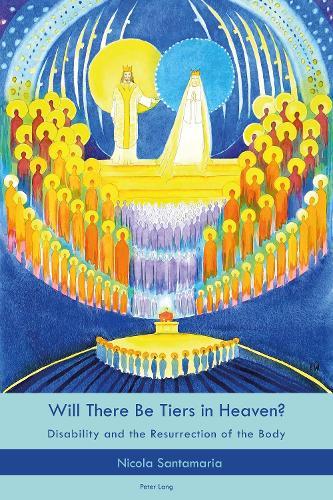
Will someone with a disability, either mental or physical, be recognisable in the heavenly realm? If they no longer have their disabilities, how will we know them? Are disabilities part of who we are? In the case of someone who loses a limb in an accident, it is easy to imagine them with the missing limb restored, but with congenital conditions many complex questions are raised. This book attempts to look at the issues in detail by comparing two key interlocutors, St Augustine and Jean Vanier. Although Augustine lived more than a thousand years ago, his teachings on the subject of heaven are still fundamental to much contemporary theology. Jean Vanier, founder of the L’Arche communities, works with people with learning difficulties. His contribution is supplemented by the work of Henri Nouwen, a Dutch Catholic priest whose writing was heavily influenced by his experiences with L’Arche. Finally, this book also offers some suggestions for the application of the theological debate to pastoral situations.
Full Product Details
Author: Nicola Santamaria
Publisher: Peter Lang International Academic Publishers
Imprint: Peter Lang International Academic Publishers
Edition: New edition
Weight: 0.375kg
ISBN: 9781788742436
ISBN 10: 1788742435
Pages: 262
Publication Date: 30 April 2018
Audience:
Professional and scholarly
,
Professional & Vocational
Format: Paperback
Publisher's Status: Active
Availability: In Print

This item will be ordered in for you from one of our suppliers. Upon receipt, we will promptly dispatch it out to you. For in store availability, please contact us.
Reviews
«A rich blend of theological reflection, lived experience and practical insight, this book makes a significant contribution to disability studies. Nicola Santamaria offers her readers an inspirational and hope-filled reflection on a question asked by us all: ‹how will you know me in heaven?›» (Pia Matthews, St Mary’s University, Surrey) «This is a moving and deep treatment of a challenging theological question, which brings us right into the centre of fundamental issues such as theology of the body, theology of identity, theology of salvation, theology of dignity, and the ‹last things›. Nicola Santamaria has chosen inspiring interlocutors for her impressive work, creating a fruitful dialogue with Augustine, Jean Vanier and Henri Nouwen. Highly recommended!» (Clemens Sedmak, University of Notre Dame, Indiana)
A rich blend of theological reflection, lived experience and practical insight, this book makes a significant contribution to disability studies. Nicola Santamaria offers her readers an inspirational and hope-filled reflection on a question asked by us all: <how will you know me in heaven?> (Pia Matthews, St Mary's University, Surrey) This is a moving and deep treatment of a challenging theological question, which brings us right into the centre of fundamental issues such as theology of the body, theology of identity, theology of salvation, theology of dignity, and the <last things>. Nicola Santamaria has chosen inspiring interlocutors for her impressive work, creating a fruitful dialogue with Augustine, Jean Vanier and Henri Nouwen. Highly recommended! (Clemens Sedmak, University of Notre Dame, Indiana)
Author Information
Nicola Santamaria taught maths and psychology in secondary schools for many years, before completing a doctorate in theology at King’s College London. During this time, she worked at St Joseph’s Pastoral Centre for people with learning disabilities and taught at Allen Hall, the Roman Catholic Seminary in the Diocese of Westminster.