Overview
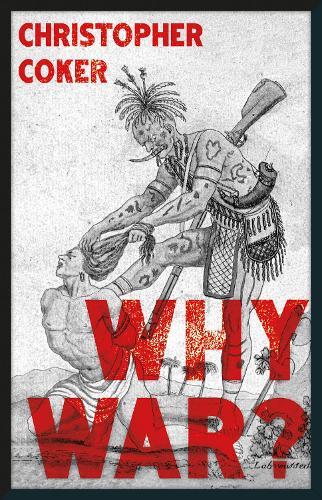
What are humanity's biological origins? What are the mechanisms, including culture, that continue to drive it? What is the history that has allowed it to evolve over time? And what are its functions--how does it survive and thrive by exploiting the features that define it as a species? These are the four questions of the Tinbergen Method for explaining animal behaviour, developed by the Nobel Prizewinning Dutch ethologist Niko Tinbergen. This book contends that applying this method to war--which is unique to humans--can help us better understand why conflict is so resilient. Christopher Coker explores these four questions of our past and present, and looks at our post-human future, assessing how far scientific advances in gene-editing, robotics and AI systems will de-centre human agency. He concludes that we won't witness war's end until it has exhausted its evolutionary possibilities--meaning that, well into the future, war is likely to remain what Thucydides first called it: 'the human thing'. From the Ancients to Artificial Intelligence, Why War? is an exhilarating tour d'horizon of humankind's propensity to warfare and its behavioural underpinnings, offering new ways of thinking about our species' unique and deadly preoccupation.
Full Product Details
Author: Christopher Coker
Publisher: C Hurst & Co Publishers Ltd
Imprint: C Hurst & Co Publishers Ltd
ISBN: 9781787383890
ISBN 10: 178738389
Pages: 256
Publication Date: 25 March 2021
Audience:
General/trade
,
General
Format: Hardback
Publisher's Status: Active
Availability: Temporarily unavailable

The supplier advises that this item is temporarily unavailable. It will be ordered for you and placed on backorder. Once it does come back in stock, we will ship it out to you.
Reviews
'A romp through war sounds like an oxymoron, or worse. But here, it is something better. Coker uses war to explore nature, nurture and artificial intelligence--and how each interacts with and transforms the other. He pulls the rug out from underneath Pinker and others who argue that humankind is leaving war behind.' -- Richard Ned Lebow, Professor of International Political Theory, Department of War Studies, King's College London 'Why War? is a sophisticated book that rewards close reading. It is a serious contribution to how we understand the relationship between war and human progress.' -- Matthew Ford, Senior Lecturer in International Relations, University of Sussex 'Coker's argument is vibrantly made--that humans are inescapably violent, a feature of our evolution. It is an exhilarating read. The book is striking and stimulating throughout, and the synthesis of ideas is very impressive. Absorbing, elegantly written and highly engrossing.' -- Kenneth Payne, Reader in International Relations, King's College London 'An unusually broad perspective on the place of war in human life, including a sophisticated treatment of the modern Hobbes versus Rousseau controversy and forays into pop culture, the classics, archaeology and the personalities of Ulysses and Hector. An excellent read.' -- Christopher Boehm, Professor of Biological Sciences and Anthropology, University of South Carolina 'Few books have both impressed and depressed me in equal measures as much as this one has done. Christopher Coker's magnificently researched Why War? [...] demands your constant attention and rewards you for it.' -- Literary Review
'Why War? is a sophisticated book that rewards close reading. It is a serious contribution to how we understand the relationship between war and human progress.' -- Matthew Ford, Senior Lecturer in International Relations, University of Sussex 'Coker's argument is vibrantly made--that humans are inescapably violent, a feature of our evolution. It is an exhilarating read. The book is striking and stimulating throughout, and the synthesis of ideas is very impressive. Absorbing, elegantly written and highly engrossing.' -- Kenneth Payne, Reader in International Relations, King's College London
'A ""romp"" through war sounds like an oxymoron, or worse. But here, it is something better. Coker uses war to explore nature, nurture and artificial intelligence--and how each interacts with and transforms the other. He pulls the rug out from underneath Pinker and others who argue that humankind is leaving war behind.' -- Richard Ned Lebow, Professor of International Political Theory, Department of War Studies, King's College London 'Why War? is a sophisticated book that rewards close reading. It is a serious contribution to how we understand the relationship between war and human progress.' -- Matthew Ford, Senior Lecturer in International Relations, University of Sussex 'Coker's argument is vibrantly made--that humans are inescapably violent, a feature of our evolution. It is an exhilarating read. The book is striking and stimulating throughout, and the synthesis of ideas is very impressive. Absorbing, elegantly written and highly engrossing.' -- Kenneth Payne, Reader in International Relations, King's College London 'An unusually broad perspective on the place of war in human life, including a sophisticated treatment of the modern ""Hobbes versus Rousseau"" controversy and forays into pop culture, the classics, archaeology and the personalities of Ulysses and Hector. An excellent read.' -- Christopher Boehm, Professor of Biological Sciences and Anthropology, University of South Carolina 'Few books have both impressed and depressed me in equal measures as much as this one has done. Christopher Coker’s magnificently researched Why War? […] demands your constant attention and rewards you for it.' -- Literary Review
Author Information
Christopher Coker is Director of LSE IDEAS, the London School of Economics foreign policy think-tank. His recent books include 'Rebooting Clausewitz'; 'Men at War'; and 'The Improbable War: China, the United States and the Logic of Great Power Conflict', all published by Hurst.