Overview
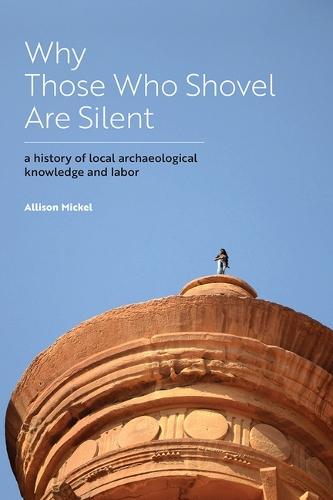
For more than 200 years, archaeological sites in the Middle East have been dug, sifted, sorted, and saved by local community members who, in turn, developed immense expertise in excavation and interpretation and had unparalleled insight into the research process and findings—but who have almost never participated in strategies for recording the excavation procedures or results. Their particular perspectives have therefore been missing from the archaeological record, creating an immense gap in knowledge about the ancient past and about how archaeological knowledge is created. Why Those Who Shovel Are Silent is based on six years of in-depth ethnographic work with current and former site workers at two major Middle Eastern archaeological sites—Petra, Jordan, and Çatalhöyük, Turkey—combined with thorough archival research. Author Allison Mickel describes the nature of the knowledge that locally hired archaeological laborers exclusively possess about artifacts, excavation methods, and archaeological interpretation, showing that archaeological workers are experts about a wide range of topics in archaeology. At the same time, Mickel reveals a financial incentive for site workers to pretend to be less knowledgeable than they actually are, as they risk losing their jobs or demotion if they reveal their expertise. Despite a recent proliferation of critical research examining the history and politics of archaeology, the topic of archaeological labor has not yet been substantially examined. Why Those Who Shovel Are Silent employs a range of advanced qualitative, quantitative, and visual approaches and offers recommendations for archaeologists to include more diverse expert perspectives and produce more nuanced knowledge about the past. It will appeal to archaeologists, science studies scholars, and anyone interested in challenging the concept of “unskilled” labor.
Full Product Details
Author: Allison Mickel
Publisher: University Press of Colorado
Imprint: University Press of Colorado
Dimensions:
Width: 15.20cm
, Height: 1.30cm
, Length: 22.90cm
Weight: 0.295kg
ISBN: 9781646421268
ISBN 10: 1646421264
Pages: 218
Publication Date: 01 March 2021
Recommended Age: From 18 to 99 years
Audience:
Professional and scholarly
,
Professional & Vocational
Format: Paperback
Publisher's Status: Active
Availability: Available To Order

We have confirmation that this item is in stock with the supplier. It will be ordered in for you and dispatched immediately.
Reviews
A valuable and unique contribution to archaeology that responds to current concern with community engagement by foregrounding a community that paradoxically is rarely recognized. --Rosemary Joyce, University of California, Berkeley The critical analysis of the underlying structures impinging upon the contribution of local labor to the construction of archaeological knowledge is a vital topic both within and outside the academy. --Brian Boyd, director of Museum Anthropology at Columbia University The author uses stories elicited through worker interviews to show that the wealth of archaeological knowledge developed by indigenous workers is lost to the profession when it is not considered worth recording. --CHOICE If every dig director took the time to read this book, and apply the participatory practices suggested in it, the field of archaeology could become a more inclusive and enriching discipline. --BASOR An important assessment of archaeological labor and contributes to a growing literature on the ethnography of archaeological practice. --American Anthropologist
A valuable and unique contribution to archaeology that responds to current concern with community engagement by foregrounding a community that paradoxically is rarely recognized. --Rosemary Joyce, University of California, Berkeley The critical analysis of the underlying structures impinging upon the contribution of local labor to the construction of archaeological knowledge is a vital topic both within and outside the academy. --Brian Boyd, director of Museum Anthropology at Columbia University The author uses stories elicited through worker interviews to show that the wealth of archaeological knowledge developed by indigenous workers is lost to the profession when it is not considered worth recording. --CHOICE If every dig director took the time to read this book, and apply the participatory practices suggested in it, the field of archaeology could become a more inclusive and enriching discipline. --BASOR
A valuable and unique contribution to archaeology that responds to current concern with community engagement by foregrounding a community that paradoxically is rarely recognized. --Rosemary Joyce, University of California, Berkeley The critical analysis of the underlying structures impinging upon the contribution of local labor to the construction of archaeological knowledge is a vital topic both within and outside the academy. --Brian Boyd, director of Museum Anthropology at Columbia University
Author Information
Allison Mickel is assistant professor of anthropology at Lehigh University. She has excavated in Kenya, Turkey, Jordan, and the United States and is the author of Archaeologists as Authors and the Stories of Sites.