Overview
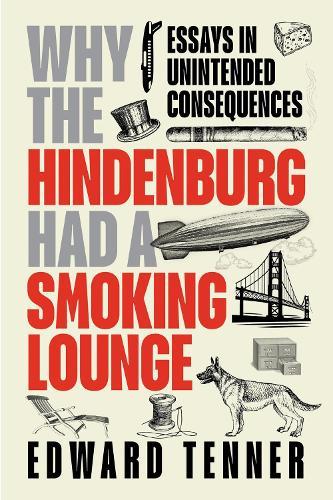
Essays by international bestselling author Edward Tenner that explore both the negative and positive surprises of human ingenuity How did the addition of lifeboats after the Titanic shipwreck contribute to another tragedy in Chicago harbor three years later? How efficient are wild animals as investors, and how do dog breeds become national symbols? Why have scientific breakthroughs so often originated in the study of shadows? How did the file card prepare scholarship and commerce for the rise of electronic data processing, and why did the visual metaphor of the tab survive into today's graphic interfaces? Why have Amish artisans played an important role in manufacturing advanced technology? Why was United Shoe Machinery the Microsoft of the 1890s? Surprises like these, Edward Tenner believes, can help us deal with the technological issues that confront us now. Since the 1980s, Edward Tenner has contributed essays on technology, design, and culture to leading magazines, newspapers, and professional journals, and has been interviewed on subjects ranging from medical ethics to typography. Why the Hindenburg Had a Smoking Lounge—named for one of the paradoxes that can result from the inherent contradictions between consumer safety and product marketing—brings many of Tenner's essays together into one volume for the first time, accompanied by new introductions by the author on the theme of each work. As an independent historian and public speaker, Tenner has spent his career deploying concepts from economics, engineering, psychology, science, and sociology, to explore both the negative and positive surprises of human ingenuity.
Full Product Details
Author: Edward Tenner
Publisher: American Philosophical Society Press
Imprint: American Philosophical Society Press
ISBN: 9781606180273
ISBN 10: 1606180274
Pages: 585
Publication Date: 08 April 2025
Audience:
Professional and scholarly
,
Professional & Vocational
Format: Hardback
Publisher's Status: Active
Availability: Temporarily unavailable

The supplier advises that this item is temporarily unavailable. It will be ordered for you and placed on backorder. Once it does come back in stock, we will ship it out to you.
Reviews
""Today we need savvy, historically informed technology critics more than ever. No critic is savvier when it comes to weighing the pros and cons of technologies old and new than Edward Tenner."" * John Horgan, science journalist and Director, Center for Science Writings, Stevens Institute of Technology * ""The essayist is often a writer who receives little respect. But the best of them can change how we see our world. Edward Tenner is a profound reporter of startling connections. Whether discussing the surprise of the Hindenburg disaster, the dynamic history of chairs, or the significance of the dung beetle, Tenner takes us into place we would never imagine being. He knows that unintended consequences are everywhere, and we could not survive without them. As in the case of one of his iconic essays, his imagination is Titanic."" * Gary Alan Fine, James E. Johnson Professor of Sociology, Northwestern University *
Author Information
Edward Tenner is a Distinguished Scholar of the Smithsonian's Lemelson Center for the Study of Invention and Innovation and a visiting scholar in the Rutgers University History Department. He also has held visiting research positions in the Woodrow Wilson International Center for Scholars, the Institute for Advanced Study, and the University of Pennsylvania, and in the Princeton departments and programs of Geosciences, English, Information Technology Policy, and has taught seminars in the Princeton Humanities Council and the Freshman Seminars Program. He published his first book, Tech Speak or How to Talk High Tech: An Advanced Post-Vernacular Discourse Modulation Protocol in 1986 while still a book acquisition editor at Princeton University Press. He left the Press to accept a Guggenheim award in 1991. The resulting book, Why Things Bite Back: Technology and the Revenge of Unintended Consequences, became an international bestseller and was followed by Our Own Devices: How Technology Remakes Humanity (2003) and The Efficiency Paradox: What Big Data Can't Do (2018). He has been an international speaker at academic, government, and corporate meetings.