Overview
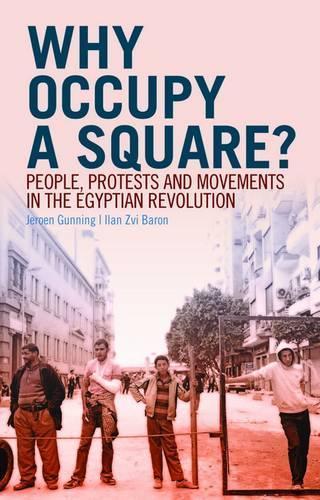
On 25 January 2011, tens of thousands of Egyptians came out on the streets to protest against emergency rule and police brutality. Eighteen days later, Mubarak, one of the longest sitting dictators in the region, had gone. How are we to make sense of these events? Was this a revolution, a revolutionary moment? How did the protests come about? How were they able to outmanoeuvre the police? Was this really a 'leaderless revolution,' as so many pundits claimed, or were the protests an out- growth of the protest networks that had developed over the past decade? Why did so many people with no history of activism participate? What role did economic and systemic crises play in creating the conditions for these pro- tests to occur? Was this really a Facebook revolution? Why Occupy a Square? is a dynamic exploration of the shape and timing of these extraordinary events, the players behind them, and the tactics and protest frames they developed. Drawing on social movement theory, it traces the interaction between protest cycles, regime responses and broader structural changes over the past decade. Using theories of urban politics, space and power, it reflects on the exceptional state of non-sovereign politics that developed during the occupation of Tahrir Square.
Full Product Details
Author: Jeroen Gunning ,
Ilan Zvi Baron
Publisher: C Hurst & Co Publishers Ltd
Imprint: C Hurst & Co Publishers Ltd
Dimensions:
Width: 21.30cm
, Height: 2.40cm
, Length: 13.70cm
ISBN: 9781849042659
ISBN 10: 1849042659
Pages: 256
Publication Date: 01 November 2013
Audience:
General/trade
,
General
Format: Paperback
Publisher's Status: Active
Availability: Temporarily unavailable

The supplier advises that this item is temporarily unavailable. It will be ordered for you and placed on backorder. Once it does come back in stock, we will ship it out to you.
Reviews
'This is an excellent book that goes a long way toward dispelling the dual myths that the 25 January Revolution in Egypt came out of nowhere or was an inevitable consequence of political and socioeconomic frustration. The book puts forward a compelling narrative about waves of protest beginning at the turn of the millennium and culminating in the 2011 revolution. Social movement theory is used to good effect as a way of marshalling the manifold factors that enabled protest to become revolution. The resulting synthesis is highly readable and will be of immense value in helping scholars and students make sense of the daunting complexities of Egyptian politics over the last two decades.' - Ewan Stein, Lecturer in International Relations, University of Edinburgh and author of Representing Israel in Modern Egypt: Ideas, Intellectuals and Foreign Policy from Nasser to Mubarak
Author Information
Jeroen Gunning is Reader in Middle East Politics at the University of Durham, and author of Hamas in Politics: Democracy, Religion, Violence (Hurst). Ilan Zvi Baron is Lecturer in the School of Government and International Affairs, University of Durham.