Overview
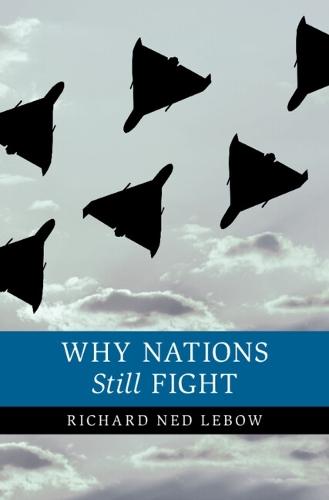
Drawing on an original data set of interventions and wars from 1945 to the current day, as well as numerous short case studies, Richard Ned Lebow offers a novel account of their origins and outcomes – one that emphasises miscalculation, failure to conduct meaningful risk assessments, and cultural and political arrogance. In a successive work to Why Nations Fight (2010), he explains why initiators routinely lose militarily and politically when they resort to force, as well as accounting for why the great powers, in particular, have not learned from their failures. Lebow offers both type- and region-specific forecasts for the future likelihood of interventions and wars. His account reveals the inapplicability of theories nested in the realist and rationalist paradigms to the study of war. He argues what is needed instead is an “irrationalist” theory, and he takes the initial steps in this direction.
Full Product Details
Author: Richard Ned Lebow (Dartmouth College, New Hampshire)
Publisher: Cambridge University Press
Imprint: Cambridge University Press
Weight: 0.500kg
ISBN: 9781009701051
ISBN 10: 1009701053
Pages: 450
Publication Date: 08 January 2026
Audience:
General/trade
,
General
Format: Hardback
Publisher's Status: Forthcoming
Availability: Not yet available, will be POD

This item is yet to be released. You can pre-order this item and we will dispatch it to you upon it's release. This is a print on demand item which is still yet to be released.
Reviews
‘In everything he writes, Richard Ned Lebow combines a deep commitment to a better, more peaceful world, with meticulous research, great erudition and careful argument. ‘Why Nations Still Fight’ explains both why wars so often fail to achieve their aims, yet governments still resort to them.’ Lawrence Freedman, Emeritus professor of War Studies, King's College London ‘Direct warfare between states seems to have declined, particularly in the developed world. However, Lebow finds in this thoughtful, engaging, provocative, and well-researched book that states around the world are still willing to use armed force in wars and especially in interventions. He details 88 instances since World War II - about one a year - all but 7 in what used to be called the Third World. What is particularly impressive is that this happens even though the efforts mostly fail to achieve their military, and especially their political, goals. In the process he details case after case of chronic self-delusion and miscalculation by initiators.’ John Mueller, Ohio State University, Cato Institute and author of The Stupidity of War: American Foreign Policy and the Case for Complacency. ‘Richard Ned Lebow has studied war and peace for over half a century. ‘Why Nations Still Fight’ builds on that remarkable scholarly edifice to present a global rethinking of the causes of war. Studying all wars since 1945, Lebow develops a new and unique typology and offers distinct findings and arguments about each kind. The true tragedy of most wars, he argues, is their fundamental irrationality. Still, Lebow offers reasons to hope that humans can rise to the challenge of overcoming the biases, miscalculation and hubris that push leaders toward tragically counterproductive bellicosity.’ William C. Wohlforth, Daniel Webster Professor, Dartmouth College
Author Information
Richard Ned Lebow is Professor Emeritus of International Political Theory in the War Studies Department of King's College London, Honorary Fellow of Pembroke College at the University of Cambridge, and James O. Freedman Presidential Professor Emeritus at Dartmouth College. He is a Fellow of the British Academy and a member of the Atheneum. His most recent books include Weimar's Long Shadow (Cambridge, 2024), co-edited with Ludvig Norman; Fragility and Robustness of Political Orders, also co-edited with Ludvig Norman (Cambridge, 2022); and The Quest for Knowledge in International Relations: How Do We Know? (Cambridge 2021), as well as this book's predecessor, Why Nations Fight (Cambridge, 2010). He also publishes short stories, murder mysteries, and counterfactual, historical fiction.