Overview
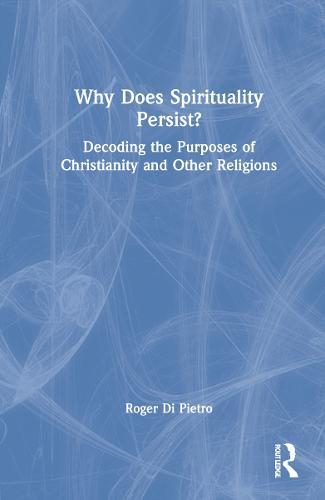
* A unique combination of cognitive and behavioral science, Adlerian psychology, political and demographic factors, as well as Darwinian and evolutionary concepts explain the purposes and persistence of religion and spirituality for an existing worldwide educational, self-help, and psychotherapy audience that lacks any books which directly compete with this title. * Approachable language and wide-ranging applicability as well as discussing growing atheism makes the book accessible for laypersons interested in developing insight and counterbalancing mainstream concepts. * A blend of theory and research from an array of disciplines uses a scientific approach and objective data to explore subjective religious and spiritual notions and experiences and support proposed conclusions.
Full Product Details
Author: Roger Di Pietro (Private practice, New York, USA)
Publisher: Taylor & Francis Ltd
Imprint: Taylor & Francis Ltd
ISBN: 9781032256481
ISBN 10: 1032256486
Pages: 272
Publication Date: 01 November 2022
Audience:
General/trade
,
College/higher education
,
Professional and scholarly
,
General
,
Tertiary & Higher Education
Format: Hardback
Publisher's Status: Forthcoming
Availability: Not yet available

This item is yet to be released. You can pre-order this item and we will dispatch it to you upon its release.
Reviews
Why Does Spirituality Persist? is a carefully researched compendium that is an important contribution to the professional literature on religion and spirituality. A broad spectrum of readers will find it illuminating and sometimes challenging, while therapists and those engaged in spiritual counseling will find it clinically useful in understanding the religious and spiritual concerns of those seeking their help. Len Sperry, MD, PhD, author of Spirituality in Clinical Practice, 2nd ed Dr. Di Pietro explores the reasons spirituality and religion persist and the importance of religious beliefs to those who hold them. His book comes at a critical time for those of us trying to understand and make sense of each other in an increasingly polarized world. His book is insightful, rooted in empirical data, and infused with his unique and optimistic perspective. Eileen Merges, PhD, associate professor of psychology at St. John Fisher College Dr. Di Pietro's latest academic accomplishment takes on the differences and similarities between 'spirituality' and 'religion' with a noticeable diligence not to offend readers who may or may not align with either persuasion. Approximately 30% of Americans are currently using the phrase 'spiritual but not religious' to describe themselves-an increase of almost eight percent in a recent five-year span. What exactly is the difference and what led to the swift embrace of this nondescriptive term? Dr. Di Pietro meticulously explores the diverse fundamental and practical purposes religion has provided humankind since the dawn of history, while simultaneously exploring the relationship between emerging lifestyle convictions and the burgeoning embrace of the term 'spirituality.' Gerhardt Wagner, MD, PhD
Why Does Spirituality Persist? is a carefully researched compendium that is an important contribution to the professional literature on religion and spirituality. A broad spectrum of readers will find it illuminating and sometimes challenging, while therapists and those engaged in spiritual counseling will find it clinically useful in understanding the religious and spiritual concerns of those seeking their help. Len Sperry, MD, PhD, author of Spirituality in Clinical Practice, 2nd ed Dr. Di Pietro explores the reasons spirituality and religion persist and the importance of religious beliefs to those who hold them. His book comes at a critical time for those of us trying to understand and make sense of each other in an increasingly polarized world. His book is insightful, rooted in empirical data, and infused with his unique and optimistic perspective. Eileen Merges, PhD, associate professor of psychology at St. John Fisher College Dr. Di Pietro's latest academic accomplishment takes on the differences and similarities between 'spirituality' and 'religion' with a noticeable diligence not to offend readers who may or may not align with either persuasion. Approximately 30% of Americans are currently using the phrase 'spiritual but not religious' to describe themselves-an increase of almost eight percent in a recent five-year span. What exactly is the difference and what led to the swift embrace of this nondescriptive term? Dr. Di Pietro meticulously explores the diverse fundamental and practical purposes religion has provided humankind since the dawn of history, while simultaneously exploring the relationship between emerging lifestyle convictions and the burgeoning embrace of the term 'spirituality.' Gerhardt Wagner, MD, PhD
Author Information
Roger Di Pietro, PsyD, is a licensed clinical psychologist in private practice who has authored and co-authored books on anxiety, depression, and the use of early memories as a personality assessment.