Overview
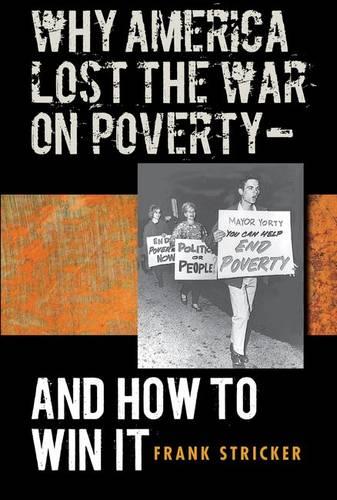
In a provocative assessment of American poverty and policy from 1950 to the present, Frank Stricker examines an era that has seen serious discussion about the causes of poverty and unemployment. Analyzing the War on Poverty, theories of the culture of poverty and the underclass, the effects of Reaganomics, and the 1996 welfare reform, Stricker demonstrates that most antipoverty approaches are futile without the presence (or creation) of good jobs. Stricker notes that since the 1970s, U.S. poverty levels have remained at or above 11%, despite training programs and periods of economic growth. The creation of jobs has continued to lag behind the need for them. Stricker argues that a serious public debate is needed about the job situation; social programs must be redesigned, a national health care program must be developed, and economic inequality must be addressed. He urges all sides to be honest--if we don't want to eliminate poverty, then we should say so. But if we do want to reduce poverty significantly, he says, we must expand decent jobs and government income programs, redirecting national resources away from the rich and toward those with low incomes. ""Why America Lost the War on Poverty--And How to Win It"" is sure to prompt much-needed debate on how to move forward.
Full Product Details
Author: Frank Stricker
Publisher: University of North Carolina Press
Imprint: University of North Carolina Press
ISBN: 9781469603575
ISBN 10: 1469603578
Pages: 360
Publication Date: 24 June 2014
Audience:
General/trade
,
General
Format: Undefined
Publisher's Status: Active
Availability: In Print

This item will be ordered in for you from one of our suppliers. Upon receipt, we will promptly dispatch it out to you. For in store availability, please contact us.
Reviews
"""Frank Stricker's iconoclastic book uses historical analysis to challenge the conventional wisdom about the nature of poverty in America. This is a sobering but engrossing account of an important subject, written with scholarly authority in an entertaining, even inviting, style.""--Edward D. Berkowitz, George Washington University ""Highly recommended.""--""CHOICE"" ""No other book so effectively locates antipoverty policy right where it belongs, in America's political economy. . . . On economic policy, Stricker is provocative and incisive.""--""Labor"" ""Trac[es] poverty policy and programs in the United States from a refreshingly structuralist point of view. . . . An impressive account of the historical mechanics of poverty in the United States and a rich description of how politics and culture shape the poverty discussion and resulting policy interventions.""--""Journal of Sociology and Social Welfare"""
Frank Stricker's iconoclastic book uses historical analysis to challenge the conventional wisdom about the nature of poverty in America. This is a sobering but engrossing account of an important subject, written with scholarly authority in an entertaining, even inviting, style. --Edward D. Berkowitz, George Washington University Highly recommended. -- CHOICE No other book so effectively locates antipoverty policy right where it belongs, in America's political economy. . . . On economic policy, Stricker is provocative and incisive. -- Labor Trac[es] poverty policy and programs in the United States from a refreshingly structuralist point of view. . . . An impressive account of the historical mechanics of poverty in the United States and a rich description of how politics and culture shape the poverty discussion and resulting policy interventions. -- Journal of Sociology and Social Welfare