Overview
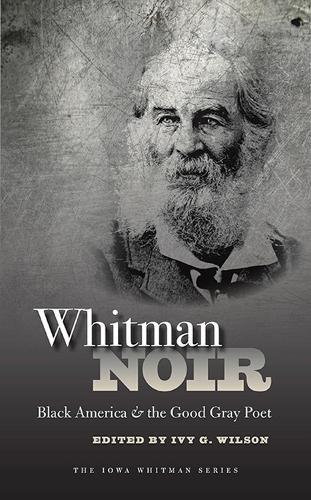
Walt Whitman’s now-famous maxim about “containing the multitudes” has often been understood as a metaphor for the democratising impulses of the young American nation. But did these impulses extend across the colour line? Early in his career, especially in the manuscripts leading up to the first edition of Leaves of Grass, the poet espoused a rather progressive outlook on race relations within the United States. However, as time passed, he steered away from issues of race and blackness altogether. These changing depictions and representations of African Americans in the poetic space of Leaves of Grass and Whitman’s other writings complicate his attempts to fully contain all of America’s subject-citizens within the national imaginary. As alluring as “containing the multitudes” might prove to be, African American poets and writers have been equally vexed by and attracted to Whitman’s acknowledgment of the promise and contradictions of the United States and their place within it. Whitman Noir: Black America and the Good Gray Poet explores the meaning of blacks and blackness in Whitman’s imagination and, equally significant, also illuminates the aura of Whitman in African American letters from Langston Hughes to June Jordan, Margaret Walker to Yusef Komunyakaa. The essays, which feature academic scholars and poets alike, address questions of literary history, the textual interplay between author and narrator, and race and poetic influence. The volume as a whole reveals the mutual engagement with a matrix of shared ideas, contradictions, and languages to expose how Whitman influenced African American literary production as well as how African American Studies brings to bear new questions and concerns for evaluating Whitman.
Full Product Details
Author: Ivy G. Wilson ,
Ivy Wilson
Publisher: University of Iowa Press
Imprint: University of Iowa Press
Dimensions:
Width: 15.20cm
, Height: 1.70cm
, Length: 22.90cm
Weight: 0.378kg
ISBN: 9781609382360
ISBN 10: 1609382366
Pages: 200
Publication Date: 01 May 2014
Audience:
College/higher education
,
Undergraduate
,
Postgraduate, Research & Scholarly
Format: Paperback
Publisher's Status: Active
Availability: Available To Order

We have confirmation that this item is in stock with the supplier. It will be ordered in for you and dispatched immediately.
Reviews
Offering groundbreaking scholarship and intensely personal reflections, Whitman Noir demonstrates how the poet's treatment of race in America troubled and inspired later generations of readers and poets, and continues to do so today. This timely collection explores Whitman's shifting representations of African Americans in his poetry and prose, revealing the ways that his writings--and erasures--reflect a nation both transformed and stubbornly unchanged by the Civil War. --Martin T. Buinicki, author, Walt Whitman's Reconstruction: Poetry and Publishing between Memory and History A tremendous collection. These essays probe, first, the treatment and stunning evasions of blacks and blackness in Whitman's imagination and, second, the remaking of Whitman and his legacy by black writers. Readers of this book will find a poet who could never quite erase race and in the process was both deeply troubling and strangely enabling--they'll find a Whitman Noir. --Kenneth M. Price, codirector, The Walt Whitman Archive
A tremendous collection. These essays probe, first, the treatment and stunning evasions of blacks and blackness in Whitman s imagination and, second, the remaking of Whitman and his legacy by black writers. Readers of this book will find a poet who could never quite erase race and in the process was both deeply troubling and strangely enablingthey ll find a Whitman Noir. Kenneth M. Price, codirector, The Walt Whitman Archive Offering groundbreaking scholarship and intensely personal reflections, Whitman Noir demonstrates how the poet s treatment of race in America troubled and inspired later generations of readers and poets, and continues to do so today. This timely collection explores Whitman s shifting representations of African Americans in his poetry and prose, revealing the ways that his writingsand erasuresreflect a nation both transformed and stubbornly unchanged by the Civil War. Martin T. Buinicki, author, Walt Whitman s Reconstruction: Poetry and Publishing between Memory and History Offering groundbreaking scholarship and intensely personal reflections, Whitman Noir demonstrates how the poet's treatment of race in America troubled and inspired later generations of readers and poets, and continues to do so today. This timely collection explores Whitman's shifting representations of African Americans in his poetry and prose, revealing the ways that his writings--and erasures--reflect a nation both transformed and stubbornly unchanged by the Civil War. --Martin T. Buinicki, author, Walt Whitman's Reconstruction: Poetry and Publishing between Memory and History A tremendous collection. These essays probe, first, the treatment and stunning evasions of blacks and blackness in Whitman's imagination and, second, the remaking of Whitman and his legacy by black writers. Readers of this book will find a poet who could never quite erase race and in the process was both deeply troubling and strangely enabling--they'll find a Whitman Noir. --Kenneth M. Price, codirector, The Walt Whitman Archive
Offering groundbreaking scholarship and intensely personal reflections, Whitman Noir demonstrates how the poet's treatment of race in America troubled and inspired later generations of readers and poets, and continues to do so today. This timely collection explores Whitman's shifting representations of African Americans in his poetry and prose, revealing the ways that his writings--and erasures--reflect a nation both transformed and stubbornly unchanged by the Civil War. --Martin T. Buinicki, author, Walt Whitman's Reconstruction: Poetry and Publishing between Memory and History
Author Information
Ivy G. Wilson is an associate professor of English and the director of the Program in American Studies at Northwestern University, where he teaches courses on the comparative literatures of the black diaspora with a particular emphasis on African American culture. He is the author of Specters of Democracy: Blackness and the Aesthetics of Politics in the Antebellum U.S., the editor of At the Dusk of Dawn: Selected Poetry and Prose of Albery Allson Whitman, and the coeditor of The Works of James M. Whitfield: “America” and Other Writings by a Nineteenth-Century African American Poet. He lives in Chicago.