Overview
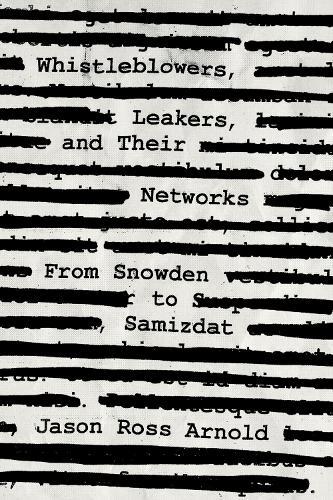
Human rights organizations. Hackers. Soviet dissidents. Animal welfare activists. Corruption-reporting apps. The world of whistleblowing is much more diverse than most people realize. It includes the prototypical whistleblowers—government and corporate employees who spill their organizations’ secrets to publicize abuses, despite the personal costs. But if you look closely at what the concept entails, then it becomes clear that there are many more varieties. There is a wide world of whistleblowing out there, and we have only begun to understand and explain it. In Whistleblowers, Leakers, and Their Networks: From Snowden to Samizdat, Jason Ross Arnold clarifies the elusive concept of ""whistleblowing."" Most who have tried to define or understand it have a sense that whistleblowers are justified secret-spillers—people who make wise decisions about their unauthorized disclosures. But we still have no reliable framework for determining which secret-spillers deserve the positively charged term whistleblower, and which ones should get stuck with the less noble moniker “leaker.” A better understanding can inform our frustratingly endless political debates about important cases—the Snowdens, Mannings, Ellsbergs, Deep Throats, etc.—but it can also provide guidance to would-be whistleblowers about whether or not they and their collaborators should make unauthorized disclosures.
Full Product Details
Author: Jason Ross Arnold
Publisher: Bloomsbury Publishing Plc
Imprint: Rowman & Littlefield
Dimensions:
Width: 15.20cm
, Height: 1.40cm
, Length: 22.80cm
Weight: 0.354kg
ISBN: 9781538130568
ISBN 10: 1538130564
Pages: 218
Publication Date: 04 September 2019
Audience:
Professional and scholarly
,
Professional & Vocational
Format: Paperback
Publisher's Status: Active
Availability: Manufactured on demand

We will order this item for you from a manufactured on demand supplier.
Reviews
Arnold (Virginia Commonwealth) offers a blueprint for defining whistle-blowers, a historical look at whistle-blowing and leaking, and an understanding of the impact of those who assist in publicizing classified information. Perhaps the most important chapter focuses on the need to define whistle-blowing, and critiques definitions found in dictionaries and scholarly work. Using distinct types of whistle-blowers, Arnold walks his readers through the impact and legitimacy of whistle-blowers--and make no mistake, not all leaking of classified information is equally legitimate. The discussion found in these pages that distinguishes Edward Snowden and WikiLeaks, for example, from humanitarian efforts--such as Peter Gabriel's WITNESS program--is excellent. The strengths of this book are its detail, accessibility, and its conclusion, which predicts that as technology advances, it will allow ever more whistle-blowing and leaking. Classes in history, political science, international and national security, and disciplines such as journalism would find this text useful. Individuals interested in American history and politics will find it an interesting and quick read. Summing Up: Highly recommended. Lower-division undergraduates through faculty.
"Arnold (Virginia Commonwealth) offers a blueprint for defining whistle-blowers, a historical look at whistle-blowing and leaking, and an understanding of the impact of those who assist in publicizing classified information. Perhaps the most important chapter focuses on the need to define whistle-blowing, and critiques definitions found in dictionaries and scholarly work. Using distinct types of whistle-blowers, Arnold walks his readers through the impact and legitimacy of whistle-blowers--and make no mistake, not all leaking of classified information is equally legitimate. The discussion found in these pages that distinguishes Edward Snowden and WikiLeaks, for example, from humanitarian efforts--such as Peter Gabriel's WITNESS program--is excellent. The strengths of this book are its detail, accessibility, and its conclusion, which predicts that as technology advances, it will allow ever more whistle-blowing and leaking. Classes in history, political science, international and national security, and disciplines such as journalism would find this text useful. Individuals interested in American history and politics will find it an interesting and quick read. Summing Up: Highly recommended. Lower-division undergraduates through faculty. -- ""Choice Reviews"" Arnold (Virginia Commonwealth) offers a blueprint for defining whistle-blowers, a historical look at whistle-blowing and leaking, and an understanding of the impact of those who assist in publicizing classified information. Perhaps the most important chapter focuses on the need to define whistle-blowing, and critiques definitions found in dictionaries and scholarly work. Using distinct types of whistle-blowers, Arnold walks his readers through the impact and legitimacy of whistle-blowers--and make no mistake, not all leaking of classified information is equally legitimate. The discussion found in these pages that distinguishes Edward Snowden and WikiLeaks, for example, from humanitarian efforts--such as Peter Gabriel's WITNESS program--is excellent. The strengths of this book are its detail, accessibility, and its conclusion, which predicts that as technology advances, it will allow ever more whistle-blowing and leaking. Classes in history, political science, international and national security, and disciplines such as journalism would find this text useful. Individuals interested in American history and politics will find it an interesting and quick read. Summing Up: Highly recommended. Lower-division undergraduates through faculty."
Arnold (Virginia Commonwealth) offers a blueprint for defining whistle-blowers, a historical look at whistle-blowing and leaking, and an understanding of the impact of those who assist in publicizing classified information. Perhaps the most important chapter focuses on the need to define whistle-blowing, and critiques definitions found in dictionaries and scholarly work. Using distinct types of whistle-blowers, Arnold walks his readers through the impact and legitimacy of whistle-blowers--and make no mistake, not all leaking of classified information is equally legitimate. The discussion found in these pages that distinguishes Edward Snowden and WikiLeaks, for example, from humanitarian efforts--such as Peter Gabriel's WITNESS program--is excellent. The strengths of this book are its detail, accessibility, and its conclusion, which predicts that as technology advances, it will allow ever more whistle-blowing and leaking. Classes in history, political science, international and national security, and disciplines such as journalism would find this text useful. Individuals interested in American history and politics will find it an interesting and quick read. Summing Up: Highly recommended. Lower-division undergraduates through faculty.-- Choice
Arnold (Virginia Commonwealth) offers a blueprint for defining whistle-blowers, a historical look at whistle-blowing and leaking, and an understanding of the impact of those who assist in publicizing classified information. Perhaps the most important chapter focuses on the need to define whistle-blowing, and critiques definitions found in dictionaries and scholarly work. Using distinct types of whistle-blowers, Arnold walks his readers through the impact and legitimacy of whistle-blowers--and make no mistake, not all leaking of classified information is equally legitimate. The discussion found in these pages that distinguishes Edward Snowden and WikiLeaks, for example, from humanitarian efforts--such as Peter Gabriel's WITNESS program--is excellent. The strengths of this book are its detail, accessibility, and its conclusion, which predicts that as technology advances, it will allow ever more whistle-blowing and leaking. Classes in history, political science, international and national security, and disciplines such as journalism would find this text useful. Individuals interested in American history and politics will find it an interesting and quick read. Summing Up: Highly recommended. Lower-division undergraduates through faculty.
Arnold (Virginia Commonwealth) offers a blueprint for defining whistle-blowers, a historical look at whistle-blowing and leaking, and an understanding of the impact of those who assist in publicizing classified information. Perhaps the most important chapter focuses on the need to define whistle-blowing, and critiques definitions found in dictionaries and scholarly work. Using distinct types of whistle-blowers, Arnold walks his readers through the impact and legitimacy of whistle-blowers--and make no mistake, not all leaking of classified information is equally legitimate. The discussion found in these pages that distinguishes Edward Snowden and WikiLeaks, for example, from humanitarian efforts--such as Peter Gabriel's WITNESS program--is excellent. The strengths of this book are its detail, accessibility, and its conclusion, which predicts that as technology advances, it will allow ever more whistle-blowing and leaking. Classes in history, political science, international and national security, and disciplines such as journalism would find this text useful. Individuals interested in American history and politics will find it an interesting and quick read. Summing Up: Highly recommended. Lower-division undergraduates through faculty.--CHOICE
"Arnold (Virginia Commonwealth) offers a blueprint for defining whistle-blowers, a historical look at whistle-blowing and leaking, and an understanding of the impact of those who assist in publicizing classified information. Perhaps the most important chapter focuses on the need to define whistle-blowing, and critiques definitions found in dictionaries and scholarly work. Using distinct types of whistle-blowers, Arnold walks his readers through the impact and legitimacy of whistle-blowers--and make no mistake, not all leaking of classified information is equally legitimate. The discussion found in these pages that distinguishes Edward Snowden and WikiLeaks, for example, from humanitarian efforts--such as Peter Gabriel's WITNESS program--is excellent. The strengths of this book are its detail, accessibility, and its conclusion, which predicts that as technology advances, it will allow ever more whistle-blowing and leaking. Classes in history, political science, international and national security, and disciplines such as journalism would find this text useful. Individuals interested in American history and politics will find it an interesting and quick read. Summing Up: Highly recommended. Lower-division undergraduates through faculty.-- ""Choice Reviews"""
Author Information
Jason Ross Arnold is associate professor of political science at Virginia Commonwealth University. He is the author of Secrecy in the Sunshine Era: The Promise and Failures of U.S. Open Government Laws (2014).