Full Product Details
Author: Steven J. Simmons ,
Ruth E. Harper
Publisher: Charlesbridge Publishing,U.S.
Imprint: Charlesbridge Publishing,U.S.
Dimensions:
Width: 26.70cm
, Height: 0.50cm
, Length: 24.10cm
Weight: 0.191kg
ISBN: 9781623547820
ISBN 10: 1623547822
Pages: 32
Publication Date: 10 March 2026
Recommended Age: From 3 to 7 years
Audience:
Children/juvenile
,
Children / Juvenile
Format: Paperback
Publisher's Status: Forthcoming
Availability: Not yet available

This item is yet to be released. You can pre-order this item and we will dispatch it to you upon its release.
Reviews
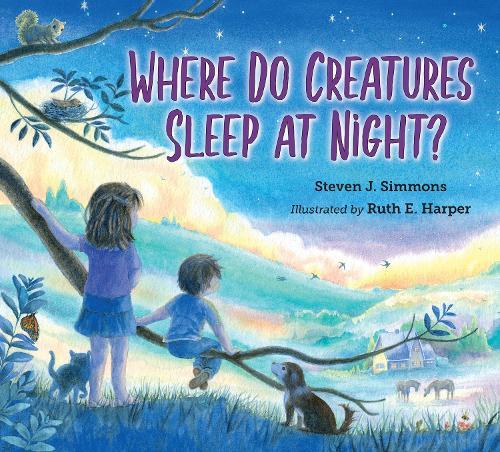
What do animals do when children are sleeping? Featuring creatures young children are likely to know, this book has the answers. Each spread’s left-hand page describes the animal’s daytime activities, while the right focuses on nighttime behaviors. Realistic watercolor illustrations highlight the animals and, for the night scenes, incorporate the midnight blue introduced on the endpapers. Golden moonlight encircles sleeping creatures, including a frog, ducks, and horses. Young readers will easily recognize the brilliant fluttering daytime butterflies and see children feeding a pet goldfish or playing with another pet. The three or four couplets on each spread end in rhyme (with a fun bush/shushhh pair) or near rhyme (down/found, sleep/feet, line/eye, safe/late). Given the couplets and rhyme, readers may expect a rhythmic read, but the lack of consistent meter makes smooth reading a challenge. However, unusual nighttime facts are a plus. “With tiny clawed feet, [a butterfly] hangs upside-down, / making it difficult to be found.” Goldfish sleep with their eyes open since they have no eyelids; ducks sometimes sleep in a line, with the first and last guarding the rest; bees’ antennae droop. (Unfortunately, both illustration and text incorrectly imply that bees’ comb is aligned horizontally instead of vertically.) Although the story ends with a bedtime message, most listeners will probably not be sleepy at the end. Recurring child characters present White, with one scene including racially diverse friends. This may not encourage sleep, but it probably will prompt more questions about animals after dark. —Kirkus Reviews
Author Information
Steven J. Simmons has been a professor of law and government, a White House aide on domestic policy, and a leader in the cable industry. Steven is the author of Where Do Creatures Sleep at Night? and the best-selling Alice and Greta- A Tale of Two Witches. Ruth Harper is a self-taught artist from England. She loves to echo nature in her work. She lives in Iowa with an adorable husband--they have six grown-up kids between them (plus handfuls of grandbabies!). She is the illustrator of the NYT bestseller The Kissing Hand (with Nancy M. Leak), Sassafras, and Happy Mamas. www.rutheharper.com