Awards
- Runner-up for <DIV>Second runner-up, Aidoo-Snyder Book Prize, African Studies Association Women's Caucus, 2019<BR /> Jackie Kirk Outstanding Book Award, Compara 2019
- Winner of <DIV>Second runner-up, Aidoo-Snyder Book Prize, African Studies Association Women's Caucus, 2019<BR /> Jackie Kirk Outstanding Book Award, Compara 2020
- Winner of <DIV>Second runner-up, Aidoo-Snyder Book Prize, African Studies Association Women's Caucus, 2019<BR /> Jackie Kirk Outstanding Book Award, Comparative and International Education Society (CIES), 2020</DIV> 2020
Overview
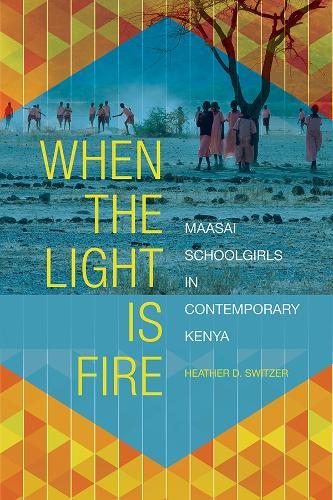
A host of international organizations promotes the belief that education will empower Kenya's Maasai girls. Yet the ideas that animate their campaigns often arise from presumptions that reduce the girls themselves to helpless victims of gender-related forms of oppression. Heather D. Switzer's interviews with over one hundred Kenyan Maasai schoolgirls challenge the widespread view of education as a silver bullet solution to global poverty. In their own voices, the girls offer incisive insights into their commitments, aspirations, and desires. Switzer weaves this ethnographic material into an astute analysis of historical literature, education and development documents, and theoretical literature. Maasai schoolgirls express a particular knowledge about themselves and provocative hopes for their futures. Yet, as Switzer shows, new opportunities force them to face, and navigate, new vulnerabilities and insecurities within a society that is itself in flux.
Full Product Details
Author: Heather D. Switzer
Publisher: University of Illinois Press
Imprint: University of Illinois Press
Dimensions:
Width: 15.20cm
, Height: 2.00cm
, Length: 22.90cm
Weight: 0.313kg
ISBN: 9780252042034
ISBN 10: 0252042034
Pages: 248
Publication Date: 20 September 2018
Audience:
Professional and scholarly
,
Professional & Vocational
Format: Hardback
Publisher's Status: Active
Availability: Out of stock

The supplier is temporarily out of stock of this item. It will be ordered for you on backorder and shipped when it becomes available.
Reviews
Second runner-up, Aidoo-Snyder Book Prize, African Studies Association Women's Caucus, 2019 Jackie Kirk Outstanding Book Award, Comparative and International Education Society (CIES), 2020 ""Switzer's book draws from her empirical research with over 100 Kenyan Maasai schoolgirls. . . .Switzer does a brilliant job of bringing to light the complexities of the context and the paradox of what education promises these girls therein. . . . This book is worth reading."" --Feminist Africa ""The book both dispels any misapprehensions about the helplessness, and the hopelessness, of Maasai girls and directly refutes the developmentalist discourse that sees girls' empowerment as a panacea for the developing world's problems."" --H-Africa ""One of the only books that I know which draws on and shares the perspectives and experiences of schoolgirls themselves, thus challenging dominant ideas that they are especially passive, vulnerable, or incapable of articulating their complicated and changing lives. As such, the book directly challenges broad, abstract claims by development donors and other champions of 'the girl effect.'""--Dorothy L. Hodgson, author of Being Maasai, Becoming Indigenous: Postcolonial Politics in a Neoliberal World ""When the Light is Fire is a book that forces you to confront the many contradictions, paradoxes and nuances of 'schoolgirl.' What Valerie Walkerdine set out to explore several decades ago in Schoolgirl Fictions is now taken up by Heather Switzer in relation to contemporary Maasai culture. As central to its obvious contributions to deepening an understanding of girls' education, Switzer’s rich analysis offers a fascinating critique of global policy and neoliberalism. The book is compelling reading for scholars in variety of areas including girlhood studies, feminist research, and development studies.""--Claudia Mitchell, coeditor of Girlhood and the Politics of Place ""When the Light is Fire captures children and education in Africa . . . the book exhorts us to critically reexamine our perception of education in the twenty-first century, especially in transnational development discourse."" --African Studies Review
One of the only books that I know which draws on and shares the perspectives and experiences of schoolgirls themselves, thus challenging dominant ideas that they are especially passive, vulnerable, or incapable of articulating their complicated and changing lives. As such, the book directly challenges broad, abstract claims by development donors and other champions of 'the girl effect.' --Dorothy L. Hodgson, author of Being Maasai, Becoming Indigenous: Postcolonial Politics in a Neoliberal World
The book both dispels any misapprehensions about the helplessness, and the hopelessness, of Maasai girls and directly refutes the developmentalist discourse that sees girls' empowerment as a panacea for the developing world's problems. --H-Africa One of the only books that I know which draws on and shares the perspectives and experiences of schoolgirls themselves, thus challenging dominant ideas that they are especially passive, vulnerable, or incapable of articulating their complicated and changing lives. As such, the book directly challenges broad, abstract claims by development donors and other champions of 'the girl effect.' --Dorothy L. Hodgson, author of Being Maasai, Becoming Indigenous: Postcolonial Politics in a Neoliberal World When the Light is Fire is a book that forces you to confront the many contradictions, paradoxes and nuances of 'schoolgirl.' What Valerie Walkerdine set out to explore several decades ago in Schoolgirl Fictions is now taken up by Heather Switzer in relation to contemporary Maasai culture. As central to its obvious contributions to deepening an understanding of girls' education, Switzer's rich analysis offers a fascinating critique of global policy and neoliberalism. The book is compelling reading for scholars in variety of areas including girlhood studies, feminist research, and development studies. --Claudia Mitchell, coeditor of Girlhood and the Politics of Place When the Light is Fire captures children and education in Africa . . . the book exhorts us to critically reexamine our perception of education in the twenty-first century, especially in transnational development discourse. --African Studies Review
"Second runner-up, Aidoo-Snyder Book Prize, African Studies Association Women's Caucus, 2019 Jackie Kirk Outstanding Book Award, Comparative and International Education Society (CIES), 2020 ""Switzer's book draws from her empirical research with over 100 Kenyan Maasai schoolgirls. . . .Switzer does a brilliant job of bringing to light the complexities of the context and the paradox of what education promises these girls therein. . . . This book is worth reading."" --Feminist Africa ""The book both dispels any misapprehensions about the helplessness, and the hopelessness, of Maasai girls and directly refutes the developmentalist discourse that sees girls' empowerment as a panacea for the developing world's problems."" --H-Africa ""One of the only books that I know which draws on and shares the perspectives and experiences of schoolgirls themselves, thus challenging dominant ideas that they are especially passive, vulnerable, or incapable of articulating their complicated and changing lives. As such, the book directly challenges broad, abstract claims by development donors and other champions of 'the girl effect.'""--Dorothy L. Hodgson, author of Being Maasai, Becoming Indigenous: Postcolonial Politics in a Neoliberal World ""When the Light is Fire is a book that forces you to confront the many contradictions, paradoxes and nuances of 'schoolgirl.' What Valerie Walkerdine set out to explore several decades ago in Schoolgirl Fictions is now taken up by Heather Switzer in relation to contemporary Maasai culture. As central to its obvious contributions to deepening an understanding of girls' education, Switzer’s rich analysis offers a fascinating critique of global policy and neoliberalism. The book is compelling reading for scholars in variety of areas including girlhood studies, feminist research, and development studies.""--Claudia Mitchell, coeditor of Girlhood and the Politics of Place ""When the Light is Fire captures children and education in Africa . . . the book exhorts us to critically reexamine our perception of education in the twenty-first century, especially in transnational development discourse."" --African Studies Review"
Author Information
Heather D. Switzer is an associate professor of women and gender studies in the School of Social Transformation at Arizona State University.