Overview
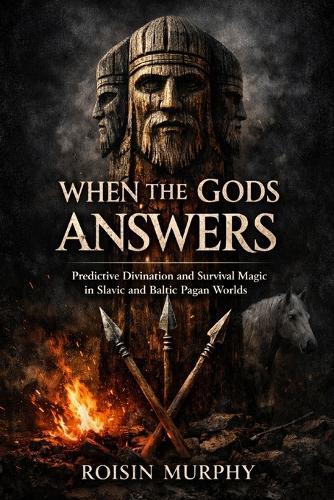
When the Gods Gave Answers examines Slavic and Baltic pagan divination as a system of practical decision making in societies where survival depended on being right. Long before divination became symbolic or mystical, these cultures used it as a predictive tool to guide war, agriculture, migration, health, and leadership. The signs were not metaphors. They were answers. Across the forests, plains, and river systems of Eastern Europe and the Baltic world, communities faced constant uncertainty. Crops could fail. Winters could kill. Raids could erase entire settlements. In this environment, divination functioned as survival technology. Gods were consulted through idols, horses, weapons, bread, fire, and seasonal signs, and their responses were read through physical outcomes that could be tested against reality. This book reconstructs those systems in detail. Idol divination determined whether wars would be fought or delayed based on movement, cracking, or collapse of sacred images. Horse divination guided military campaigns through the gait and behavior of consecrated animals, most famously in the cult of Svetovit. Weapons were placed, balanced, or suspended to predict success or refusal in battle. Bread and grain divination forecast harvests, illness, and death in a world where food meant life. Baltic fire divination shaped communal decisions through flame behavior, sparks, and smoke direction. Seasonal signs provided agricultural and migratory forecasting long before written calendars. Rather than treating these practices as superstition, the book places them in their historical context as structured systems governed by rules, accountability, and feedback. Methods that failed were abandoned. Priests who misread signs lost authority. Divination survived because it worked often enough to justify its use under extreme pressure. The gods mattered because their answers changed behavior, and changed behavior determined survival. The book also traces what happened when Christianity suppressed these systems. Temples were destroyed and priests silenced, but the methods persisted beneath the surface of folklore, household customs, and seasonal traditions. What survived was not theology, but practice. The need to predict danger, scarcity, and opportunity never disappeared. Drawing on historical sources, archaeology, and comparative analysis, When the Gods Gave Answers presents Slavic and Baltic paganism not as romantic belief, but as applied knowledge embedded in ritual form. It is a study of how people confronted uncertainty, demanded answers from the world around them, and built systems that allowed them to act decisively when hesitation meant death. This book is for readers interested in pagan history, pre-Christian Europe, divination, anthropology of religion, and the forgotten ways humans once turned observation into survival.
Full Product Details
Author: Roisin Murphy
Publisher: Independently Published
Imprint: Independently Published
Dimensions:
Width: 15.20cm
, Height: 0.70cm
, Length: 22.90cm
Weight: 0.177kg
ISBN: 9798247677000
Pages: 126
Publication Date: 09 February 2026
Audience:
General/trade
,
General
Format: Paperback
Publisher's Status: Active
Availability: Available To Order

We have confirmation that this item is in stock with the supplier. It will be ordered in for you and dispatched immediately.