Overview
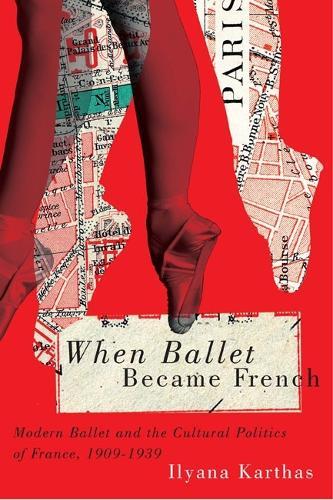
For centuries before the 1789 revolution, ballet was a source of great cultural pride for France, but by the twentieth century the art form had deteriorated along with France's international standing. It was not until Serge Diaghilev's Ballets Russes found success in Paris during the first decade of the new century that France embraced the opportunity to restore ballet to its former glory and transform it into a hallmark of the nation. In When Ballet Became French, Ilyana Karthas explores the revitalization of ballet and its crucial significance to French culture during a period of momentous transnational cultural exchange and shifting attitudes towards gender and the body. Uniting the disciplines of cultural history, gender and women's studies, aesthetics, and dance history, Karthas examines the ways in which discussions of ballet intersect with French concerns about the nation, modernity, and gender identities, demonstrating how ballet served as an important tool for France's project of national renewal. Relating ballet commentary to themes of transnationalism, nationalism, aesthetics, gender, and body politics, she examines the process by which critics, artists, and intellectuals turned ballet back into a symbol of French culture. The first book to study the correlation between ballet and French nationalism, When Ballet Became French demonstrates how dance can transform a nation's cultural and political history.
Full Product Details
Author: Ilyana Karthas ,
Ilyana Karthas
Publisher: McGill-Queen's University Press
Imprint: McGill-Queen's University Press
Dimensions:
Width: 15.20cm
, Height: 3.00cm
, Length: 22.90cm
Weight: 0.737kg
ISBN: 9780773546059
ISBN 10: 0773546057
Pages: 412
Publication Date: 01 September 2015
Audience:
General/trade
,
General
Format: Hardback
Publisher's Status: Active
Availability: In Print

This item will be ordered in for you from one of our suppliers. Upon receipt, we will promptly dispatch it out to you. For in store availability, please contact us.
Reviews
Ambitious in scope and focused in argument, When Ballet Became French offers a compelling account of the rise and fall and rise again of ballet's fortunes as an exemplary French cultural, and implicitly, political form. Integrating dance history into a broader narrative of French cultural and gender history, Karthas combines an internalist understanding of the transformations in ballet's choreography, technique, staging, and institutional form with a broader, externalist analysis of its symbolism, social location, and cultural and political resonance. Judith Surkis, Rutgers University
Ambitious in scope and focused in argument, When Ballet Became French offers a compelling account of the rise and fall and rise again of ballet s fortunes as an exemplary French cultural, and implicitly, political form. Integrating dance history into a broader narrative of French cultural and gender history, Karthas combines an internalist understanding of the transformations in ballet s choreography, technique, staging, and institutional form with a broader, externalist analysis of its symbolism, social location, and cultural and political resonance. Judith Surkis, Rutgers University
Karthas unearths the history and lineages of the balletic tradition and how it moved from its monarchical roots to the flowering possibilities in republicanism. On the whole, it is an interesting study and a rewarding read in an under represented area.
Author Information
Ilyana Karthas is associate professor of history and affiliate faculty of women's and gender studies at the University of Missouri-Columbia.