Overview
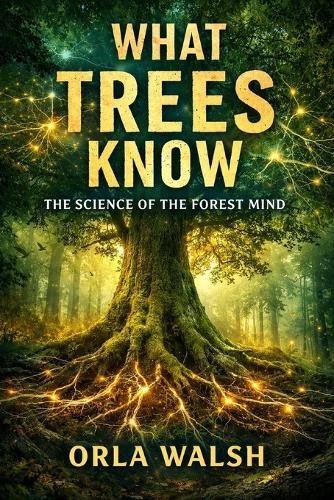
What Trees Know: The Science of the Forest Mind The forest has never been silent. We simply did not know how to listen. For centuries, trees were understood as passive organisms, beautiful, useful, ecologically important, but ultimately still. They grew. They photosynthesized. They died. What happened between these events was assumed to be simple chemistry and mechanical response, nothing more. The science now tells a profoundly different story. What Trees Know draws on the latest peer-reviewed research in plant biology, mycology, forest ecology, and biochemistry to reveal a living world of extraordinary complexity beneath the forest canopy. Trees communicate through the air and through the soil. They recognize their own offspring and send them resources through underground fungal networks spanning hundreds of acres. They remember droughts, attacks, and infections, encoding those memories in their tissues and passing them forward to the next generation. They mount sophisticated chemical defenses, recruit the predators of their enemies, and make what can only honestly be described as decisions about resource allocation and survival. None of this is metaphor. All of it is science. Inside this book you will find: The extraordinary biology of the mycorrhizal network, the wood wide web connecting individual trees into a community with shared resources, shared warnings, and shared memory How trees communicate through the air using volatile chemical signals, recruiting predators, warning neighbors, and responding to threats they cannot see The science of plant memory, including epigenetic stress memory, drought learning, transgenerational inheritance, and the immune memory encoded in living wood The social life of forests, including kin recognition, crown shyness, nurse trees, and the cooperative dynamics that complicate the simple story of competition How trees measure time, predict seasons, count cold days, and synchronize behavior across vast distances without any central coordination The intelligence of seeds, including dormancy mechanisms, germination decision-making, and the maternal programming that prepares offspring for challenges before they have experienced them The deep animal partnerships that forests depend on, from mycorrhizal fungi to seed-dispersing jays, insectivorous birds, and the large herbivores that have shaped tree evolution for millions of years What dying trees do, and why dead wood is among the most ecologically valuable material in a healthy forest The specific suffering of urban trees, and the extraordinary services they provide to human health, air quality, temperature regulation, and mental wellbeing despite that suffering What the science now requires of us, in forest policy, urban planning, conservation strategy, and the way we personally relate to the living world around us This is not a book about appreciating trees. It is a book about understanding them, and the understanding changes everything. The oldest trees alive today were growing before writing existed. The networks beneath a mature forest have been developing for centuries. The chemical languages trees speak have been refined across three hundred and fifty million years of evolution. We are very late to this understanding. But the forest has been patient.
Full Product Details
Author: Orla Walsh
Publisher: Independently Published
Imprint: Independently Published
Dimensions:
Width: 15.20cm
, Height: 0.80cm
, Length: 22.90cm
Weight: 0.195kg
ISBN: 9798250277020
Pages: 138
Publication Date: 01 March 2026
Audience:
General/trade
,
General
Format: Paperback
Publisher's Status: Active
Availability: Available To Order

We have confirmation that this item is in stock with the supplier. It will be ordered in for you and dispatched immediately.