Overview
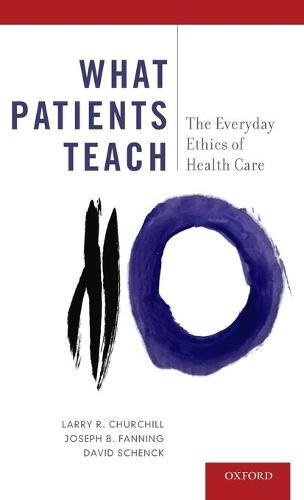
Being a patient is a unique interpersonal experience but it is also a universal human experience. The relationships formed when we are patients can also teach some of life's most important lessons, and these relationships provide a special window into ethics, especially the ethics of healthcare professionals. This book answers two basic questions: As patients see it, what things allow relationships with healthcare providers to become therapeutic? What can this teach us about healthcare ethics? This volume presents detailed descriptions and analyses of 50 interviews with 58 patients, representing a wide spectrum of illnesses and clinician specialties. The authors argue that the structure, rhythm, and horizon of routine patient care are ultimately grounded in patient vulnerability and clinician responsiveness. From the short interview segments, the longer vignettes and the full patient stories presented here emerge the neglected dimensions of healthcare and healthcare ethics. What becomes visible is an ethics of everyday interdependence, with mutual responsibilities that follow from this moral symbiosis. Both professional expressions of healthcare ethics and the field of bioethics need to be informed and reformed by this distinctive, more patient-centered, turn in how we understand both patient care as a whole and the ethics of care more specifically. The final chapters present revised codes of ethics for health professionals, as well as the implications for medical and health professions education.
Full Product Details
Author: Larry Churchill ,
Joseph B. Fanning ,
David Schenck
Publisher: Oxford University Press Inc
Imprint: Oxford University Press Inc
Dimensions:
Width: 14.70cm
, Height: 2.20cm
, Length: 21.60cm
Weight: 0.356kg
ISBN: 9780199331185
ISBN 10: 0199331189
Pages: 208
Publication Date: 04 October 2013
Audience:
College/higher education
,
Postgraduate, Research & Scholarly
Format: Hardback
Publisher's Status: Active
Availability: To order

Stock availability from the supplier is unknown. We will order it for you and ship this item to you once it is received by us.
Reviews
<br> This an outstanding contribution to the ethics literature--thoughtful, analytic, original, and exceptionally attuned to the dynamic, 'doubled-agency' aspects of the doctor-patient relationship. Combining profound insight with empirical data gleaned from in-depth interviews, the authors challenge the received wisdom that the abstract framework of principled-centered ethics will suffice to solve clinical problems. All those involved in conducting and teaching ethics consultations will benefit from this book. -- Larry Schneiderman, Professor Emeritus, Medicine and Family & Preventive Medicine, University of California, San Diego <br><p><br> The near-universal complaint among disappointed patients is, 'My doctor doesn't listen.' Churchill, Schenck, and Fanning let the patients themselves tell us exactly what it means to listen within the context of a truly therapeutic relationship, thoughtfully describing the unglamorous, everyday world of solid medical practice. Along the way, they force us to rethink many of our assumptions about what most matters ethically in health care. -- Howard Brody, John P. McGovern Centennial Chair in Family Medicine and Director, Institute for the Medical Humanities, University of Texas Medical Branch <br><p><br>
<br> This an outstanding contribution to the ethics literature--thoughtful, analytic, original, and exceptionally attuned to the dynamic, 'doubled-agency' aspects of the doctor-patient relationship. Combining profound insight with empirical data gleaned from in-depth interviews, the authors challenge the received wisdom that the abstract framework of principled-centered ethics will suffice to solve clinical problems. All those involved in conducting and teaching ethics consultations will benefit from this book. -- Larry Schneiderman, Professor Emeritus, Medicine and Family & Preventive Medicine, University of California, San Diego <br><p><br> The near-universal complaint among disappointed patients is, 'My doctor doesn't listen.' Churchill, Schenck, and Fanning let the patients themselves tell us exactly what it means to listen within the context of a truly therapeutic relationship, thoughtfully describing the unglamorous, everyday world of solid medical practice. Along the way, they force us to rethink many of our assumptions about what most matters ethically in health care. -- Howard Brody, John P. McGovern Centennial Chair in Family Medicine and Director, Institute for the Medical Humanities, University of Texas Medical Branch <br><p><br> What Patients Teach, with its companion volume, Healers, gives health-care professionals the clearest, most practical, best researched guide to relationships with their patients. Few books offer as constructive a vision of what clinical care can be. The authors' concluding call for a reorientation of bioethics to focus on patients' vulnerability deserves to debated and, I hope, implemented. These books are essential reading for anyone concerned with the humane delivery of health care. -- Arthur W. Frank, author of The Wounded Storyteller (new edition, 2013) and Letting Stories Breathe<br><p><br> This is an essential book in medical ethics. Drawing on extensive interviews, the authors emphasize the patient's agency and the bod
Author Information
Larry R. Churchill is the Anne Geddes Stahlman Professor of Medical Ethics, Professor of Medicine and Professor of Philosophy and Religion at Vanderbilt. His major works include a 1987 book Rationing Health Care in America (Univ. of Notre Dame Press), a 1994 book Self-Interest and Universal Health Care (Harvard Univ. Press, selected a Choice Magazine Outstanding Academic Book for 1995). With Marion Danis and Carolyn Clancy he edited Ethical Dimensions of Health Policy, (Oxford University Press) in 2002. His most recent book, with David Schenck, is Healers: Extraordinary Clinicians at Work (Oxford Univ. Press, 2011). Churchill's work in ethics and health policy was the basis for his election to the Institute of Medicine, National Academy of Sciences, in 1991, and his selection as a Fellow of the Hastings Center in 2000. Joseph B. Fanning is Assistant Professor of Medicine in the Center for Biomedical Ethics and Vanderbilt University Medical Center. He serves as the Director of the Clinical Ethics Consultations Service and works with patients, families and clinicians on ethical concerns that arise in patient care. His research focuses on the importance of communication in building therapeutic relationships. In 2009, Fanning co-edited with Ellen Wright Clayton a special issue of the American Journal of Medical Genetics that focused on spiritual and religious issues in medical genetics. He has also co-authored articles on the philosophy and practice of clinical ethics consultation. He is a lead investigator on a pilot project funded by the Baptist Healing Trust that seeks to understand how health care teams and families of incapacitated patients coordinate expectations about the future course of care. Fanning also teaches healthcare ethics across the medical center and directs an undergraduate course on death and dying in America. David Schenck is a Research Assistant Professor, Department of Medicine, of the Center for Biomedical Ethics and Society at the Vanderbilt University Medical Center. After twenty years as a professor of philosophy and religion, Schenck served as the founding executive director of a free medical clinic, and as a counselor and healthcare advocate for the homeless. He has volunteered and worked for many hospices over the last twenty years. Schenck has published articles in: Annals of Internal Medicine, Cambridge Quarterly of Healthcare Ethics, Social Medicine Reader, Society, Journal British Society Phenomenology, Phenomenology and Philosophical Research, Soundings, Journal of Religious Ethics, International Philosophical Quarterly, International Studies in Philosophy, Human Studies. He is the author, with Larry R. Churchill, of Healers: Extraordinary Clinicians at Work (Oxford University Press, 2011)