|
|
|||
|
||||
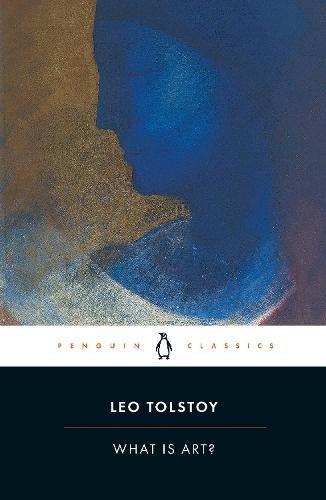
OverviewTolstoy's controversial treatise on the purpose of Art During his decades of world fame as a novelist, Tolstoy also wrote prolifically in a series of essays and polemics on issues of morality, social justice and religion. These works culminated in What is Art?, published in 1898. Impassioned and iconoclastic, this powerfully influential work both criticizes the elitist nature of art in nineteenth-century Western society, and rejects the idea that its sole purpose should be the creation of beauty. The works of Dante, Michelangelo, Shakespeare, Beethoven, Baudelaire and Wagner are all vigorously condemned, as Tolstoy explores what he believes to be the spiritual role of the artist - arguing that true art must work with religion and science as a force for the advancement of mankind. Full Product DetailsAuthor: Leo Tolstoy , Richard Pevear , Larissa Volokhonsky , Richard PevearPublisher: Penguin Books Ltd Imprint: Penguin Classics Dimensions: Width: 12.90cm , Height: 1.40cm , Length: 19.70cm Weight: 0.180kg ISBN: 9780140446425ISBN 10: 0140446427 Pages: 240 Publication Date: 31 August 1995 Audience: General/trade , General Format: Paperback Publisher's Status: Active Availability: Available To Order We have confirmation that this item is in stock with the supplier. It will be ordered in for you and dispatched immediately. Language: Russian Table of ContentsWhat Is Art? - Leo Tolstoy Translated by Richard Pevear and Larissa Volokhonsky with a Preface by Richard PevearPreface Bibliographical Note A Note on the Text WHAT IS ART?Appendix I Appendix II NotesReviewsAuthor InformationLeo Tolstoy was born in central Russia in 1828. He studied Oriental languages and law (although failed to earn a degree in the latter) at the University of Kazan, and after a dissolute youth eventually joined an artillery regiment in the Caucasus in 1851. He took part in the Crimean War, and the Sebastopol Sketches that emerged from it established his reputation. After living for some time in St Petersburg and abroad, he married Sophie Behrs in 1862 and they had thirteen children. The happiness this brought him gave him the creative impulse for his two greatest novels, War and Peace (1869) and Anna Karenina (1877). Later in life his views became increasingly radical as he gave up his possessions to live a simple peasant life. After a quarrel with his wife he fled home secretly one night to seek refuge in a monastery. He became ill during this dramatic flight and died at the small railway station of Astapovo in 1910. Tab Content 6Author Website:Countries AvailableAll regions |
||||