|
|
|||
|
||||
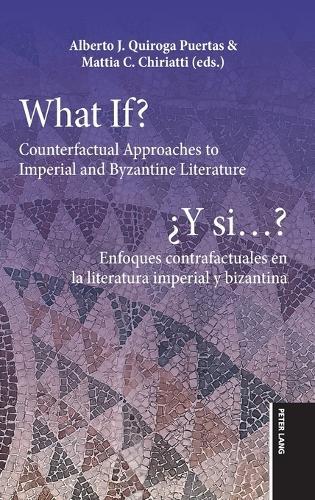
OverviewThis volume explores counterfactual episodes (“what would have happened if…?”) in the literature of the Roman Empire in the Imperial, Late Antique, and Byzantine periods. In the first study of its kind, the authors engage with writers including Plutarch, the emperor Julian and Nonnus of Panopolis to understand how they imagined alternative pasts and futures. A landmark new edited collection, it will be of interest of all those studying the literature and cultural history of the Mediterranean in the first millennium. Este volumen estudia episodios contrafactuales («¿qué habría pasado si...?») en la literatura greco-romana de los periodos imperial, tardoantiguo y bizantino. Se trata del primer estudio de este tipo, en el que se analiza la obra de escritores como Plutarco, el emperador Juliano o Nono de Panópolis para comprender cómo imaginaban pasados y futuros alternativos. Se trata de una obra de referencia que resultará de interés para todos aquellos que estudian la literatura y la historia cultural del Mediterráneo en el primer milenio. Full Product DetailsAuthor: Mattia Chiriatti , Alberto Quiroga PuertasPublisher: Peter Lang Publishing Inc Imprint: Peter Lang Publishing Inc Edition: New edition Weight: 0.385kg ISBN: 9781636672373ISBN 10: 163667237 Pages: 208 Publication Date: 16 February 2026 Audience: Professional and scholarly , Professional & Vocational Format: Hardback Publisher's Status: Active Availability: Manufactured on demand We will order this item for you from a manufactured on demand supplier. Language: English, Spanish Table of ContentsAlberto J. Quiroga Puertas (University of Granada): introduction - 1. A grammatical prelude - Ezra la Roi (Ghent University): ""Contextualizing Counterfactual Patterns in Post-Classical Greek texts: Forms, Functions and Contexts"" - 2. The use of counterfactuals in Plutarch - Elia Otranto (Universidad de Granada): ""Tempo di (auto)elogi: Plutarco e la periautologia controfattuale"" - Dámaris Romero-González (Universidad de Córdoba): ""Si (no) fuera Alejandro"" - Israel Muñoz Gallarte (Universidad de Córdoba) and Carmen Sánchez-Mañas (Universidad de Murcia): ""Contrafactualidad en Plutarco: una aproximación de la teoría de Moralia a la praxis de la sygkriseis en Vitae"" - 3. The lives of the others: counterfactuals in Late Antique Literature - Mireia Movellán Luis (Universidad de Valencia): ""Las guerras que no fueron: de la épica homérica a la época imperial"" - Alberto J. Quiroga Puertas (University of Granada): ""The reluctant mythmaker. Emperor Julian’s use of counterfactuals"" - Javier Campos-Daroca (University of Almería): ""What if Socrates had kept quiet? Counterfactual constructions about Socrates’ silence"" - Laura Miguélez-Cavero (Complutense University of Madrid): ""Seeing double: Twin versions of events in Nonnus’ Dionysiaca"" - 4. The religious uses of counterfactuals in Late Antique and Byzantine times - María Dolores Hernández Mayor (Universidad de Murcia): ""Función del argumento contrafactual en la refutación de los mirabilia Christi"" - Ángel Narro Sánchez (University of Valencia): ""Counterfactual offers and temptations in Byzantine Martyrdom Narratives"" - Álvaro Ibáñez Chacón (Universidad de Granada): ""Contrafactualidad y composición hagiográfica en la leyenda del ʻnuevoʼ Procopio (BHG 1577)"" - Lorenzo M. Ciolfi (Complutense University of Madrid): ""Μνήμη καὶ λήθη. Il passato niceno nella retorica politica di Michele VIII""ReviewsAuthor InformationAlberto J. Quiroga’s research interests include Greek imperial literature and late antique rhetoric. Alberto J. Quiroga investiga sobre literatura griega imperial y retórica tardo-antigua. Mattia Chiriatti’s research interests include the study of Christian literature, Byzantine history and the evolution of female power in Late Antiquity. Mattia Chiriatti investiga sobre literatura cristiana, historia bizantina y la evolución del poder femenino en la Antigüedad tardía. Tab Content 6Author Website:Countries AvailableAll regions |
||||