Overview
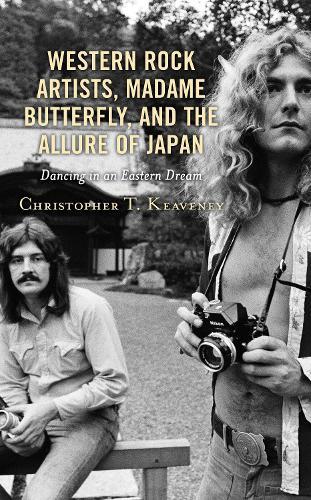
Using the framework of Edward Said’s Orientalism, this work examines how Western rock and pop artists—particularly during the age of album rock from the 1970s through the 1990s—perpetuated long-held stereotypes of Japan in their direct encounters with the country and in songs and music videos with Japanese content.
Full Product Details
Author: Christopher T. Keaveney
Publisher: Bloomsbury Publishing Plc
Imprint: Lexington Books
Dimensions:
Width: 15.40cm
, Height: 1.80cm
, Length: 21.90cm
Weight: 0.372kg
ISBN: 9781793625274
ISBN 10: 1793625271
Pages: 284
Publication Date: 20 December 2021
Audience:
Professional and scholarly
,
Professional & Vocational
Format: Paperback
Publisher's Status: Active
Availability: Manufactured on demand

We will order this item for you from a manufactured on demand supplier.
Reviews
Taking his readers on a rock 'n roll tour of Japan from the 1960s through the 1990s, Christopher Keaveney reveals the Orientalist dreams influencing many Western musicians from their kimono-clad album covers and geisha-inspired lyrics to their reflections on their Japanese fandom. Informative, erudite, and wonderfully fun to read, Keaveney's study compels rethinking the legacy of Madame Butterfly, samurai masculinity, and discovery of the Western self in the exotic East. -- Rebecca Copeland, Washington University in St. Louis Christopher T. Keaveney shifts our focus from the impact of rock music on Japan to the impact of Japan on rock music. He places rock and roll in the long history of japonisme, demonstrating how both explicitly gendered ‘imaginaries’ and real experiences of Japan influenced the economic and cultural development of AOR and rock video. Throughout the book, Keaveney’s passion for the music comes through. -- E. Taylor Atkins, Northern Illinois University This knowledgeable, lovingly written, accessible book records the many ways orientalist stereotypes of Japan have influenced American and British rock musicians during the ‘Age of Album Rock’ (1960s–1990s) and beyond, as heard in their songs, seen on their album covers, enacted on their concerts at the Budokan, performed in photographs and music videos, and reported by journalists. -- Alisa Freedman, University of Oregon Christopher Keaveney’s monograph is a very welcome addition to the field of transnational and comparative Japan studies, and by extension contemporary cultural studies…. [A] valuable aspect of the book…is perhaps its ability to trigger ideas for further projects and point to avenues for further research in the rich and ever-growing fields of cultural representation analysis and of transnational Japan studies. * Journal of Japanese and International Economy *
Taking his readers on a rock 'n roll tour of Japan from the 1960s through the 1990s, Christopher Keaveney reveals the Orientalist dreams influencing many Western musicians from their kimono-clad album covers and geisha-inspired lyrics to their reflections on their Japanese fandom. Informative, erudite, and wonderfully fun to read, Keaveney's study compels rethinking the legacy of Madame Butterfly, samurai masculinity, and discovery of the Western self in the exotic East. -- Rebecca Copeland, Washington University in St. Louis Christopher T. Keaveney shifts our focus from the impact of rock music on Japan to the impact of Japan on rock music. He places rock and roll in the long history of japonisme, demonstrating how both explicitly gendered 'imaginaries' and real experiences of Japan influenced the economic and cultural development of AOR and rock video. Throughout the book, Keaveney's passion for the music comes through. -- E. Taylor Atkins, Northern Illinois University This knowledgeable, lovingly written, accessible book records the many ways orientalist stereotypes of Japan have influenced American and British rock musicians during the 'Age of Album Rock' (1960s-1990s) and beyond, as heard in their songs, seen on their album covers, enacted on their concerts at the Budokan, performed in photographs and music videos, and reported by journalists. -- Alisa Freedman, University of Oregon
Author Information
Christopher T. Keaveney is assistant professor at Rikkyo University.