|
|
|||
|
||||
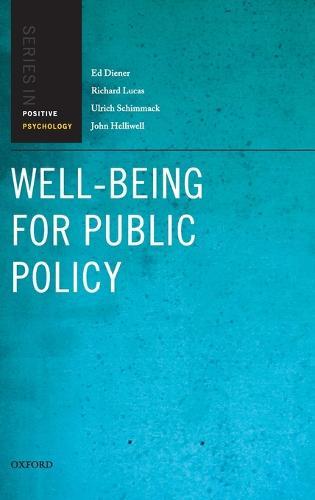
OverviewIn this volume, the authors explain the reasons why subjective indicators of well-being are needed. They describe how these indicators can offer useful input and provide examples of policy uses of well-being measures. The book then delves into objections to the use of subjective well-being indicators for policy purposes and discusses why these objections are not warranted. Finally, the book contains answers pertaining to the measures that are currently in use and describes the types of measures that are most likely to be valuable in the policy domain. At the most ambitious, even audacious, level, Well-Being for Public Policy has the potential of transforming society by making people and policy more concerned about well-being, and less concerned about economics and income. The existence of national measures of well-being would draw more interest to the rewarding and problem areas of life, and serve to give a broader focus to societal decisions. National accounts of well-being could reorient societies so that social values, the environment, enjoyable work, and physical and emotional health are given prominence along with economic development. This book is an invaluable treatise on current understanding of the complex relationship between well-being and public policy-- it will be of great interest to researchers in the fields of psychology and economics. Full Product DetailsAuthor: Ed Diener (Professor Emeritus, Professor Emeritus, University of Illinois in Urbana-Champaign) , Richard Lucas (Associate Professor of Psychology, Associate Professor of Psychology, Michigan State University) , Ulrich Schimmack (Professor, Professor, University of Toronto) , John HelliwellPublisher: Oxford University Press Inc Imprint: Oxford University Press Inc Dimensions: Width: 23.60cm , Height: 2.50cm , Length: 15.50cm Weight: 0.499kg ISBN: 9780195334074ISBN 10: 0195334078 Pages: 256 Publication Date: 30 April 2009 Audience: General/trade , General Format: Hardback Publisher's Status: Active Availability: To order Stock availability from the supplier is unknown. We will order it for you and ship this item to you once it is received by us. Table of ContentsSection I: Measuring well-being for public policy 1: Introduction 2: Defining well-being Section II: How well-being adds information 3: Limitations of economic and social indicators 4: Contributions of well-being measures 5: The well-being measures are valid 6: Issues regarding using well-being for policy 7: The Desirability of well-being as a guide for policy Section III: Examples of policy uses of well-being measures 8: Health and well-being: Policy examples 9: The environment and well-being: Policy examples 10: Work, the economy, and well-being: Policy examples 11: The social context of well-being: Policy examples Section IV: Implementing the measures 12: Existing surveys 13: Conclusions References IndexReviewsAuthor InformationTab Content 6Author Website:Countries AvailableAll regions |
||||