Overview
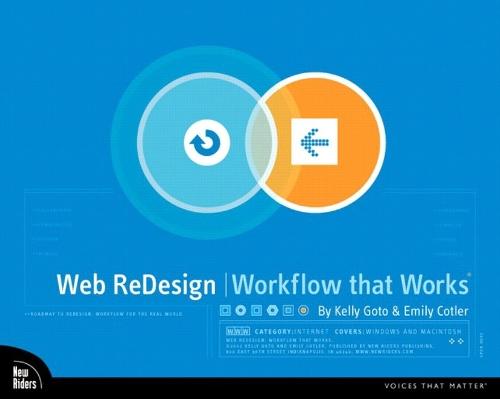
For courses in Website Management or Web Design. Web (Re)Design: Web Work Flow that Works provides students with a roadmap toward designing or redesigning web sites. The authors present case studies demonstrating effective procedures and techniques that work for small design shops or larger teams of designers. This book, which covers everything from conceptualizing the project to budgeting expenses to managing client relationships, is perfect for courses that focus on the reality of designing - or redesigning - useful web sites.
Full Product Details
Author: Kelly Goto ,
Emily Cotler
Publisher: Pearson Education (US)
Imprint: New Riders Publishing
Dimensions:
Width: 20.40cm
, Height: 1.20cm
, Length: 25.40cm
Weight: 0.654kg
ISBN: 9780735710627
ISBN 10: 0735710627
Pages: 272
Publication Date: 22 August 2001
Audience:
College/higher education
,
Tertiary & Higher Education
Replaced By: 9780735714335
Format: Paperback
Publisher's Status: Out of Print
Availability: Out of stock

Reviews
I wish I had this book when I was working at a Web design firm in the '90s. It would have saved us all a lot of headache. www.webreference.com, Sept 2001
"""I wish I had this book when I was working at a Web design firm in the '90s. It would have saved us all a lot of headache.""www.webreference.com, Sept 2001"
Author Information
Kelly Goto is a sought-after lecturer and instructor on the topics of web development, information design, and user experience. Her sessions at conference after conference (and class after class) are invariably packed - Kelly has a knack for making the complex topic of workflow accessible, even engaging. Formerly an award-winning creative director at Idea Integration (http://www.idea.com), Kelly successfully managed the redesigns of many sites ranging from independent to corporate levels. In commercial design since the late 1980s (remember when PageMaker 1.0 was the design tool?), Kelly has acted as creative director, designer, and producer for many high-profile clients, including Warner Bros. Online, National Geographic Online, Adobe Corporation, Paramount Television, Macromedia Corporation, and Sony Pictures. Currently a principal at gotomedia, inc. (http://www.gotomedia.com), an online consultancy for user experience and interaction design, Kelly continues to focus on developing new techniques for collaborative development in digital media. When not tethered to her laptop, Kelly can be found trekking the Third World - where she does not check her email. Emily Cotler is a graphic designer, web designer, journalist, and novelist. A designer since the late 1980s (remember rubdown lettering and stat camera separations?), she is in high demand for both web and print work. Focusing primarily on smaller sites for individual creative professionals and small enterprises, Emily specializes in creating (or re-creating, as the case may be) a positive web presence for smaller budgets. Her clients include New York Times best-selling authors Julia Quinn and Susan Andersen, and many small but thriving companies, including L.A.-based entertainment booking agency Artist Booking International, Denver-based technical writing firm Pomegranate Consulting, and Seattle-based Kira Stewart Photography. A regular contributor to Publish Magazine since 1998, Emily is known for her accessible style and readability - dry topics come alive, interesting topics come off the page. She currently has a 40-foot commute to Waxcreative Design (http://www.waxcreative.com) in Oakland, California, where she reigns as creative directrix. Her preferred method of escape from cyberspace includes a snowboard and a Colorado mountain.