Overview
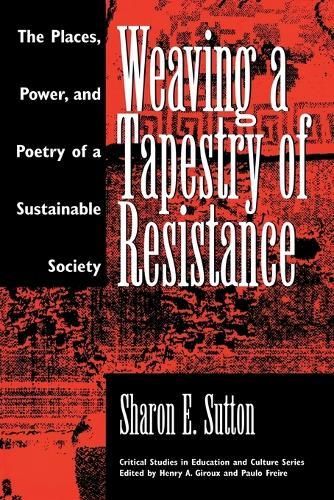
A vivid rendering of the educational, social, and physical environment of two elementary schools in contrasting socioeconomic settings, this book calls attention to the importance of place in human lives and learning. The author draws from systematic observations conducted over a three-year period, presenting the schools and the persons who inhabit them via a fictionalized narrative. This treatment allows readers to understand how the material conditions of poverty and wealth inform children's worldview without compromising the identity of the study participants. Written by an eminent African-American professor of architecture and urban planning who is an outspoken advocate for social justice, this book is a rare gem.
Full Product Details
Author: Sharon E. Sutton
Publisher: Bloomsbury Publishing Plc
Imprint: Praeger Publishers Inc
Dimensions:
Width: 15.60cm
, Height: 1.90cm
, Length: 23.50cm
Weight: 0.397kg
ISBN: 9780897892780
ISBN 10: 089789278
Pages: 264
Publication Date: 21 June 1996
Recommended Age: From 7 to 17 years
Audience:
Professional and scholarly
,
General/trade
,
Professional & Vocational
,
General
Format: Paperback
Publisher's Status: Active
Availability: Manufactured on demand

We will order this item for you from a manufactured on demand supplier.
Reviews
""Among the myriad approaches to educational reform, Dr. Sutton offers a critical missing perspective--the overlooked significance and undervalued possibilities of children's physical environment. Dr. Sutton allows readers to see exciting new possibilities: children's awakening sense of personal efficacy and connectedness as they turn a passive relationship to the physical environment into an active, creative one. A compelling and original work.""-Frances Moore Lappe and Paul Martin Du Bois Authors of The Quickening of America ""This book more than any that I have read really points out the motive of education....It (provides) a great opportunity for educators to use architecture, urban planning, and design as media of instruction to teach not only the basics, but to teach higher order and critical thinking skills and cooperative learning. A sense of team building could be developed that would serve students well as they move to adulthood. They might also develop a better understanding of the concept of a community of learners and a community for learning....I really enjoyed reading Professor Sutton's work.""-Charles D. Moody, Sr., Executive Director and Vice Provost for Academic Affairs University of Michigan ""This book vividly describes the inter-connection of influences that are at the heart of the destructive trends in our society. Its insight into the linkage between the physical environment and one's sense of self is fascinating. It is a profound work that is a ""must"" for those who are interested in shaping children's lives through their physical environments in our preferred future.""-Susan A. Maxman, FAIA Susan Maxman Architects, Philadelphia ""This is required reading because it focuses on the most critical issues of our time: growing environmental deterioration, socio-economic inequalities, and the miseducation of all our children into conformity with the forces producing these life threatening realities. But most importantly, this book provides evidence of and testimony to powerful and practical means by which collaborating children and adults can resist and transform current social and environmental conditions that increasingly threaten life itself.""-James E. Crowfoot, President of Antioch College Professor and Dean Emeritus, University of Michigan School of Natural Resources and Environment ?Sutton enriches critical educational theory by analyzing the physical aspects of schools and their surroundings. Within the urban network, Sutton helps children develop their understanding of context by viewing it as a map/text of society, reflecting beauty and injustice, aiding the realization that actors can re-create this environment. Her book complements Samuel Bowles, Herbert Gintis, Henry Giroux, Jonathan Kozol, Peter McLaren, et al.; moreover, she facilitates the understanding of connection between theory and practice and between local and global efforts.?-Choice ""Sutton enriches critical educational theory by analyzing the physical aspects of schools and their surroundings. Within the urban network, Sutton helps children develop their understanding of context by viewing it as a map/text of society, reflecting beauty and injustice, aiding the realization that actors can re-create this environment. Her book complements Samuel Bowles, Herbert Gintis, Henry Giroux, Jonathan Kozol, Peter McLaren, et al.; moreover, she facilitates the understanding of connection between theory and practice and between local and global efforts.""-Choice
Among the myriad approaches to educational reform, Dr. Sutton offers a critical missing perspective--the overlooked significance and undervalued possibilities of children's physical environment. Dr. Sutton allows readers to see exciting new possibilities: children's awakening sense of personal efficacy and connectedness as they turn a passive relationship to the physical environment into an active, creative one. A compelling and original work. -Frances Moore Lappe and Paul Martin Du Bois Authors of The Quickening of America This book more than any that I have read really points out the motive of education....It (provides) a great opportunity for educators to use architecture, urban planning, and design as media of instruction to teach not only the basics, but to teach higher order and critical thinking skills and cooperative learning. A sense of team building could be developed that would serve students well as they move to adulthood. They might also develop a better understanding of the concept of a community of learners and a community for learning....I really enjoyed reading Professor Sutton's work. -Charles D. Moody, Sr., Executive Director and Vice Provost for Academic Affairs University of Michigan This book vividly describes the inter-connection of influences that are at the heart of the destructive trends in our society. Its insight into the linkage between the physical environment and one's sense of self is fascinating. It is a profound work that is a must for those who are interested in shaping children's lives through their physical environments in our preferred future. -Susan A. Maxman, FAIA Susan Maxman Architects, Philadelphia This is required reading because it focuses on the most critical issues of our time: growing environmental deterioration, socio-economic inequalities, and the miseducation of all our children into conformity with the forces producing these life threatening realities. But most importantly, this book provides evidence of and testimony to powerful and practical means by which collaborating children and adults can resist and transform current social and environmental conditions that increasingly threaten life itself. -James E. Crowfoot, President of Antioch College Professor and Dean Emeritus, University of Michigan School of Natural Resources and Environment ?Sutton enriches critical educational theory by analyzing the physical aspects of schools and their surroundings. Within the urban network, Sutton helps children develop their understanding of context by viewing it as a map/text of society, reflecting beauty and injustice, aiding the realization that actors can re-create this environment. Her book complements Samuel Bowles, Herbert Gintis, Henry Giroux, Jonathan Kozol, Peter McLaren, et al.; moreover, she facilitates the understanding of connection between theory and practice and between local and global efforts.?-Choice Sutton enriches critical educational theory by analyzing the physical aspects of schools and their surroundings. Within the urban network, Sutton helps children develop their understanding of context by viewing it as a map/text of society, reflecting beauty and injustice, aiding the realization that actors can re-create this environment. Her book complements Samuel Bowles, Herbert Gintis, Henry Giroux, Jonathan Kozol, Peter McLaren, et al.; moreover, she facilitates the understanding of connection between theory and practice and between local and global efforts. -Choice
Sutton enriches critical educational theory by analyzing the physical aspects of schools and their surroundings. Within the urban network, Sutton helps children develop their understanding of context by viewing it as a map/text of society, reflecting beauty and injustice, aiding the realization that actors can re-create this environment. Her book complements Samuel Bowles, Herbert Gintis, Henry Giroux, Jonathan Kozol, Peter McLaren, et al.; moreover, she facilitates the understanding of connection between theory and practice and between local and global efforts. -Choice ?Sutton enriches critical educational theory by analyzing the physical aspects of schools and their surroundings. Within the urban network, Sutton helps children develop their understanding of context by viewing it as a map/text of society, reflecting beauty and injustice, aiding the realization that actors can re-create this environment. Her book complements Samuel Bowles, Herbert Gintis, Henry Giroux, Jonathan Kozol, Peter McLaren, et al.; moreover, she facilitates the understanding of connection between theory and practice and between local and global efforts.?-Choice This book vividly describes the inter-connection of influences that are at the heart of the destructive trends in our society. Its insight into the linkage between the physical environment and one's sense of self is fascinating. It is a profound work that is a must for those who are interested in shaping children's lives through their physical environments in our preferred future. -Susan A. Maxman, FAIA Susan Maxman Architects, Philadelphia Among the myriad approaches to educational reform, Dr. Sutton offers a critical missing perspective--the overlooked significance and undervalued possibilities of children's physical environment. Dr. Sutton allows readers to see exciting new possibilities: children's awakening sense of personal efficacy and connectedness as they turn a passive relationship to the physical environment into an active, creative one. A compelling and original work. -Frances Moore Lappe and Paul Martin Du Bois Authors of The Quickening of America This is required reading because it focuses on the most critical issues of our time: growing environmental deterioration, socio-economic inequalities, and the miseducation of all our children into conformity with the forces producing these life threatening realities. But most importantly, this book provides evidence of and testimony to powerful and practical means by which collaborating children and adults can resist and transform current social and environmental conditions that increasingly threaten life itself. -James E. Crowfoot, President of Antioch College Professor and Dean Emeritus, University of Michigan School of Natural Resources and Environment This book more than any that I have read really points out the motive of education....It (provides) a great opportunity for educators to use architecture, urban planning, and design as media of instruction to teach not only the basics, but to teach higher order and critical thinking skills and cooperative learning. A sense of team building could be developed that would serve students well as they move to adulthood. They might also develop a better understanding of the concept of a community of learners and a community for learning....I really enjoyed reading Professor Sutton's work. -Charles D. Moody, Sr., Executive Director and Vice Provost for Academic Affairs University of Michigan
This book more than any that I have read really points out the motive of education....It (provides) a great opportunity for educators to use architecture, urban planning, and design as media of instruction to teach not only the basics, but to teach higher order and critical thinking skills and cooperative learning. A sense of team building could be developed that would serve students well as they move to adulthood. They might also develop a better understanding of the concept of a community of learners and a community for learning....I really enjoyed reading Professor Sutton's work. -Charles D. Moody, Sr., Executive Director and Vice Provost for Academic Affairs University of Michigan
Author Information
SHARON E. SUTTON is Professor of Architecture and Urban Planning at the University of Michigan. She brings to her work a varied background in music, psychology, and the graphic arts as well as experience in conflict management. A recipient of the American Planning Association's 1991 Education Award and former Kellogg National Fellow, Sutton is the author of The Urban Network(1989) and Learning Through the Built Environment (1985).