Overview
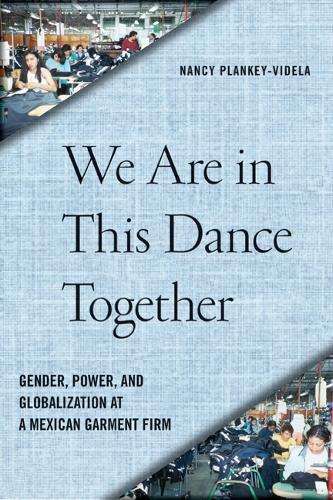
Changes in the global economy have real and contradictory outcomes for the everyday lives of women workers. In 2001, Nancy Plankey-Videla had a rare opportunity to witness these effects firsthand. Having secured access to one of Latin America's top producers of high-end men's suits in Mexico for participant-observer research, she labored as a machine operator for nine months on a shop floor made up, mostly, of women. The firm had recently transformed itself from traditional assembly techniques, to lean, cutting-edge, Japanese-style production methods. Lured initially into the firm by way of increased wages and benefits, workers had helped shoulder the company's increasing debts. When the company's plan for successful expansion went awry and it reneged on promises it had made to the workforce, women workers responded by walking out on strike. Building upon in-depth interviews with over sixty workers, managers, and policy makers, Plankey-Videla documents and analyzes events leading up to the female-led factory strike and its aftermath-including harassment from managers, corrupt union officials and labor authorities, and violent governor-sanctioned police actions. We Are in This Dance Together illustrates how the women's shared identity as workers and mothers-deserving of dignity, respect, and a living wage-became the basis for radicalization and led to further civic organizing against the state, the company, and the corrupt union to demand justice.
Full Product Details
Author: Nancy Plankey-Videla
Publisher: Rutgers University Press
Imprint: Rutgers University Press
Dimensions:
Width: 15.20cm
, Height: 2.30cm
, Length: 22.90cm
Weight: 0.540kg
ISBN: 9780813553016
ISBN 10: 0813553016
Pages: 264
Publication Date: 04 July 2012
Audience:
General/trade
,
General
Format: Hardback
Publisher's Status: Active
Availability: Manufactured on demand 
We will order this item for you from a manufactured on demand supplier.
Table of Contents
Contents List of Figures and Tables Acknowledgments List of Abbreviations Introduction “We Are in This Dance Together” 1 Contextualizing the Case of Moctezuma 2 “I Like Piecework More . . . Because I Work for Myself” 3 From Piecework to Teamwork: Translating Theory into Practice 4 Becoming a Worker: Discovering the Shop Floor and the Contested Nature of Self-Managed Teams 5 Lean during Mean Times 6 The Strike: From Motherhood to Workers’ Rights 7 “We Lost Control of the Shop Floor”: Flexible Taylorism and the Demise of the Firm Conclusion “We Are Workers, Not Beggars” Appendix A The Workforce at Moctezuma Appendix B Past Work Employment Classification Methods Appendix C Reprimands in Worker Files, 1993–2001 Notes Glossary Bibliography Index Figures and TablesFigures 2.1. Moctezuma woman worker at protest, August 1972 3.1. Poka-yoke lights, control panels, local supply shelves, and altar to Virgin of Guadalupe, pants department, 2001 4.1. Picture of bundle preparation (Op-1) and first sewing operation (Op-2), José and Luisa in the foreground 4.2. Production flow and work posts in the pants department, team four 6.1. Decisionmaking during the strike: voting through a show of hands, March 16, 2001 6.2. Blocking traffic to demand a meeting with the governor, April 4, 2001 6.3. State repression of workers’ sit-in, April 4, 2001 6.4. Marches after work to demand recognition of independent union, May 2001 8.1. Sewing workshop, Doña Ana in the middle, 2006 8.2. Sewing workshop, 2006 Tables 1.1.Grupo Mexicano’s Participation in Textile and Apparel Commodity Chain 7.1. Moctezuma’s Proportion of Working Capital to Debts, 1996–2001 (in Millions of Pesos) A.1. Female Workers by Marital Status and Number of Children, 2001(Percentages in Parentheses) A.2. Education Level by Gender, 2001 A.3. Percentage of Women Workers Hired by Age Group under Changing Work Organization over Time A.4. Percentage of Men Workers Hired by Age Group under Changing Work Organization over Time B.1. Mexican Classification of Occupation (CMO ) Codes and Categories for Moctezuma’s Workers B.2. Percentage of Women Hired by Mexican Classification of Occupation (CMO) Work Category for Previous Employment, 1970s–2001 C.1. Number of Reprimands by Infraction, 1993–2001
Reviews
Plankey-Videla's engaging ethnography of a Mexican factory illustrates the ways in which team production, gender, and labor resistance interact. It should interest readers in sociology, gender studies, and labor studies as well as anyone interested in the political economy of globalization. --Ruth Milkman professor of sociology, City University of New York Graduate Center Plankey-Videla's cogent ethnography of labor relations and worker resistance at a cutting-edge apparel factory in Mexico reveals some of the most serious contradictions in our contemporary global labor market. --Jane Collins author of Threads: Gender, Labor & Power in the Global Economy A compelling story that joins the ranks of other important feminist scholarship examining the gendered dynamics of work within a context of globalization. --American Journal of Sociology On its surface, We Are in This Dance Together effectively portrays the unraveling of a single Mexican garment production company and the challenges faced by the broader Mexican economy during a period of global economic upheaval. Yet by weaving together the narratives of female factory workers, the progressively impotent efforts by management to remain relevant within an increasingly competitive marketplace, and the corrupt state apparatus, Plankey-Videla does much more. --Anthropology of Work Review
Plankey-Videla's cogent ethnography of labor relations and worker resistance at a cutting-edge apparel factory in Mexico reveals some of the most serious contradictions in our contemporary global labor market. --Jane Collins Author of Threads: Gender, Labor & Power in the Global Economy (01/04/2012)
Plankey-Videla''s engaging ethnography of a Mexican factory illustrates the ways in which team production, gender, and labor resistance interact. It should interest readers in sociology, gender studies, and labor studies as well as anyone interested in the political economy of globalization. --Ruth Milkman professor of sociology, City University of New York Graduate Center (10/13/2011)
Plankey-Videla''s engaging ethnography of a Mexican factory illustrates the ways in which team production, gender, and labor resistance interact. It should interest readers in sociology, gender studies, and labor studies as well as anyone interested in the political economy of globalization. --Ruth Milkman Professor of sociology, City University of New York Graduate Center (10/13/2011)
Plankey-Videla's cogent ethnography of labor relations and worker resistance at a cutting-edge apparel factory in Mexico reveals some of the most serious contradictions in our contemporary global labor market. --Jane Collins author of Threads: Gender, Labor & Power in the Global Economy (01/04/2012)
Author Information
NANCY PLANKEY-VIDELA is an assistant professor in the department of sociology at Texas A & M University. She studies inequality in the workplace.
Tab Content 6
Author Website:
Countries Available
All regions
|