|
|
|||
|
||||
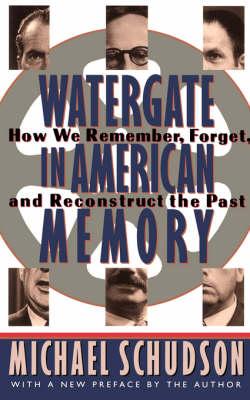
OverviewA look at what Americans remember (and what they have forgotten) about one of the most traumatic domestic political event in the America's post-war history. Full Product DetailsAuthor: Michael SchudsonPublisher: Basic Books Imprint: Basic Books Dimensions: Width: 12.70cm , Height: 1.80cm , Length: 19.90cm Weight: 0.304kg ISBN: 9780465090839ISBN 10: 0465090834 Pages: 304 Publication Date: 17 November 1993 Audience: College/higher education , Professional and scholarly , Undergraduate , Postgraduate, Research & Scholarly Format: Paperback Publisher's Status: Active Availability: Manufactured on demand We will order this item for you from a manufactured on demand supplier. Table of ContentsReviewsA fitfully perceptive account of the collective American memory of Watergate, and of what this tells us about the nature of history. Schudson (Communication and Sociology/UC-San Diego; Advertising, the Uneasy Persuasion, 1984, etc.) contends that Watergate, like other traumatic public events, has entered the national consciousness in a variety of ways. It is, of course, still within the reach of personal recollection, not only for the participants but for the milllions who watched the televised hearings. It has produced a massive body of published writing and it still casts a long shadow over national politics, as the Irangate affair showed. Yet, Schudson points out, questions arise. How significant was Watergate, in fact? Was it a serious constitutional crisis or just a scandal ? Was the real villain of the piece Nixon, or was it the political system that produced him? What does the collective memory of Watergate tell us about how we learn from the past? Does it tell us that there are facts of history we would do well to remember, or, rather, that our past is largely constructed by our present? Schudson bobs back and forth among these possibilities, his aim being less to answer such questions than to identify them and their continuing influence. The result is a great many interesting remarks and observations concerning particulars, coupled with an irritating circularity and vagueness of direction in general. This is especially apparent when the author attempts to extract general conclusions about what it is to learn from the past. Much labor is expended in arriving at the unremarkable view that the past is neither wholly objective nor wholly constructed. Schudson is at his beat when describing the careers, reforms, myths, celebrities, and expectations created by Watergate, and when showing how Watergate became a lens through which, for better or worse, Irangate was viewed. Sociologically and politically interesting; philosophically half-baked. (Kirkus Reviews) Author InformationTab Content 6Author Website:Countries AvailableAll regions |
||||